Vue papier
Découvrez la vue papier en cliquant ici
Unit 8
Spotlight
Next-gen viral voices
Ressource affichée de l'autre côté.
Faites défiler pour voir la suite.
Faites défiler pour voir la suite.
1
Algospeak
“The more I looked into it, the more I realized that algorithms are really affecting every aspect of modern language change,” Mr. Aleksic said in
a recent interview, padding around the Manhattan apartment he shares
with a roommate and wearing socks stitched with tiny dolphins.
Even those who steer clear of social media are not exempt. If you have encountered Oxford University Press's 2024 word of the year, “brain rot” (the “supposed deterioration of a person's mental or intellectual state,” thanks to a fire hose of digital content), you, too, have had a brush with social media's ability to incubate slang and catapult it into the offline world.
Mr. Aleksic has been dissecting slang associated with Gen Z on social media since 2023. In wobbly, breathless videos that are usually about a minute long, he uses his undergraduate degree in linguistics from Harvard to explain the spread of terms including “lowkey” and “gyat.” [...]
Mr. Aleksic argues that “algospeak” [...] is a linguistic ecosystem in which words rocket from the margins to the mainstream in a matter of days, and sometimes fade just as fast. When influencers modify their vocabulary and speech patterns for maximum visibility, those patterns are reinforced among their audiences.
Does that have to be a bad thing? Moments of linguistic upheaval, like the proliferation of “netspeak” in the early 2000s, are not always as scary as they seem, the linguist David Crystal argued in his 2001 book “Language and the Internet.” Rather, they can allow for bursts of creativity.
Even those who steer clear of social media are not exempt. If you have encountered Oxford University Press's 2024 word of the year, “brain rot” (the “supposed deterioration of a person's mental or intellectual state,” thanks to a fire hose of digital content), you, too, have had a brush with social media's ability to incubate slang and catapult it into the offline world.
Mr. Aleksic has been dissecting slang associated with Gen Z on social media since 2023. In wobbly, breathless videos that are usually about a minute long, he uses his undergraduate degree in linguistics from Harvard to explain the spread of terms including “lowkey” and “gyat.” [...]
Mr. Aleksic argues that “algospeak” [...] is a linguistic ecosystem in which words rocket from the margins to the mainstream in a matter of days, and sometimes fade just as fast. When influencers modify their vocabulary and speech patterns for maximum visibility, those patterns are reinforced among their audiences.
Does that have to be a bad thing? Moments of linguistic upheaval, like the proliferation of “netspeak” in the early 2000s, are not always as scary as they seem, the linguist David Crystal argued in his 2001 book “Language and the Internet.” Rather, they can allow for bursts of creativity.
Ressource affichée de l'autre côté.
Faites défiler pour voir la suite.
Faites défiler pour voir la suite.
2
Social media slang

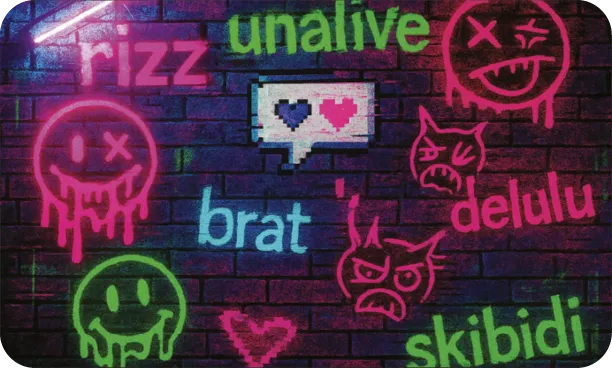
“How social media slang is reshaping the way we speak”, CBS Mornings Plus, 2025.
Vidéo associée

Ressource affichée de l'autre côté.
Faites défiler pour voir la suite.
Faites défiler pour voir la suite.
PATH A
B1
1-A
Read the text. Find a quote that defines
“algospeak” according to Adam Aleksic.
2-A
Watch the video. Pick two trending words
mentioned and explain their meaning.
3-A
What makes certain words “algorithm-friendly”? Identify two points from the video.
Ressource affichée de l'autre côté.
Faites défiler pour voir la suite.
Faites défiler pour voir la suite.
PATH B
B2
1-B
Read the text. Pick out information on Adam
Aleksic and his research.
2-B
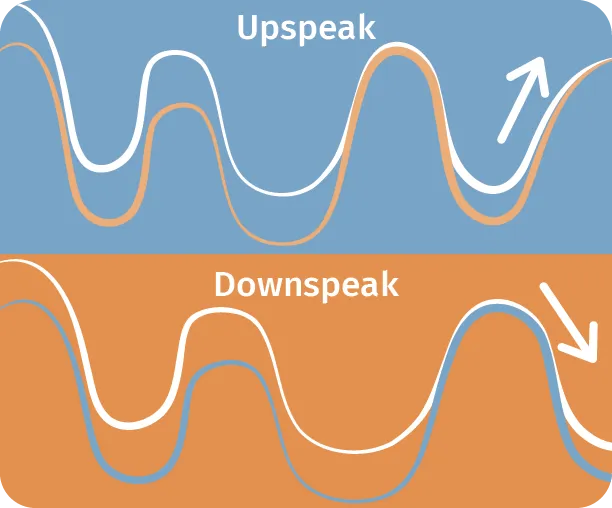
Listen to the audio. What defines the
“influencer accents” mentioned by Aleksic?
3-B
How does Aleksic explain the link between
social media visibility and the spread of
certain speech patterns?
Ressource affichée de l'autre côté.
Faites défiler pour voir la suite.
Faites défiler pour voir la suite.
Let's talk this out!
4
Share your findings. Sum up the ways that social media platforms influence how people speak.
5
Do you believe that powerful online communication still depends on the same techniques as traditional
speeches?
Ressource affichée de l'autre côté.
Faites défiler pour voir la suite.
Faites défiler pour voir la suite.
Create a viral speech.
You are a member of the communication team tasked with creating a message that will go viral. Drawing on what you learnt from Aleksic, craft a mini speech designed to be popular on social media, then add one sentence explaining why your message is likely to perform well online.
You are a member of the communication team tasked with creating a message that will go viral. Drawing on what you learnt from Aleksic, craft a mini speech designed to be popular on social media, then add one sentence explaining why your message is likely to perform well online.
Une erreur sur la page ? Une idée à proposer ?
Nos manuels sont collaboratifs, n'hésitez pas à nous en faire part.
j'ai une idée !
Oups, une coquille