Vue papier
Découvrez la vue papier en cliquant ici
Unit 12
Activity 1
From apps to fame
Ressource affichée de l'autre côté.
Faites défiler pour voir la suite.
Faites défiler pour voir la suite.
1#BookTok

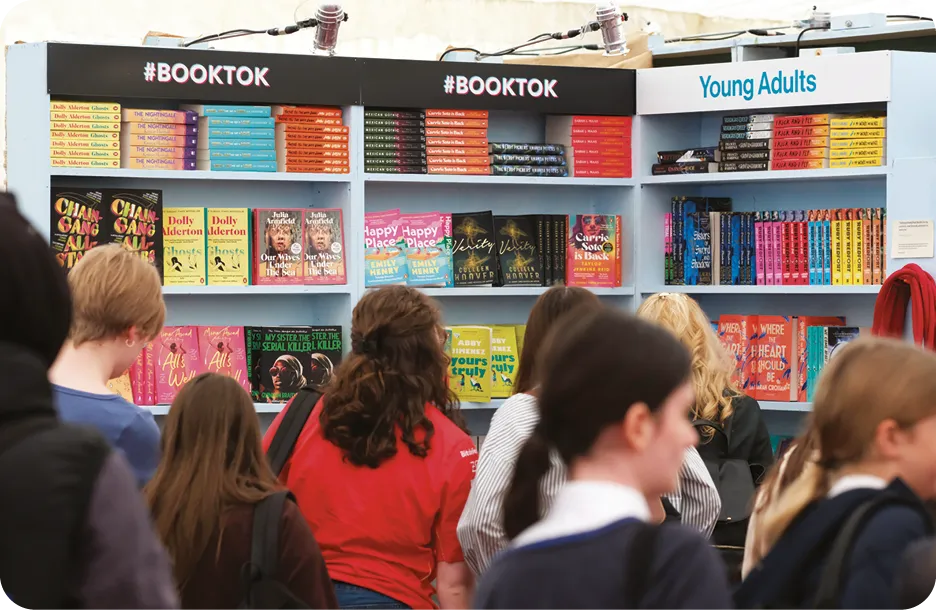
Students browse the BookTok and Young Adults titles on sale at Hay Festival bookshop, Hay-on-Wye, Wales.
Vidéo associée
From 0:00 to 3:40Ressource affichée de l'autre côté.
Faites défiler pour voir la suite.
Faites défiler pour voir la suite.
2#BookTok
“The cult of the notes app poetry”, Jack Edwards, 2023.
Vidéo associée
From 1:55 to 5:45Ressource affichée de l'autre côté.
Faites défiler pour voir la suite.
Faites défiler pour voir la suite.
3
A community of poetry readers
angt-unit12-activity1-doc3-.mp3
Instagram poetry has made writers like Rupi Kaur and Donna Ashworth rise to stardom, amassing thousands of followers and earning them quite a bit of money.
As a subgenre of poetry, it combines self-help, reflections on romantic relationships, identity and plain language to create poems that users can quickly grasp and share through hashtags like #instapoetry. Visually, Instapoetry is often accompanied by drawings, uses typewritten fonts and has an overall lack of capitalisation and punctuation.
If you like Instapoetry, you've likely heard all the arguments for why it's an unserious sub-genre that shouldn't be seen as “real” poetry. However, its popularity and its boost to overall poetry sales should be taken more seriously by the establishment – as should young people's love of it. [...]
The success of Kaur and several other Instapoets has been linked by the publishing industry to a general increase in poetry sales, driven partly by young people.
Key to Instapoetry's appeal is its accessibility. Instagram enables direct communication between the author and readers, who use the comment section to express their responses to the poem and communicate with each other, creating a community – or at least the sense of one.
The community of Instapoetry-readers is fundamental for the poets. The more interaction their posts or poems receive, the more the content and artwork will be spread.
As a subgenre of poetry, it combines self-help, reflections on romantic relationships, identity and plain language to create poems that users can quickly grasp and share through hashtags like #instapoetry. Visually, Instapoetry is often accompanied by drawings, uses typewritten fonts and has an overall lack of capitalisation and punctuation.
If you like Instapoetry, you've likely heard all the arguments for why it's an unserious sub-genre that shouldn't be seen as “real” poetry. However, its popularity and its boost to overall poetry sales should be taken more seriously by the establishment – as should young people's love of it. [...]
The success of Kaur and several other Instapoets has been linked by the publishing industry to a general increase in poetry sales, driven partly by young people.
Key to Instapoetry's appeal is its accessibility. Instagram enables direct communication between the author and readers, who use the comment section to express their responses to the poem and communicate with each other, creating a community – or at least the sense of one.
The community of Instapoetry-readers is fundamental for the poets. The more interaction their posts or poems receive, the more the content and artwork will be spread.
Ressource affichée de l'autre côté.
Faites défiler pour voir la suite.
Faites défiler pour voir la suite.
Questions
1
How has BookTok changed the way people discover and buy books?
2
List the main features of Instagram or “notes app” poetry. Why do you think it appeals to so many readers?
3
How does Instagram help poets connect with their audience? Explain why this connection is important for their success.
Ressource affichée de l'autre côté.
Faites défiler pour voir la suite.
Faites défiler pour voir la suite.
Background check
How does social media amplify the voices of writers and poets?Ressource affichée de l'autre côté.
Faites défiler pour voir la suite.
Faites défiler pour voir la suite.
Pick one of the apps mentioned
in the documents, and find three
adjectives that best describe how
writers, poets, or readers use it.
Une erreur sur la page ? Une idée à proposer ?
Nos manuels sont collaboratifs, n'hésitez pas à nous en faire part.
j'ai une idée !
Oups, une coquille