Vue papier
Découvrez la vue papier en cliquant ici
Unit 12
Spotlight
Does AI write better poems?
Ressource affichée de l'autre côté.
Faites défiler pour voir la suite.
Faites défiler pour voir la suite.
angt-unit12-spotlight.mp3
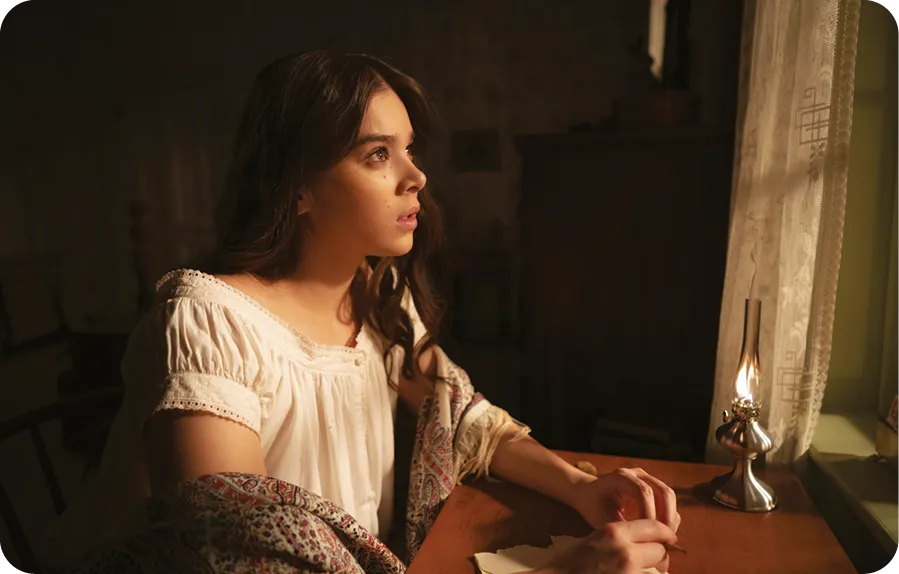
Poems written by AI are preferred to those written by humans, according to a new study.
The non-expert poetry readers who participated were more likely to judge AI-generated poems as being written by humans than those actually written by humans.
The study, conducted by researchers at the University of Pittsburgh, showed participants poems written by 10 famous English-language poets along with poems generated in the style of those poets by ChatGPT 3.5.
Real and imitation poems by [William Shakespeare, Walt Whitman, Emily Dickinson, TS Eliot and Sylvia Plath] were presented to participants.
Results showed that the odds of a poem written by a human being judged as human-authored were roughly 75% that of an AI-generated poem being judged as human-authored.
Contrary to previous research, the study also found that participants ranked AI-generated poems higher in terms of overall quality than human-written poems.
The authors propose that non-expert readers prefer AI-generated poems because they find them more straightforward and accessible.
The “complexity and opacity” of human-written poetry is “part of the poems' appeal”, write the study authors. [...]
However, “because AI-generated poems do not have such complexity, they are better at unambiguously communicating an image, a mood, an emotion, or a theme to non-expert readers of poetry, who may not have the time or interest for the in-depth analysis demanded by the poetry of human poets,” they said.
“While I have no doubt that AI can generate an almost perfect Fibonacci sequence of poetry by reverse engineering well-known works, humanity is at the core of what a poem is,” said poet Joelle Taylor, [...] in response to the study results. “A poem is more than an algorithm. It is meaning, empathy, revelation, inversion, dissidence, passion, and surprise: poetry is what happens in the space between logic and chaos.”
The non-expert poetry readers who participated were more likely to judge AI-generated poems as being written by humans than those actually written by humans.
The study, conducted by researchers at the University of Pittsburgh, showed participants poems written by 10 famous English-language poets along with poems generated in the style of those poets by ChatGPT 3.5.
Real and imitation poems by [William Shakespeare, Walt Whitman, Emily Dickinson, TS Eliot and Sylvia Plath] were presented to participants.
Results showed that the odds of a poem written by a human being judged as human-authored were roughly 75% that of an AI-generated poem being judged as human-authored.
Contrary to previous research, the study also found that participants ranked AI-generated poems higher in terms of overall quality than human-written poems.
The authors propose that non-expert readers prefer AI-generated poems because they find them more straightforward and accessible.
The “complexity and opacity” of human-written poetry is “part of the poems' appeal”, write the study authors. [...]
However, “because AI-generated poems do not have such complexity, they are better at unambiguously communicating an image, a mood, an emotion, or a theme to non-expert readers of poetry, who may not have the time or interest for the in-depth analysis demanded by the poetry of human poets,” they said.
“While I have no doubt that AI can generate an almost perfect Fibonacci sequence of poetry by reverse engineering well-known works, humanity is at the core of what a poem is,” said poet Joelle Taylor, [...] in response to the study results. “A poem is more than an algorithm. It is meaning, empathy, revelation, inversion, dissidence, passion, and surprise: poetry is what happens in the space between logic and chaos.”
Ressource affichée de l'autre côté.
Faites défiler pour voir la suite.
Faites défiler pour voir la suite.
PATH A
B1
1-A
According to the study, which poems were
judged more “human-like” by readers?
2-A
Why do the authors think non-expert
readers prefer AI-generated poems?
3-A
Find a quote explaining what makes
a poem human.
Ressource affichée de l'autre côté.
Faites défiler pour voir la suite.
Faites défiler pour voir la suite.
PATH B
B2
1-B
What did the study find about readers' preferences?
Why do the authors think this is the case?
2-B
Explain in your own words how human-written
poems differ from AI-generated poems.
3-B
What criticisms does Joelle Taylor make about
AI-generated poetry?
Ressource affichée de l'autre côté.
Faites défiler pour voir la suite.
Faites défiler pour voir la suite.
Let's talk this out!
4
Share your findings. Discuss whether poetry is a strictly human creation or if AI can authentically master
the power of words.
5
Would you personally choose to use AI to write poetry? Explain your answer.
Ressource affichée de l'autre côté.
Faites défiler pour voir la suite.
Faites défiler pour voir la suite.
#PoetryGate
A famous Instapoet has just been exposed for secretly using AI to write some of their most viral poems and the comment section is exploding. In small groups, write the comments reacting to the scandal. Share opinions and reply to other students' comments to keep the debate going.
A famous Instapoet has just been exposed for secretly using AI to write some of their most viral poems and the comment section is exploding. In small groups, write the comments reacting to the scandal. Share opinions and reply to other students' comments to keep the debate going.
Une erreur sur la page ? Une idée à proposer ?
Nos manuels sont collaboratifs, n'hésitez pas à nous en faire part.
j'ai une idée !
Oups, une coquille