Vue papier
Découvrez la vue papier en cliquant ici
Case Study 12
Axe 5
Objet d'étude 4
#MeToo
Ressource affichée de l'autre côté.
Faites défiler pour voir la suite.
Faites défiler pour voir la suite.
Create the front page of a newspaper.
You are on a team of journalists contributing to a special issue of Ms. Magazine focused on the history of the #MeToo movement. Create the front page of the magazine special issue including a headline, articles, and visual elements, showing how both social media and investigative journalism played crucial roles in shaping the movement.
You are on a team of journalists contributing to a special issue of Ms. Magazine focused on the history of the #MeToo movement. Create the front page of the magazine special issue including a headline, articles, and visual elements, showing how both social media and investigative journalism played crucial roles in shaping the movement.

Ressource affichée de l'autre côté.
Faites défiler pour voir la suite.
Faites défiler pour voir la suite.
1
From hashtag to global movement
angt-cs12-step1.mp3
It started with an exposé detailing countless allegations against Hollywood producer Harvey Weinstein. But soon, personal stories began pouring in from women in all industries across the world, and the hashtag #MeToo became a rallying cry against sexual assault and harassment.
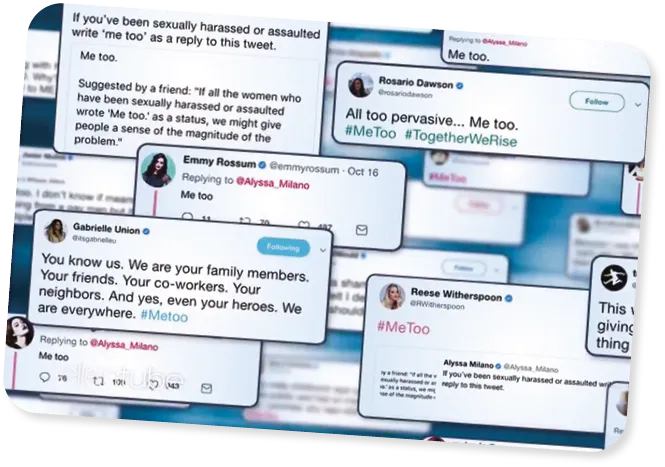
The movement began on social media after a call to action by the actor Alyssa Milano, one of Weinstein's most vocal critics, who wrote: “If all the women who have been sexually harassed or assaulted wrote ‘Me too’ as a status, we might give people a sense of the magnitude of the problem.” Within days, millions of women – and some men – used Twitter, Facebook and Instagram to disclose the harassment and abuse they have faced in their own lives. [...]
“It is about so much more than Harvey Weinstein,” said Caroline Criado-Perez, co-founder of The Women's Room and the feminist campaigner who forced the Bank of England to have female representation on banknotes. [...]
The internet age has better equipped people to deal with these issues. Social media has democratised feminism, helping women to share experiences of sexual violence, such as on the HarassMap platform launched in Egypt, build solidarity, as seen with the #YesAllWomen hashtag that trended for weeks after Elliot Rodger went on a shooting spree in California, or keep international attention on events that slipped off the news agenda, such as the #BringBackOurGirls campaign launched after the abduction of more than 300 schoolgirls in Chibok, Nigeria.
“I don't think we [should] underestimate how much of an impact is being made by the way in which women can just speak out about their experiences, because we're just not represented in the news media, and films and literature,” said Criado-Perez. “Until the internet came along, we just weren't having these conversations about what it's like to be a woman, what it's like to walk down the street and be harassed and cat-called. We didn't know about the idea of everyday sexism.”
The movement began on social media after a call to action by the actor Alyssa Milano, one of Weinstein's most vocal critics, who wrote: “If all the women who have been sexually harassed or assaulted wrote ‘Me too’ as a status, we might give people a sense of the magnitude of the problem.” Within days, millions of women – and some men – used Twitter, Facebook and Instagram to disclose the harassment and abuse they have faced in their own lives. [...]
“It is about so much more than Harvey Weinstein,” said Caroline Criado-Perez, co-founder of The Women's Room and the feminist campaigner who forced the Bank of England to have female representation on banknotes. [...]
The internet age has better equipped people to deal with these issues. Social media has democratised feminism, helping women to share experiences of sexual violence, such as on the HarassMap platform launched in Egypt, build solidarity, as seen with the #YesAllWomen hashtag that trended for weeks after Elliot Rodger went on a shooting spree in California, or keep international attention on events that slipped off the news agenda, such as the #BringBackOurGirls campaign launched after the abduction of more than 300 schoolgirls in Chibok, Nigeria.
“I don't think we [should] underestimate how much of an impact is being made by the way in which women can just speak out about their experiences, because we're just not represented in the news media, and films and literature,” said Criado-Perez. “Until the internet came along, we just weren't having these conversations about what it's like to be a woman, what it's like to walk down the street and be harassed and cat-called. We didn't know about the idea of everyday sexism.”
Ressource affichée de l'autre côté.
Faites défiler pour voir la suite.
Faites défiler pour voir la suite.

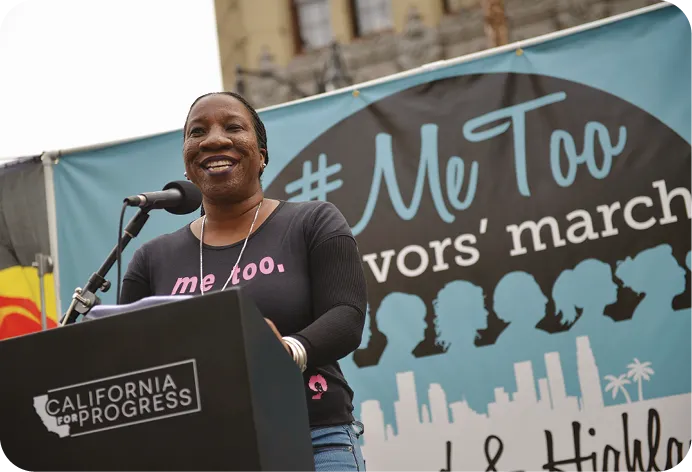
Tarana Burke, founder of the #MeToo movement.
Vidéo associée
From 1:31 to 4:42Ressource affichée de l'autre côté.
Faites défiler pour voir la suite.
Faites défiler pour voir la suite.
Step 1
1
Read the text. How did the #MeToo movement begin and spread? Pick out dates, names, and key facts.
2
List the specific impacts of social media on the movement.
3
Watch the video. What is the purpose of the #MeToo movement according to Tarana Burke?
4
What concerns did she express when the hashtag went viral?
Action!
Step into your role as a journalist and plan the layout of your page. Give titles to each section.
Ressource affichée de l'autre côté.
Faites défiler pour voir la suite.
Faites défiler pour voir la suite.
2
From hashtag to global movement
angt-cs12-step2.mp3
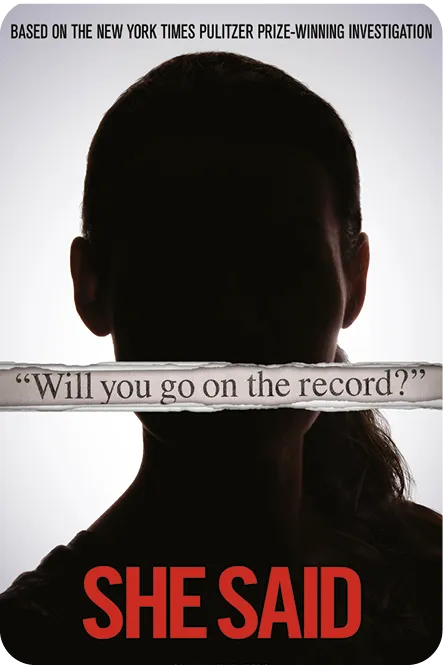
Kantor and Twohey broke the Weinstein story. Their 3,300-word Times article on Oct. 5, 2017, aired allegations against him that had been piling up as whispers and rumors for 30 years. That report, and the ones to follow, were grounded in scores of interviews with actresses and current and former employees, supplemented by legal filings, corporate records and internal company communications that documented a thick web of cover-ups, bullying tactics and confidential settlements. It was bravura journalism.
“We watched with astonishment as a dam wall broke,” Kantor and Twohey write of the response to that first article. A day after it was published, so many women phoned The Times to report allegations of sexual harassment and assault against Weinstein that the paper had to assign additional reporters to handle the calls. On Oct. 10, another round of women, including marquee names like Gwyneth Paltrow, Angelina Jolie and Rosanna Arquette, went public in a second article in The Times. [...]
Kantor and Twohey take us through the time-consuming, meticulous and often go-nowhere grunt work that's intrinsic to gathering evidence, winning the trust of gun-shy victims and maneuvering past barricades that block the path to a publishable article. Along the way, we witness how much institutional support such a protracted effort requires. Kantor and Twohey make a point throughout the book of stressing their reliance on a multilayered editorial team, from rigorous young research assistants like Grace Ashford, who combs through government employment data and tracks down a key former assistant from the late 1980s at Miramax, Weinstein's film production company, to seasoned elder hands like the Times investigative editor Rebecca Corbett. [...]
In this way, “She Said” is a dead-on description of what makes so-called “legacy” journalism so powerful. Ironically, the #MeToo movement that Kantor and Twohey's articles about Weinstein helped launch promulgates an opposite message: that the best way to bring injustice to light is to get rid of the “gatekeepers” and let rip on Twitter, that we'll only get to the “truth” when the Establishment is brought down and no one is in charge. [...]
Nonetheless, the big-league sexual predators who have been brought to justice in the #MeToo era have been brought there not by internet whisper campaigns but by good old-fashioned reporting.
“We watched with astonishment as a dam wall broke,” Kantor and Twohey write of the response to that first article. A day after it was published, so many women phoned The Times to report allegations of sexual harassment and assault against Weinstein that the paper had to assign additional reporters to handle the calls. On Oct. 10, another round of women, including marquee names like Gwyneth Paltrow, Angelina Jolie and Rosanna Arquette, went public in a second article in The Times. [...]
Kantor and Twohey take us through the time-consuming, meticulous and often go-nowhere grunt work that's intrinsic to gathering evidence, winning the trust of gun-shy victims and maneuvering past barricades that block the path to a publishable article. Along the way, we witness how much institutional support such a protracted effort requires. Kantor and Twohey make a point throughout the book of stressing their reliance on a multilayered editorial team, from rigorous young research assistants like Grace Ashford, who combs through government employment data and tracks down a key former assistant from the late 1980s at Miramax, Weinstein's film production company, to seasoned elder hands like the Times investigative editor Rebecca Corbett. [...]
In this way, “She Said” is a dead-on description of what makes so-called “legacy” journalism so powerful. Ironically, the #MeToo movement that Kantor and Twohey's articles about Weinstein helped launch promulgates an opposite message: that the best way to bring injustice to light is to get rid of the “gatekeepers” and let rip on Twitter, that we'll only get to the “truth” when the Establishment is brought down and no one is in charge. [...]
Nonetheless, the big-league sexual predators who have been brought to justice in the #MeToo era have been brought there not by internet whisper campaigns but by good old-fashioned reporting.
Ressource affichée de l'autre côté.
Faites défiler pour voir la suite.
Faites défiler pour voir la suite.

Vidéo associée
Ressource affichée de l'autre côté.
Faites défiler pour voir la suite.
Faites défiler pour voir la suite.
Step 2
1
Watch the trailer. What do you understand about the plot, characters, and setting?
2
Read the text. Who is Harvey Weinstein, and what was revealed about him in The New York Times investigation?
3
What methods did Kantor and Twohey use to investigate and verify allegations against him?
4
How does investigative journalism differ from social media in uncovering and sharing stories?
Action!
Add an opinion piece to your front page. Write a short article explaining why traditional press and investigative journalism remain essential today.
Ressource affichée de l'autre côté.
Faites défiler pour voir la suite.
Faites défiler pour voir la suite.
Ready...
- Gather your notes from the documents on how the #MeToo movement emerged. Identify what social media made possible and what investigative journalism contributed to.
Steady...
- Plan the front page of your issue. Sketch the layout, and decide where each element goes (headline, main article, opinion section, visuals). Select examples and quotes from the documents to support each section.
Go!
- Create your front page as a team. Write the articles, showing how social media and investigative journalism each contributed to the movement.
Une erreur sur la page ? Une idée à proposer ?
Nos manuels sont collaboratifs, n'hésitez pas à nous en faire part.
j'ai une idée !
Oups, une coquille