Vue papier

Découvrez la vue papier en cliquant ici
Unit 13
Activity 2
Red, white and blue debate
Ressource affichée de l'autre côté.
Faites défiler pour voir la suite.
Faites défiler pour voir la suite.
angt-unit13-activity2.mp3
An internal row has broken out within the British Museum over its director's suggestion of a "red, white and blue" themed ball for 2026, after staff condemned it as "in poor taste" following the rise in flag-hoisting across the UK.
Nicholas Cullinan, the director of the 272-year-old museum, has proposed a colour theme based on The Union Jack and French tricolore to mark next year's loan of the Bayeux tapestry from Normandy.
The suggestion has led to concerns being raised by staff within the museum's curatorial and administrative departments, The Guardian understands.
Some of the staff are said to argue that the idea is "in poor taste due to the current far-right flag campaigns around the country," a source said.
Since the summer, union jacks and other flags of the four nations of the UK have been hoisted from windows, bridges and lamp-posts in what has been described by some as a celebration of Britishness.
But concerns have been raised about the motivation of some of those involved. One group behind the hoisting of flags, named Operation Raise the Colours, accepted a donation from Britain First, a far-right party with an openly anti-Islam, anti-immigration agenda. [...]
Prof. Nick Groom, author of The Union Jack: The Story of the British Flag, said the British Museum should be encouraged to go ahead with its plans despite the concerns raised.
He said: "If the British Museum is reconsidering plans for a red, white and blue themed ball next year to celebrate the international concord between the UK and France in exhibiting the Bayeux tapestry in London, then it is not just abdicating its responsibilities as a national institution to safeguard our history, but will effectively be complicit in the politicisation of The Union Jack – which would open the door to over 400 years of that history being rewritten by the far right.
"And in any case, communities will still need symbols of unity – so what will The Union Jack be replaced by?
"We are all accountable here, charged with maintaining and recognising the complexities and indeed contradictions of national symbols."
Nicholas Cullinan, the director of the 272-year-old museum, has proposed a colour theme based on The Union Jack and French tricolore to mark next year's loan of the Bayeux tapestry from Normandy.
The suggestion has led to concerns being raised by staff within the museum's curatorial and administrative departments, The Guardian understands.
Some of the staff are said to argue that the idea is "in poor taste due to the current far-right flag campaigns around the country," a source said.
Since the summer, union jacks and other flags of the four nations of the UK have been hoisted from windows, bridges and lamp-posts in what has been described by some as a celebration of Britishness.
But concerns have been raised about the motivation of some of those involved. One group behind the hoisting of flags, named Operation Raise the Colours, accepted a donation from Britain First, a far-right party with an openly anti-Islam, anti-immigration agenda. [...]
Prof. Nick Groom, author of The Union Jack: The Story of the British Flag, said the British Museum should be encouraged to go ahead with its plans despite the concerns raised.
He said: "If the British Museum is reconsidering plans for a red, white and blue themed ball next year to celebrate the international concord between the UK and France in exhibiting the Bayeux tapestry in London, then it is not just abdicating its responsibilities as a national institution to safeguard our history, but will effectively be complicit in the politicisation of The Union Jack – which would open the door to over 400 years of that history being rewritten by the far right.
"And in any case, communities will still need symbols of unity – so what will The Union Jack be replaced by?
"We are all accountable here, charged with maintaining and recognising the complexities and indeed contradictions of national symbols."
Ressource affichée de l'autre côté.
Faites défiler pour voir la suite.
Faites défiler pour voir la suite.

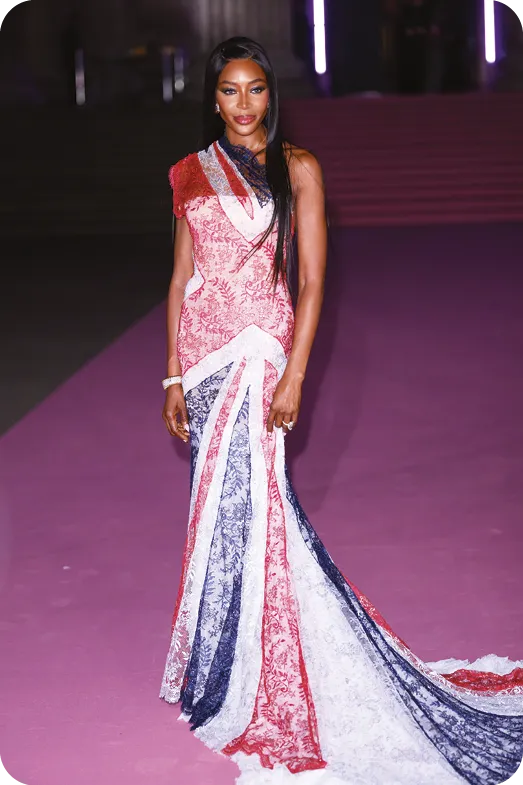
Naomi Campbell at the British Museum ball, 2025.
Ressource affichée de l'autre côté.
Faites défiler pour voir la suite.
Faites défiler pour voir la suite.
PATH A
B1
1-A
What did the director of the British Museum
suggest for the 2026 ball? Why?
2-A
Why did some people think the idea was
"in poor taste"?
3-A
What does Nick Groom think the museum
should do, and why?
Ressource affichée de l'autre côté.
Faites défiler pour voir la suite.
Faites défiler pour voir la suite.
PATH B
B2
1-B
Find quotes showing how the Union Jack
can represent different values.
2-B
Why does the author mention "Operation
Raise the Colours" and "Britain First"?
3-B
What point is Nick Groom making about
national symbols and history?
Ressource affichée de l'autre côté.
Faites défiler pour voir la suite.
Faites défiler pour voir la suite.
Let's talk this out!
4
Share your findings and sum up the controversy. What does it reveal about the meaning of the Union Jack today?
5
In your opinion, how should institutions balance celebration, history, and politics when using national symbols?
Ressource affichée de l'autre côté.
Faites défiler pour voir la suite.
Faites défiler pour voir la suite.
Plan the prom!
You are part of the team of students planning the school's prom, and someone has suggested a Union Jack theme. In groups, discuss whether to go ahead with the theme. Share the main concerns and arguments and decide together on a recommendation to present to the principal.
You are part of the team of students planning the school's prom, and someone has suggested a Union Jack theme. In groups, discuss whether to go ahead with the theme. Share the main concerns and arguments and decide together on a recommendation to present to the principal.