Unit 3
Activity 1
What lies behind the redline?
Ressource affichée de l'autre côté.
Faites défiler pour voir la suite.
Faites défiler pour voir la suite.
1 Mapping inequality
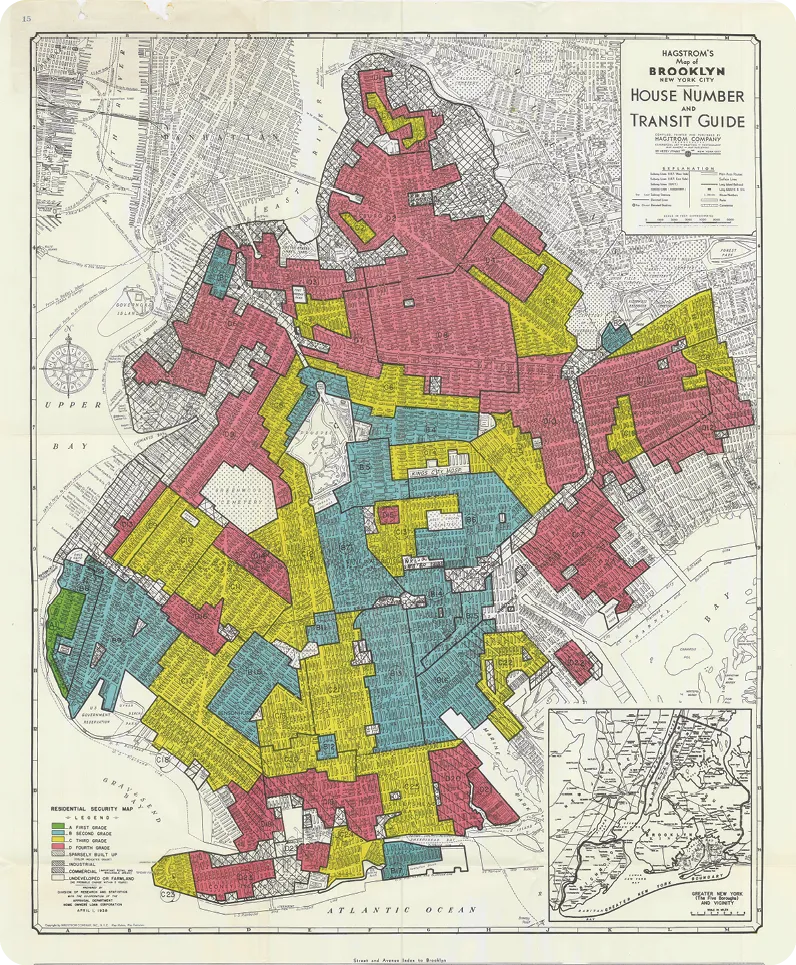
The Home Owners' Loan Corporation map of Brooklyn, 1938.
Vidéo associée
From 0:00 to 2:19Ressource affichée de l'autre côté.
Faites défiler pour voir la suite.
Faites défiler pour voir la suite.
2
From redlined to gentrified
Titre audio £

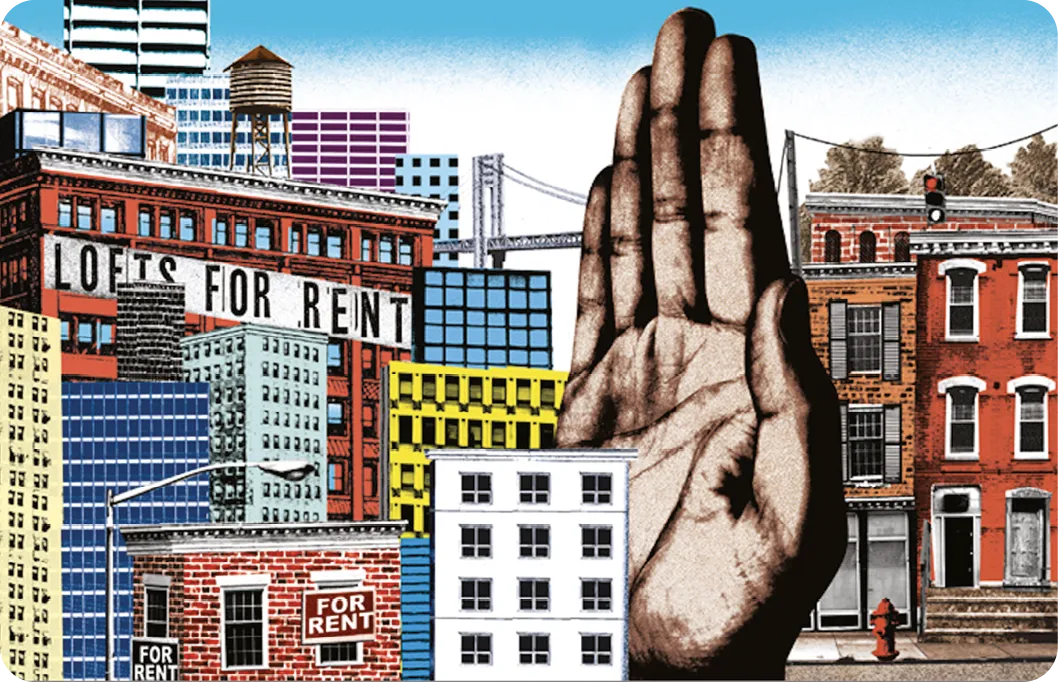
Doug Chayka, Don't Gentrify East New York, 2013.
Gentrification is the influx of higher-income, more educated, and mostly white residents into a traditionally low-income, minority neighborhood. Gentrification may increase access to physical and institutional improvements like grocery stores over mini-marts, public parks over empty lots, or coffee shops over liquor stores. While these changes can improve the living conditions and amenities of neighborhoods, they come at higher costs of living and are not equally accessible to all residents, especially low-income and racial/ethnic minorities.
Why do communities gentrify? Historically redlined areas often exhibit a “rent gap” – the difference between the potential value of the property and the current prices of housing. The prime location of urban housing paired with historical underinvestment and low rent prices make them attractive to young career professionals, developers, and investors looking to capitalize on the gap in property values. In San Francisco, 87% of neighborhoods undergoing gentrification were once redlined as “hazardous.”
Why do communities gentrify? Historically redlined areas often exhibit a “rent gap” – the difference between the potential value of the property and the current prices of housing. The prime location of urban housing paired with historical underinvestment and low rent prices make them attractive to young career professionals, developers, and investors looking to capitalize on the gap in property values. In San Francisco, 87% of neighborhoods undergoing gentrification were once redlined as “hazardous.”
Ressource affichée de l'autre côté.
Faites défiler pour voir la suite.
Faites défiler pour voir la suite.
Questions
1
Watch the video. List key dates in the history of redlining. How did these government decisions affect the mapping of cities?
2
Explain the meaning of the different colors on the map. What does it show about the U.S. cities in the 1930s? What do the colors represent?
3
Read the text. Note the definition of gentrification. Why does gentrification often happen in previously redlined neighborhoods?
Ressource affichée de l'autre côté.
Faites défiler pour voir la suite.
Faites défiler pour voir la suite.
Background check
How has redlining impacted cities and their inhabitants and what consequences are still visible today?Ressource affichée de l'autre côté.
Faites défiler pour voir la suite.
Faites défiler pour voir la suite.
Gentrification comes from gentry, a word for people of higher social status. In the UK, the “landed gentry” were landowners who lived from the renting income of their properties.
Ressource affichée de l'autre côté.
Faites défiler pour voir la suite.
Faites défiler pour voir la suite.
Choose a word related to housing, which you've read or heard in this activity (redlining, rent, neighborhood…). Give your classmates a definition of the word and see if they can guess it!
Une erreur sur la page ? Une idée à proposer ?
Nos manuels sont collaboratifs, n'hésitez pas à nous en faire part.
j'ai une idée !
Oups, une coquille