
Unit 4
Book Club
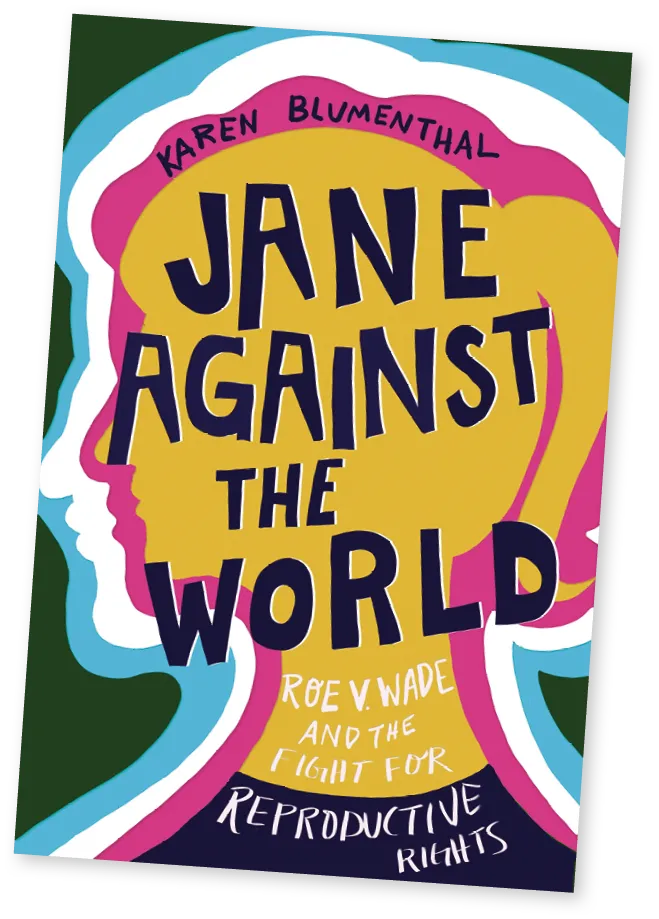
Jane Against the World
Ressource affichée de l'autre côté.
Faites défiler pour voir la suite.
Faites défiler pour voir la suite.
Norma McCorvey, aka Jane Roe, was a Texan woman in her early 20s who
wanted to terminate her pregnancy. In Texas, abortion was only permitted
if the pregnancy endangered the future mother's life, so she gave birth and
put the child up for adoption. Norma became the emblematic figure of the
Roe v. Wade case, led by lawyers Linda Coffee and Sarah Weddington, who
wanted to challenge anti-abortion laws.

Ressource affichée de l'autre côté.
Faites défiler pour voir la suite.
Faites défiler pour voir la suite.
Texte
Jane Against the World
Sarah Weddington is a lawyer. She is pleading...
At 10 a.m. the court's marshal announced, “The Honorable, the Chief Justice and the Associate Justices of the Supreme Court of the United States!” Velvet curtains parted and the justices entered as the marshals continued the traditional chant: Oyez! Oyez! Oyez! All persons having business before the Honorable, The Supreme Court of the United States, are admonished to draw near and give their attention, for the Court is now sitting. God Save the United States and this Honorable Court!
A few minutes later, Chief Justice Warren Burger called on Weddington to begin. She had been nervous as she waited, but as she began her argument with “Mr. Chief Justice and may it please the court,” she fell into her element. Her voice was strong, her pace measured, and her Texas accent in gear. She explained the facts of the case, how the federal court had found that the Texas law was too vague and that it violated a woman's right to end a pregnancy, but that the court had refused to block the state from enforcing the law. She was detailing Jane Roe's desire for an abortion when the chief justice cut in: Hadn't the recent Vuitch case settled some of the questions?
Weddington had practiced for this and was ready: The two laws were not comparable, she answered. The Texas law allowed for abortions only to save a woman's life, while the Washington, D.C., law was much broader, allowing abortion to preserve the woman's health.
“A doctor in our state does not know whether he can perform an abortion only when death is imminent or when the woman's life would be shortened,” she said. “He does not know if the death must be certain, or if it could be an increase in the probability of her death.”
Just recently, she told the court, the state's highest criminal court, the Texas Court of Criminal Appeals, upheld a doctor's conviction for performing an abortion. The state court, citing Vuitch, had ruled that the state's law wasn't vague at all. It completely ignored the three-judge federal court's ruling in Roe. Despite that Roe ruling, doctors weren't performing abortions, and hundreds of women were traveling to New York and other places to end pregnancies.
As the justices asked more about the Texas law, she made another point: Because Texas women aren't charged with a crime for seeking an abortion, they had no grounds to ask a state court to hear their plea for an abortion, even in cases of rape or incest or danger to their health, irreparably injuring them. Instead, their only option was to ask a federal court to find the law unconstitutional.
Weddington was on a roll now, and she quickly pivoted into an important point she wanted to make – the painful impact of an unwanted pregnancy. Students who are pregnant, she said, must drop out. Pregnant women are often forced to quit their jobs. They aren't eligible for unemployment compensation, and they aren't required to be rehired. Single moms may be unable to provide for their existing children.
Thus, she said, pregnancy is one of the most significant factors in a woman's life. “It disrupts her body, it disrupts her education, it disrupts her employment, and it often disrupts her entire family life,” she went on. And because of that impact, “she should be allowed to make the choice as to whether to continue or to terminate her pregnancy.”
As she continued, Justice Potter Stewart, one of the more senior justices, interrupted her to gently urge her to get to the legal issues. “You've told us about the important impact of this law, and you made a very eloquent policy argument against it,” he said. “And I trust you are going to get to what provisions of the Constitution you rely on.”
Quickly, she cited the 1965 Griswold decision and its reliance on a right to privacy. She argued that women had a right to choose whether to bear a child under the Ninth Amendment, two clauses of the Fourteenth Amendment, “and a variety of others.”
“And anything else that might have been...?” Justice Stewart asked.
“Right,” she responded, laughing at her effort to try any legal possibilities.
Weddington struggled, however, to answer questions about how far along into a pregnancy an abortion could be performed. She tried to say that question wasn't before the court, but Justice Byron White wasn't accepting that. He asked about her constitutional position on that, and she again avoided an answer. Late pregnancy might be an issue, she said, but she attributed that to an emotional response rather than a constitutional reason.
“Emotional response by whom?” White queried.
At 10 a.m. the court's marshal announced, “The Honorable, the Chief Justice and the Associate Justices of the Supreme Court of the United States!” Velvet curtains parted and the justices entered as the marshals continued the traditional chant: Oyez! Oyez! Oyez! All persons having business before the Honorable, The Supreme Court of the United States, are admonished to draw near and give their attention, for the Court is now sitting. God Save the United States and this Honorable Court!
A few minutes later, Chief Justice Warren Burger called on Weddington to begin. She had been nervous as she waited, but as she began her argument with “Mr. Chief Justice and may it please the court,” she fell into her element. Her voice was strong, her pace measured, and her Texas accent in gear. She explained the facts of the case, how the federal court had found that the Texas law was too vague and that it violated a woman's right to end a pregnancy, but that the court had refused to block the state from enforcing the law. She was detailing Jane Roe's desire for an abortion when the chief justice cut in: Hadn't the recent Vuitch case settled some of the questions?
Weddington had practiced for this and was ready: The two laws were not comparable, she answered. The Texas law allowed for abortions only to save a woman's life, while the Washington, D.C., law was much broader, allowing abortion to preserve the woman's health.
“A doctor in our state does not know whether he can perform an abortion only when death is imminent or when the woman's life would be shortened,” she said. “He does not know if the death must be certain, or if it could be an increase in the probability of her death.”
Just recently, she told the court, the state's highest criminal court, the Texas Court of Criminal Appeals, upheld a doctor's conviction for performing an abortion. The state court, citing Vuitch, had ruled that the state's law wasn't vague at all. It completely ignored the three-judge federal court's ruling in Roe. Despite that Roe ruling, doctors weren't performing abortions, and hundreds of women were traveling to New York and other places to end pregnancies.
As the justices asked more about the Texas law, she made another point: Because Texas women aren't charged with a crime for seeking an abortion, they had no grounds to ask a state court to hear their plea for an abortion, even in cases of rape or incest or danger to their health, irreparably injuring them. Instead, their only option was to ask a federal court to find the law unconstitutional.
Weddington was on a roll now, and she quickly pivoted into an important point she wanted to make – the painful impact of an unwanted pregnancy. Students who are pregnant, she said, must drop out. Pregnant women are often forced to quit their jobs. They aren't eligible for unemployment compensation, and they aren't required to be rehired. Single moms may be unable to provide for their existing children.
Thus, she said, pregnancy is one of the most significant factors in a woman's life. “It disrupts her body, it disrupts her education, it disrupts her employment, and it often disrupts her entire family life,” she went on. And because of that impact, “she should be allowed to make the choice as to whether to continue or to terminate her pregnancy.”
As she continued, Justice Potter Stewart, one of the more senior justices, interrupted her to gently urge her to get to the legal issues. “You've told us about the important impact of this law, and you made a very eloquent policy argument against it,” he said. “And I trust you are going to get to what provisions of the Constitution you rely on.”
Quickly, she cited the 1965 Griswold decision and its reliance on a right to privacy. She argued that women had a right to choose whether to bear a child under the Ninth Amendment, two clauses of the Fourteenth Amendment, “and a variety of others.”
“And anything else that might have been...?” Justice Stewart asked.
“Right,” she responded, laughing at her effort to try any legal possibilities.
Weddington struggled, however, to answer questions about how far along into a pregnancy an abortion could be performed. She tried to say that question wasn't before the court, but Justice Byron White wasn't accepting that. He asked about her constitutional position on that, and she again avoided an answer. Late pregnancy might be an issue, she said, but she attributed that to an emotional response rather than a constitutional reason.
“Emotional response by whom?” White queried.
Ressource affichée de l'autre côté.
Faites défiler pour voir la suite.
Faites défiler pour voir la suite.
a) Find elements
showing the traditions
of the Supreme Court.
Ressource affichée de l'autre côté.
Faites défiler pour voir la suite.
Faites défiler pour voir la suite.
b) How do Sarah's
feelings evolve as she
addresses the Court?
Ressource affichée de l'autre côté.
Faites défiler pour voir la suite.
Faites défiler pour voir la suite.
c) What case is Sarah
pleading here?
Ressource affichée de l'autre côté.
Faites défiler pour voir la suite.
Faites défiler pour voir la suite.
d) What phrases
show that Sarah
Weddington is well-prepared
for the trial?
Ressource affichée de l'autre côté.
Faites défiler pour voir la suite.
Faites défiler pour voir la suite.
e) What are Texan
women obliged to do if
they want to terminate
their pregnancy?
What problems could
this cause?
Ressource affichée de l'autre côté.
Faites défiler pour voir la suite.
Faites défiler pour voir la suite.
f) Can women have
access to an abortion
if they are pregnant
due to sexual abuse?
Ressource affichée de l'autre côté.
Faites défiler pour voir la suite.
Faites défiler pour voir la suite.
g) Using your own
words, explain
the impact of an
unwanted pregnancy.
Ressource affichée de l'autre côté.
Faites défiler pour voir la suite.
Faites défiler pour voir la suite.
h) Focus on the male
justices. How do they
treat Sarah?
Ressource affichée de l'autre côté.
Faites défiler pour voir la suite.
Faites défiler pour voir la suite.
i) How does Sarah use
the Constitution to
support her cause?
Ressource affichée de l'autre côté.
Faites défiler pour voir la suite.
Faites défiler pour voir la suite.
j) Focus on the
verbs. What do they
reveal about Sarah's
experience during the
hearing?
Ressource affichée de l'autre côté.
Faites défiler pour voir la suite.
Faites défiler pour voir la suite.
Karen Blumenthal (1959-2020) was born in Texas and worked as a financial
journalist for The Wall Street Journal for 25 years. She began writing nonfiction for young adults when her own daughters started reading and
she realized few non-fiction books existed for this audience. Her books
include Let Me Play: The Story of Title IX: The Law That Changed the Future of Girls in America (2005) and Bonnie and Clyde: The Making of a Legend (2018), as well as biographies of Hillary Rodham Clinton and Steve Jobs.


Ressource affichée de l'autre côté.
Faites défiler pour voir la suite.
Faites défiler pour voir la suite.
Interview on the court steps
After the day's hearing, a journalist interviews Sarah Weddington in front of the Court, asking how the proceedings went and how she's feeling about the case's outcome. Write the news article featuring the interview, including a headline, an introduction and quotes.
After the day's hearing, a journalist interviews Sarah Weddington in front of the Court, asking how the proceedings went and how she's feeling about the case's outcome. Write the news article featuring the interview, including a headline, an introduction and quotes.
Une erreur sur la page ? Une idée à proposer ?
Nos manuels sont collaboratifs, n'hésitez pas à nous en faire part.
j'ai une idée !
Oups, une coquille