Vue papier
Découvrez la vue papier en cliquant ici
Case Study 10
Axe 4
Objet d'étude 4
Ludic Luddites
Ressource affichée de l'autre côté.
Faites défiler pour voir la suite.
Faites défiler pour voir la suite.
Write a manifesto to unplug your club.
Your school's educational board is worried about the overuse of smartphones and the impact of social media on students. They want everyone to unplug and reconnect, so they're asking for your help to launch a new club called the Ludic Luddites! Write the club's manifesto: explain its values, rules, and activities.How will you inspire your classmates to unplug?

Ressource affichée de l'autre côté.
Faites défiler pour voir la suite.
Faites défiler pour voir la suite.
1
The original Luddites
The original Luddites
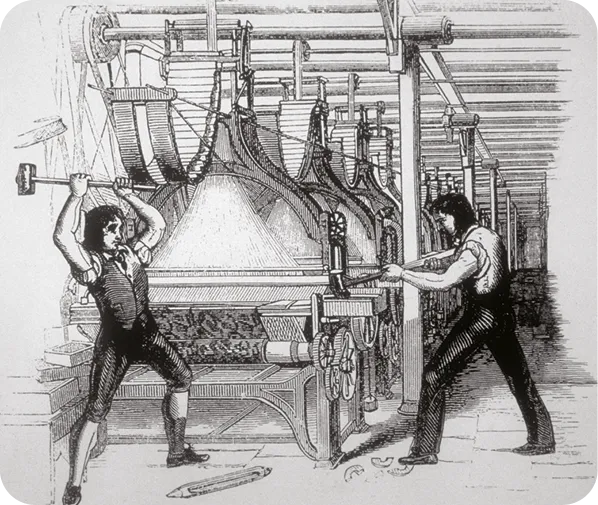
On December 15, 1811, the London Statesman issued a warning about the state of the stocking industry in Nottingham. Twenty thousand textile workers had lost their jobs because of the incursion of automated machinery. In protest, the beleaguered workers had begun breaking into factories to smash the machines.
The workers destroying the lace frames were the group who called themselves Luddites, after Ned Ludd, a (likely fictional) knitting-frame apprentice near Leicester who was said to have rebelled against his boss by destroying a frame with a hammer. Today, the word “Luddite” is used as an insult to anyone resistant to technological innovation; it suggests ignoramuses, sticks in the mud, obstacles to progress. But a new book by the journalist and author Brian Merchant, titled “Blood in the Machine,” argues that Luddism stood not against technology. The book is a historical reconsideration of the movement and a gripping narrative of political resistance told in short vignettes. [...]
The book offers plenty of satisfying imagery for the twenty first-century reader experiencing techlash. Merchant argues that the message of Luddism is just as relevant today, as our lives become increasingly enmeshed with digital platforms, from TikTok to Uber and Instacart, that translate our labor and attention into profit, “overlaying a sort of psychic factory onto its workers' lives.” (Who hasn't at times wished to take a hammer to their MacBook?). The Luddites sought revenge against the innovation that was holding them hos- tage. In Merchant's telling, they were activists, punks, and masked celebrities standing up for the skilled working class, the successors to Robin Hood, another product of Nottingham. “Luddite” by that measure sounds like a compliment.
“Blood in the Machine” is being published just as we are facing a new wave of technological automation centering on artificial intelligence – which some, including the consulting firm McKinsey, have labelled the “Fourth Industrial Revolution.”
The workers destroying the lace frames were the group who called themselves Luddites, after Ned Ludd, a (likely fictional) knitting-frame apprentice near Leicester who was said to have rebelled against his boss by destroying a frame with a hammer. Today, the word “Luddite” is used as an insult to anyone resistant to technological innovation; it suggests ignoramuses, sticks in the mud, obstacles to progress. But a new book by the journalist and author Brian Merchant, titled “Blood in the Machine,” argues that Luddism stood not against technology. The book is a historical reconsideration of the movement and a gripping narrative of political resistance told in short vignettes. [...]
The book offers plenty of satisfying imagery for the twenty first-century reader experiencing techlash. Merchant argues that the message of Luddism is just as relevant today, as our lives become increasingly enmeshed with digital platforms, from TikTok to Uber and Instacart, that translate our labor and attention into profit, “overlaying a sort of psychic factory onto its workers' lives.” (Who hasn't at times wished to take a hammer to their MacBook?). The Luddites sought revenge against the innovation that was holding them hos- tage. In Merchant's telling, they were activists, punks, and masked celebrities standing up for the skilled working class, the successors to Robin Hood, another product of Nottingham. “Luddite” by that measure sounds like a compliment.
“Blood in the Machine” is being published just as we are facing a new wave of technological automation centering on artificial intelligence – which some, including the consulting firm McKinsey, have labelled the “Fourth Industrial Revolution.”
Ressource affichée de l'autre côté.
Faites défiler pour voir la suite.
Faites défiler pour voir la suite.

Ressource affichée de l'autre côté.
Faites défiler pour voir la suite.
Faites défiler pour voir la suite.
Step 1
1
Where does the term “Luddism” come from?
2
Why was Luddism considered an insult?
3
Why can Luddism be considered a compliment?
Action!
The name of the contest raises interest. Prepare a brief note explaining the meaning of the term “Luddite” in the context of each revolution.


Ressource affichée de l'autre côté.
Faites défiler pour voir la suite.
Faites défiler pour voir la suite.
Step 2
1
What is unusual about this group of students?
2
What role did Amanda play, and why?
3
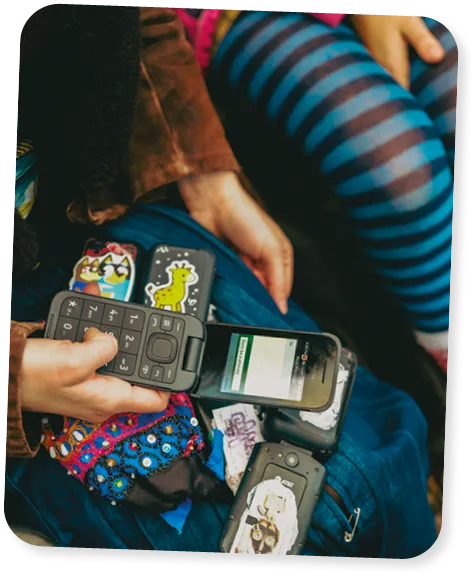
What alternatives did they find to their screens? What did they launch?
Action!
Record a voice memo about the NY Luddite Club for your friends, and try to convince them to join or start similar clubs.
Cliquez pour accéder à un module d'enregistrement audio
Enregistreur audio
Ressource affichée de l'autre côté.
Faites défiler pour voir la suite.
Faites défiler pour voir la suite.
3Luddite 2.0
Luddite 2.0
The Luddite Club was the subject of an article I wrote in 2022 – a story that, ironically, went viral. [...] Two years later, I'm still asked about them. People want to know: Did they stay on the Luddite path? Or were they dragged back into the tech abyss?
I put those questions to three of the original members. [...]
They said they still had disdain for social media platforms and the way they ensnare young people, pushing them to create picture-perfect online identities that have little to do with their authentic selves. They said they still relied on flip phones and laptops, rather than smartphones, as their main concessions to an increasingly digital world. And they reported that their movement was growing. [...] The Luddite Club is better organized these days, they said, with an uncluttered website to help spread the word. Ms. Lane, 19, is in the last stages of turning it into a registered nonprofit organization. [...]
Not every original Luddite Club member has been able to adhere to its anti-tech ideals since going off to college. Lola Shub [...] said in a phone interview that she had walked away from the Luddite path with some ambivalence. “I started using a smartphone again pretty much the day I started college,” she said. “I kind of had to. It's really hard to navigate the world without one.” [...] “It's constant access again,” Ms. Shub said. “It's the relief of knowing I can do things easier. I got Instagram, too, and it's been nice reconnecting with people on it. “But then you get used to it all, is the problem,” she continued. “I feel like I'm not trying as hard anymore. When I had the flip phone, I had to put in effort to get to places, to talk to people. Everything was a task. Now it's easy to do things.”
I put those questions to three of the original members. [...]
They said they still had disdain for social media platforms and the way they ensnare young people, pushing them to create picture-perfect online identities that have little to do with their authentic selves. They said they still relied on flip phones and laptops, rather than smartphones, as their main concessions to an increasingly digital world. And they reported that their movement was growing. [...] The Luddite Club is better organized these days, they said, with an uncluttered website to help spread the word. Ms. Lane, 19, is in the last stages of turning it into a registered nonprofit organization. [...]
Not every original Luddite Club member has been able to adhere to its anti-tech ideals since going off to college. Lola Shub [...] said in a phone interview that she had walked away from the Luddite path with some ambivalence. “I started using a smartphone again pretty much the day I started college,” she said. “I kind of had to. It's really hard to navigate the world without one.” [...] “It's constant access again,” Ms. Shub said. “It's the relief of knowing I can do things easier. I got Instagram, too, and it's been nice reconnecting with people on it. “But then you get used to it all, is the problem,” she continued. “I feel like I'm not trying as hard anymore. When I had the flip phone, I had to put in effort to get to places, to talk to people. Everything was a task. Now it's easy to do things.”
Ressource affichée de l'autre côté.
Faites défiler pour voir la suite.
Faites défiler pour voir la suite.
Step 3
1
How has the original Brooklyn Luddite Club evolved since the first article?
2
Find a quote showing how members feel about the impact of social media.
3
According to Lola Shub, what are the advantages and disadvantages of returning to smartphone use?
Action!
Write the outline for the Luddite Club's manifesto. Share its values and give ideas to support those who struggle with staying off technology.
Ressource affichée de l'autre côté.
Faites défiler pour voir la suite.
Faites défiler pour voir la suite.
Ready...
- Get acquainted with the Luddites through the ages.
- Prepare arguments on the benefits of being a “Luddite” during the fourth Industrial Revolution.
Steady...
- Prepare arguments on valuable life skills through clubs.
- Find a catchy name for your club.
Go!
- Create a digital presentation for the board, showing how this tech-free project builds life skills. Be ready to defend it!
Une erreur sur la page ? Une idée à proposer ?
Nos manuels sont collaboratifs, n'hésitez pas à nous en faire part.
j'ai une idée !
Oups, une coquille