Vue papier
Découvrez la vue papier en cliquant ici
Unit 10
Activity 3
Finding the balance
Ressource affichée de l'autre côté.
Faites défiler pour voir la suite.
Faites défiler pour voir la suite.
Group 1Protecting nature and culture
Group 1
Ressource affichée de l'autre côté.
Faites défiler pour voir la suite.
Faites défiler pour voir la suite.
Protecting nature and culture

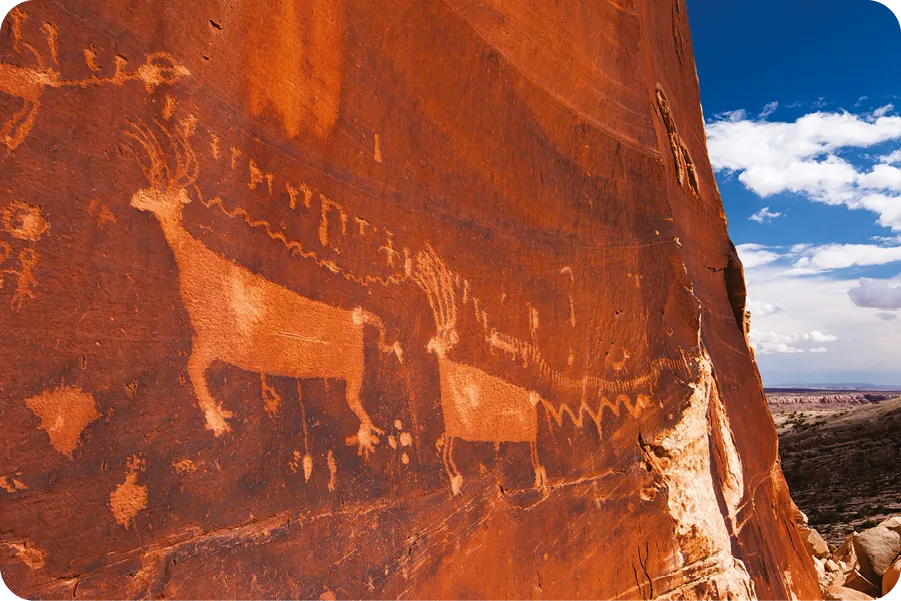
Native American petroglyphs in Comb Ridge, Bears Ears National Monument, Utah.
Increased park crowds have done permanent damage to both the environment and important cultural sites. Last year visitors etched their names into ancient petroglyphs within Texas' Big Bend National Park. The same year, California's Redwood National Park had to take strict measures to protect their flora, implementing huge fines to hikers for getting too close to Hyperion, the world's tallest known living tree – with shallow roots that are easily damaged by excessive foot traffic.
Hyperion was already in a closed area of the park but disobedient trekkers have gone off-piste in an effort to view the tree up close, leading to trampled trails, discarded human waste, and increased litter. The reckless abandon of rules makes park management harder than ever, especially as many U.S. National Parks are feeling the pressure of staff shortages.
Could technology help with this? Google thinks so. The tech giant unveiled updates to Google Maps this year to better help visitors locate attractions, campgrounds and trailheads within national parks.
As these tasks have traditionally been performed by park staff, this new tech could free up the time of rangers to provide more educational programs or more frequently patrol fragile landscapes to help ensure their protection. [...]
Some national parks are also moving towards a co-management model, allowing land to be jointly managed by park directors and Indigenous owners of the land. All national parks belong to Traditional Owners, and by allowing substantial input from Indigenous groups, land management can be improved and wildlife populations can be better protected, even in crowded parks. Indigenous knowledge can also help assist popular parks with wildlife protection, provide cultural educational programs to visitors, and enforce better custodianship of sacred sites.
Could technology help with this? Google thinks so. The tech giant unveiled updates to Google Maps this year to better help visitors locate attractions, campgrounds and trailheads within national parks.
As these tasks have traditionally been performed by park staff, this new tech could free up the time of rangers to provide more educational programs or more frequently patrol fragile landscapes to help ensure their protection. [...]
Some national parks are also moving towards a co-management model, allowing land to be jointly managed by park directors and Indigenous owners of the land. All national parks belong to Traditional Owners, and by allowing substantial input from Indigenous groups, land management can be improved and wildlife populations can be better protected, even in crowded parks. Indigenous knowledge can also help assist popular parks with wildlife protection, provide cultural educational programs to visitors, and enforce better custodianship of sacred sites.
Ressource affichée de l'autre côté.
Faites défiler pour voir la suite.
Faites défiler pour voir la suite.
Questions
You are in charge of one document.
1
How is the tourists' behavior described in your document?
2
How is this type of behavior endangering the national parks? What is particularly at risk?
3
What solutions are suggested to improve the situation? Explain their advantages and limits.
Let's talk this out!
4
Present your document to the other groups. What example strikes you the most? Why?
5
In your opinion, which of the solutions presented would be the most effective to protect the parks?
6
Do you have any other ideas to improve the national parks' experience for everyone?
Ressource affichée de l'autre côté.
Faites défiler pour voir la suite.
Faites défiler pour voir la suite.
➜ La traduction de « se blesser »
be injured : blessure physique souvent importante
If you approach a bison, you could be seriously injured.
be hurt : blessure physique, mais aussi émotionnelle
He hurt his back climbing the mountain side. The ranger hurt her feelings when he reminded her of the rules.
an injury (pl. injuries) : une blessure
a wound : une blessure cutanée (ou émotionnelle)
be injured : blessure physique souvent importante
If you approach a bison, you could be seriously injured.
be hurt : blessure physique, mais aussi émotionnelle
He hurt his back climbing the mountain side. The ranger hurt her feelings when he reminded her of the rules.
an injury (pl. injuries) : une blessure
a wound : une blessure cutanée (ou émotionnelle)
Ressource affichée de l'autre côté.
Faites défiler pour voir la suite.
Faites défiler pour voir la suite.
Write a newspaper article headline about a problem or event in one of the parks mentioned on this double page. Your classmates must guess which document it refers to.
Ressource affichée de l'autre côté.
Faites défiler pour voir la suite.
Faites défiler pour voir la suite.
Act out a conversation.
You are spending a day in a national park. Before starting your adventures, you are eager to know the basic rules to make the most of your time at this spectacular site. You go to a park ranger for tips and recommendations.
You are spending a day in a national park. Before starting your adventures, you are eager to know the basic rules to make the most of your time at this spectacular site. You go to a park ranger for tips and recommendations.
Ressource affichée de l'autre côté.
Faites défiler pour voir la suite.
Faites défiler pour voir la suite.
Exclu. numérique
Retrouvez des fiches activité pour chaque groupe.