Vue papier

Découvrez la vue papier en cliquant ici
Unit 10
Spotlight
Rewilding the land
Ressource affichée de l'autre côté.
Faites défiler pour voir la suite.
Faites défiler pour voir la suite.
Rewilding the land

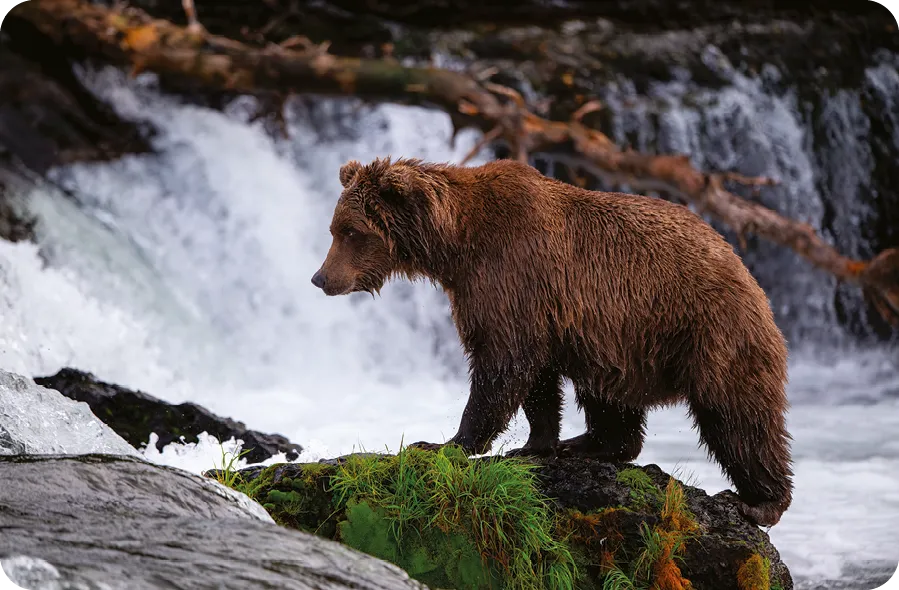
Grizzly bear in Katmai National Park.
In North Dakota, the National Parks Service (NPS) has dropped a plan that would have seen about 200 wild horses, descended from those belonging to Native American tribes who fought the 1876 Great Sioux War, rounded up and removed from Theodore Roosevelt National Park.
The scheme would have stripped the park of a cultural “emblem” of the future 26th U.S. President's time as a cattle rancher and hunter in the Dakota territory in the late 19th century, said the Republican North Dakota Senator John Hoeven, who helped secure their preservation.
Meanwhile, in Washington, NPS has partnered with U.S. Fish and Wildlife on a plan to reintroduce grizzly bears to the North Cascades ecosystem. The threatened species has not been seen in the area for more than a quarter-century.
“Our national parks are spectacular places that people expect to be set aside for wildlife, they expect wildlife to be there,” said Graham Taylor, north-west program manager for the National Parks Conservation Association (NPCA). “It's why we have multiple wilderness areas in the North Cascades, it's why we have big pristine national parks. They are supposed to be managed to protect their resources in perpetuity, and grizzly bears, all wildlife, are a resource of the parks. For one generation to have wildlife, and the next generation not, is not how they're supposed to be managed, so this really is the park service following their mission by protecting and trying to restore lost resources.” [...]
The [wild horses], directly descended from those ridden by Sioux chiefs in the 1876 Battle of Little Bighorn, had “the potential to damage fences used for wildlife management, trample or overgraze vegetation used by native wildlife species, contribute to erosion and soil-related impacts... and compete for food and water resources”, an environmental assessment found.
The scheme would have stripped the park of a cultural “emblem” of the future 26th U.S. President's time as a cattle rancher and hunter in the Dakota territory in the late 19th century, said the Republican North Dakota Senator John Hoeven, who helped secure their preservation.
Meanwhile, in Washington, NPS has partnered with U.S. Fish and Wildlife on a plan to reintroduce grizzly bears to the North Cascades ecosystem. The threatened species has not been seen in the area for more than a quarter-century.
“Our national parks are spectacular places that people expect to be set aside for wildlife, they expect wildlife to be there,” said Graham Taylor, north-west program manager for the National Parks Conservation Association (NPCA). “It's why we have multiple wilderness areas in the North Cascades, it's why we have big pristine national parks. They are supposed to be managed to protect their resources in perpetuity, and grizzly bears, all wildlife, are a resource of the parks. For one generation to have wildlife, and the next generation not, is not how they're supposed to be managed, so this really is the park service following their mission by protecting and trying to restore lost resources.” [...]
The [wild horses], directly descended from those ridden by Sioux chiefs in the 1876 Battle of Little Bighorn, had “the potential to damage fences used for wildlife management, trample or overgraze vegetation used by native wildlife species, contribute to erosion and soil-related impacts... and compete for food and water resources”, an environmental assessment found.
Ressource affichée de l'autre côté.
Faites défiler pour voir la suite.
Faites défiler pour voir la suite.
PATH A
B1
1-A
Pick out the names of the animals and
national parks mentioned in the text.
2-A
Find quotes showing why it is important
for wildlife to be reintroduced in the parks.
3-A
Focus on the end of the text. Explain the
impact of the presence of the wild horses
on both nature and park infrastructure.
Ressource affichée de l'autre côté.
Faites défiler pour voir la suite.
Faites défiler pour voir la suite.
PATH B
B1+
1-B
Why are wild horses important culturally
in Theodore Roosevelt National Park?
2-B
What happened to the National Parks Service's
plan to remove the wild horses? Find the
arguments for and against their reintroduction.
3-B
What does NPS and NPCA stand for?
How may their role and perspective differ?
Ressource affichée de l'autre côté.
Faites défiler pour voir la suite.
Faites défiler pour voir la suite.
Let's talk this out!
4
Share your findings and list the impacts rewilding efforts might have on local communities, cultural heritage and the environment.
5
What do you think are the main challenges of balancing wildlife protection and human activities in national parks?
Ressource affichée de l'autre côté.
Faites défiler pour voir la suite.
Faites défiler pour voir la suite.
A day in the life of a park ranger
You are a park ranger working in a national park where rewilding efforts are underway. Write a diary entry about a typical day in your life. Explain the importance of reintroducing wildlife and describe the challenges you face protecting it.
You are a park ranger working in a national park where rewilding efforts are underway. Write a diary entry about a typical day in your life. Explain the importance of reintroducing wildlife and describe the challenges you face protecting it.