
Case Study 16
Axe 6
Objet d'étude 3
This is the Ivy League
Ressource affichée de l'autre côté.
Faites défiler pour voir la suite.
Faites défiler pour voir la suite.
Deliver a commencement speech.
You have been chosen to deliver the commencement speech at your Ivy League graduation ceremony. You are not the traditional top student, but someone who has lived the challenges behind the American Dream: an immigrant, a second-generation student, or someone who had to fight to belong. But you made it there. It is your moment to inspire others!
You have been chosen to deliver the commencement speech at your Ivy League graduation ceremony. You are not the traditional top student, but someone who has lived the challenges behind the American Dream: an immigrant, a second-generation student, or someone who had to fight to belong. But you made it there. It is your moment to inspire others!


Ressource affichée de l'autre côté.
Faites défiler pour voir la suite.
Faites défiler pour voir la suite.
1
The making of the Ivy League
Titre audio £


The Ivy League is known for academic excellence,
prestige, and a long history of tradition. It includes
eight private universities in the Northeastern U.S.,
famous for their tough admissions, top-notch
professors,
and impressive alumni: Over a third of
U.S. Presidents attended an Ivy League school, and
together, these institutions have an impressive share
of Nobel Prize winners. [...]
The history of the Ivy League dates back to the founding of some of the oldest colleges in America. These eight Northeastern American institutions have evolved from colonial colleges to the prestigious universities we know today, maintaining a reputation for academic rigour and social elitism.
The origin of the term “Ivy League” dates back to the 1930s, when a sports journalist used the phrase “ivy colleges” to describe the inter-college rivalry which existed between these eight historic schools with a common athletic programs. He was picking on a tradition of planting ivy that took place at many universities during the nineteenth century. The term became popular and in 1954, the “Ivy League” athletic conference was officially formed.
The sporting origins of the term limit the membership to those eight universities with shared history and geography, making it an exclusive club. [...]
However, despite the highly selective nature of Ivy League schools, some are among America's biggest universities and thousands of students head to them every year. [...]
Although Ivy League are among the most expensive of U.S. universities with annual fees typically ranging between $50,000 and $70,000 a year, all the Ivy League schools offer generous, needs- based, grants and scholarships to every student, and they are all designed so that no student needs to take a loan. Despite the expensive fees of the Ivy League, they might prove one of the cheapest options.
The history of the Ivy League dates back to the founding of some of the oldest colleges in America. These eight Northeastern American institutions have evolved from colonial colleges to the prestigious universities we know today, maintaining a reputation for academic rigour and social elitism.
The origin of the term “Ivy League” dates back to the 1930s, when a sports journalist used the phrase “ivy colleges” to describe the inter-college rivalry which existed between these eight historic schools with a common athletic programs. He was picking on a tradition of planting ivy that took place at many universities during the nineteenth century. The term became popular and in 1954, the “Ivy League” athletic conference was officially formed.
The sporting origins of the term limit the membership to those eight universities with shared history and geography, making it an exclusive club. [...]
However, despite the highly selective nature of Ivy League schools, some are among America's biggest universities and thousands of students head to them every year. [...]
Although Ivy League are among the most expensive of U.S. universities with annual fees typically ranging between $50,000 and $70,000 a year, all the Ivy League schools offer generous, needs- based, grants and scholarships to every student, and they are all designed so that no student needs to take a loan. Despite the expensive fees of the Ivy League, they might prove one of the cheapest options.
Ressource affichée de l'autre côté.
Faites défiler pour voir la suite.
Faites défiler pour voir la suite.
Step 1
1
Find quotes that show that the Ivy League is prestigious.
2
Where does the term “Ivy League” come from?
3
Identify elements that highlight both the exclusivity and the accessibility of the Ivy League.
Action!
Write the opening lines of your speech, referring to the history of the Ivy League and showing why it is an attractive place to study.
Ressource affichée de l'autre côté.
Faites défiler pour voir la suite.
Faites défiler pour voir la suite.
2Challenging the American Dream

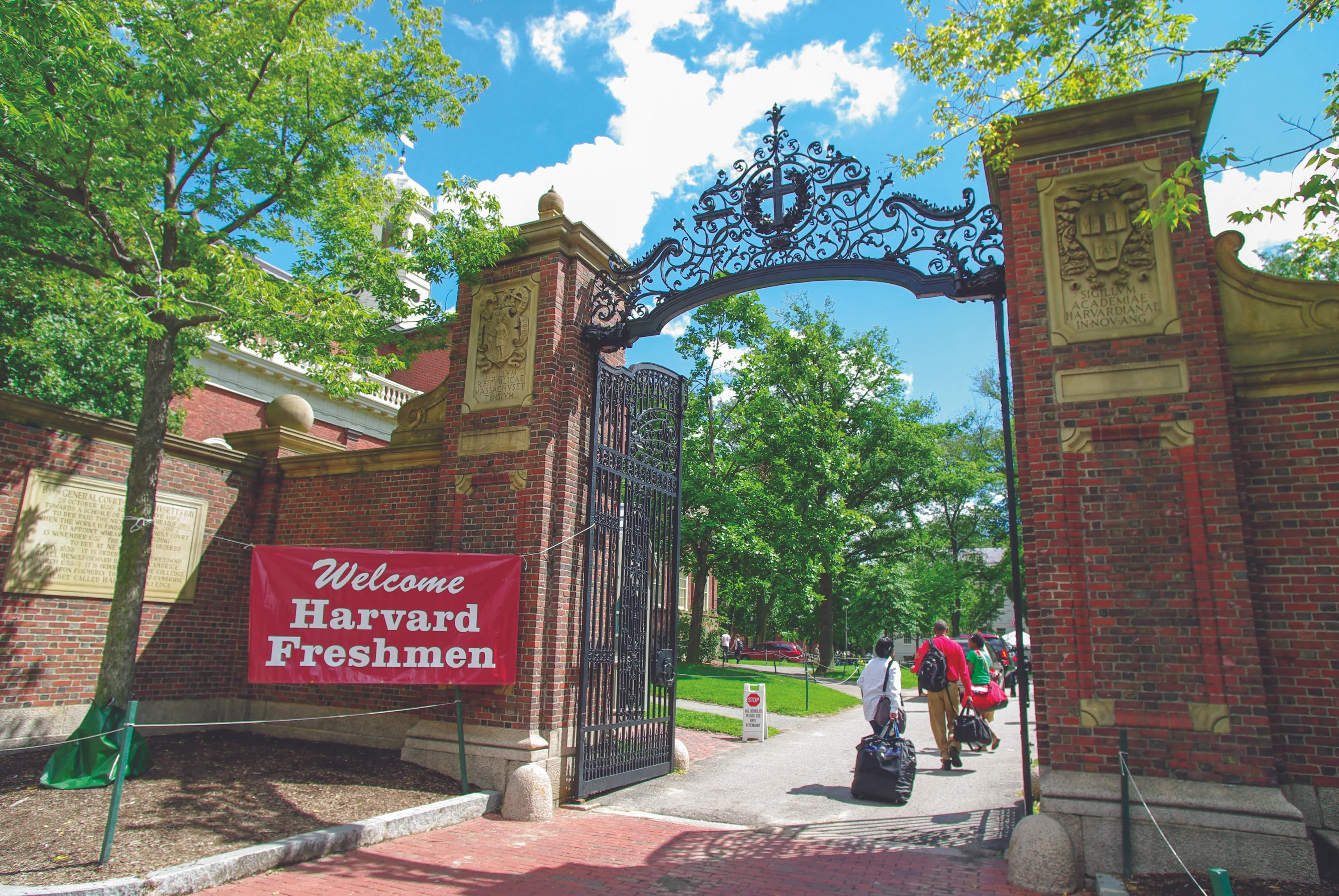
Gate at Harvard Yard in Cambridge, Massachusetts.
Vidéo associée
Ressource affichée de l'autre côté.
Faites défiler pour voir la suite.
Faites défiler pour voir la suite.
Step 2
1
How do elite colleges support social mobility?
2
What are the limitations of that system?
3
Which universities are presented as alternatives to elite schools, and why?
Action!
Create a timeline of your journey to become an Ivy League student. What opportunities or difficulties influenced your choice?
Ressource affichée de l'autre côté.
Faites défiler pour voir la suite.
Faites défiler pour voir la suite.
3Abraham Verghese's commencement speech

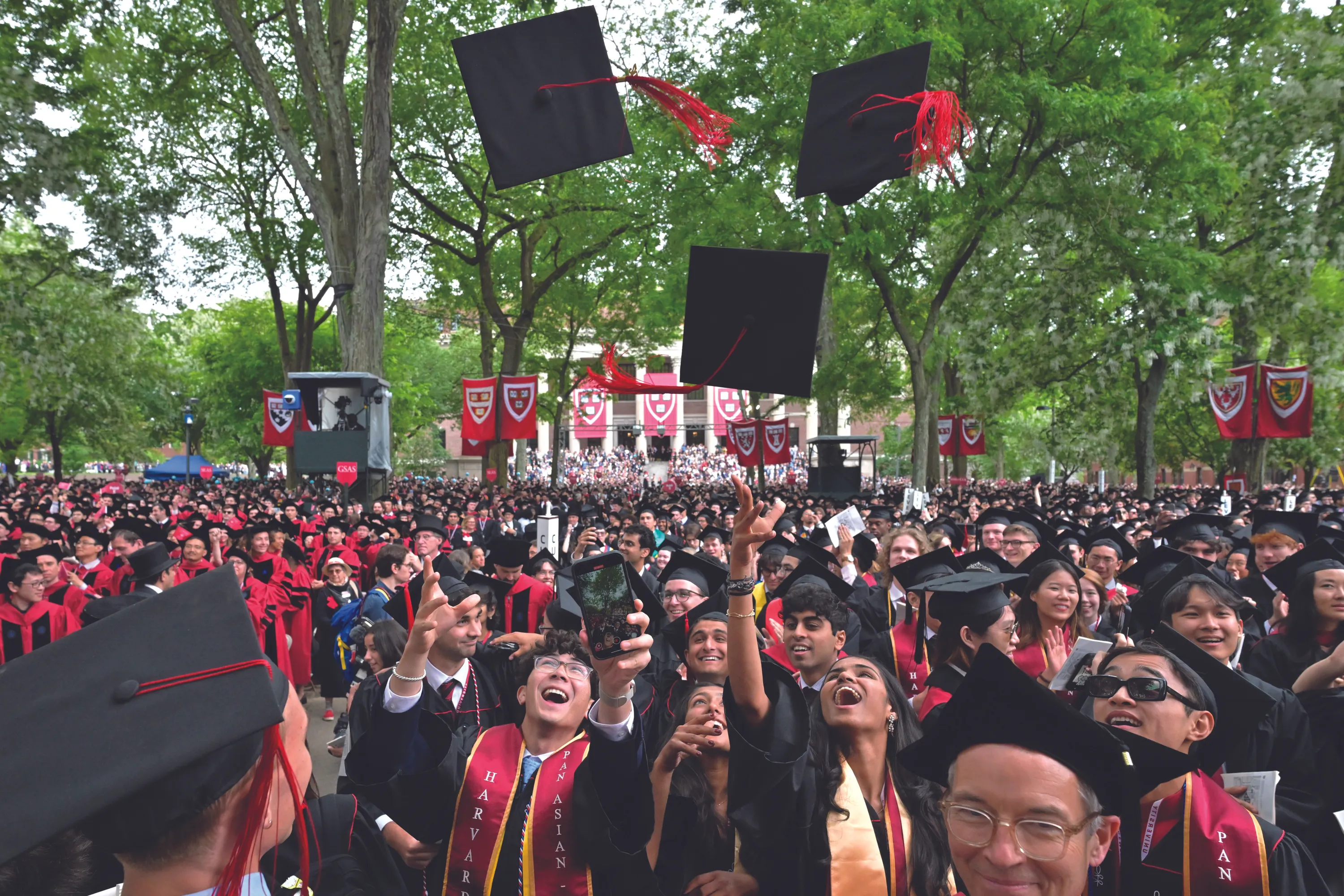
Students celebrate receiving their degrees at Harvard
University's 374th graduation ceremony, 2025.
Vidéo associée
From 0:00 to 2:33, 5:00 to 7:15 and 10:00 to 12:30Ressource affichée de l'autre côté.
Faites défiler pour voir la suite.
Faites défiler pour voir la suite.
Step 3
1
Watch from 0:00 to 2:30. How does Verghese open his speech to engage his audience?
2
Watch from 5:00 to 7:15. What personal story does Verghese share to illustrate the challenges faced on the path to success?
3
Watch from 10:00 to 12:30. How does Verghese conclude his speech? What rhetorical devices does he use to inspire his audience?
Action!
List the strategies Verghese uses that you plan to incorporate in your own speech to capture your audience's attention.
Ressource affichée de l'autre côté.
Faites défiler pour voir la suite.
Faites défiler pour voir la suite.
Ready...
- Review your notes and key information from the documents. Focus on the history of Ivy League admissions and the promises and limitations of the American Dream.
Steady...
- Create your speech outline, combining background information, personal stories, and reflections on the American Dream. Organize your ideas clearly and plan how to use persuasive techniques.
Go!
- Deliver your commencement speech with confidence and impact!
Une erreur sur la page ? Une idée à proposer ?
Nos manuels sont collaboratifs, n'hésitez pas à nous en faire part.
j'ai une idée !
Oups, une coquille