Vue papier

Découvrez la vue papier en cliquant ici
Unit 1
Book Club
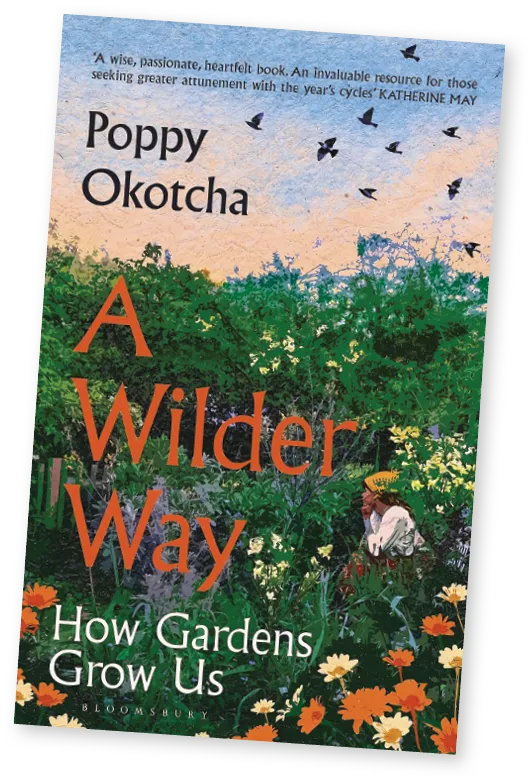
A Wilder Way: How Gardens Grow Us
Ressource affichée de l'autre côté.
Faites défiler pour voir la suite.
Faites défiler pour voir la suite.
In A Wilder Way: How Gardens Grow Us, Poppy Okotcha invites readers into
her small garden in Devon to follow a year of growth and change. Month
by month, she shares her daily experiences as a gardener (at once magical
and ordinary), showing how nature can teach us to live more slowly and
sustainably. In this excerpt, she looks back on her journey from city life and
the fashion world to a new, grounded way of living connected to the earth.
Ressource affichée de l'autre côté.
Faites défiler pour voir la suite.
Faites défiler pour voir la suite.
Texte
A Wilder Way
In May 1996, I was born in a hospital in Hampstead, to my Nigerian father and white British mother.
At first I was raised in North London, where strangely, although I was so small in such a large urban sprawl, my earliest memories are of the natural world. The non-human world has always played a significant role in my life. In the park down the road from where we lived, I discovered what to mini-me was a giant hedge. I'd crawl inside it and play house, clearing out separate pockets for a bedroom, bathroom and kitchen. I'd invite my mum to visit, and she'd shuffle into my new hedge-home on hands and knees and have a cup of tea like a good house guest. We had a buddleia, or butterfly bush, at the end of our modest urban garden, coated in peacock butterflies, and I would go hunting for slugs, snails and spiders; I loved to inspect their tiny bodies, so different to mine, through which they experienced the world. [...]
As is typical, in my late teens I drifted away from all this in the search of independence and adventure. I ended up working as a model, travelling the world, which sounds more glamorous than it was. I was lucky, it gave me the financial security I had craved and experiences that led me to where I am today. For most of that time I lived in London with my boyfriend Toby, who is now my husband, on a canal boat. Our floating home became my retreat from an unpredictable job that I found increasingly challenging.
As I became more invested in the climate movement, I started to see the hypocrisy in how I was living. I was attending demonstrations and ranting about green futures. I ate vegan to reduce my carbon footprint and harm to life, I was trying to consume more “consciously”. I felt and thought about my impact all the time. Meanwhile, I was working as a model in the fashion industry, helping to sell clothes to people who often didn't need them. As my career progressed, more and more of those clothes were coming out of sweat factories that cause all sorts of unimaginable harm: from the vulnerable humans working inside them who are mistreated, exploited and poisoned, to the life in the waters, whose habitat is destroyed by the factories' pumped-out pollution. So much destruction. I couldn't help but begin to see the connections between the global fashion complex I was engaged with now and the industrial farming I had come to understand as a teenager. I was flying around the world to participate in this business. So much air travel was making me sick, and it was making the planet sick too. I discovered that just one flight could easily wipe the carbon saved from a whole year of me living as a vegan.
As the bigger picture gradually came into focus, I began to grasp the utter insanity of it all. I had no option but to make a change, because what I was doing was not only self-harm, it was ecocide. As a fashion model, I was more than complicit in the systems of harm the industry was fuelled by – I was actively helping it to grow, validating it by being its face. [...]
Searching for a new path, I rediscovered the power in growing food. This became a way to participate in a culture of care, to nourish my body and my mind, reconnect with community, the seasons and the living world. It was a means of contributing to building healthy soils and ecosystems, rather than destroying them. I could explore the possibilities of shifting to a more local, equitable food system and way of life. This was my first step on the path of detangling myself from a culture I could see was harming so many lives on Earth. I realised that while our gardens can feed us, they also tell us valuable tales of connection – we may think that we tend and grow them, while really gardens grow and change far more in us. I wanted to share what I was learning and to leave the industrial fashion industry far behind. This change in direction brought with it a desire to move, to find somewhere to really root into and call home. Somewhere I could grow gardens. [...]
A couple of years later, I joined the community garden that I now work in, a fifteen-minute bike ride from home along winding lanes wrapped in overgrown hedgerows. The roughly 600 square metres of market garden sits within four acres of wider land which is managed for wildlife. I go there at least once a week; both it and my fellow gardeners there have taught me as much, if not more, than my own garden. [...]
I want to help grow a world that I would be proud to pass on to my children, grandchildren and great-great-grandchildren. A world filled with the life that makes it possible for us to thrive. My contribution to that world so far has been grassroots, it's been in the garden.
This book tells the story of me and my garden, but it also tells the story of us as Earth's gardeners. I hope it offers inspiration and information for this transformative process of reconnecting and remembering that we are part of the living world.
At first I was raised in North London, where strangely, although I was so small in such a large urban sprawl, my earliest memories are of the natural world. The non-human world has always played a significant role in my life. In the park down the road from where we lived, I discovered what to mini-me was a giant hedge. I'd crawl inside it and play house, clearing out separate pockets for a bedroom, bathroom and kitchen. I'd invite my mum to visit, and she'd shuffle into my new hedge-home on hands and knees and have a cup of tea like a good house guest. We had a buddleia, or butterfly bush, at the end of our modest urban garden, coated in peacock butterflies, and I would go hunting for slugs, snails and spiders; I loved to inspect their tiny bodies, so different to mine, through which they experienced the world. [...]
As is typical, in my late teens I drifted away from all this in the search of independence and adventure. I ended up working as a model, travelling the world, which sounds more glamorous than it was. I was lucky, it gave me the financial security I had craved and experiences that led me to where I am today. For most of that time I lived in London with my boyfriend Toby, who is now my husband, on a canal boat. Our floating home became my retreat from an unpredictable job that I found increasingly challenging.
As I became more invested in the climate movement, I started to see the hypocrisy in how I was living. I was attending demonstrations and ranting about green futures. I ate vegan to reduce my carbon footprint and harm to life, I was trying to consume more “consciously”. I felt and thought about my impact all the time. Meanwhile, I was working as a model in the fashion industry, helping to sell clothes to people who often didn't need them. As my career progressed, more and more of those clothes were coming out of sweat factories that cause all sorts of unimaginable harm: from the vulnerable humans working inside them who are mistreated, exploited and poisoned, to the life in the waters, whose habitat is destroyed by the factories' pumped-out pollution. So much destruction. I couldn't help but begin to see the connections between the global fashion complex I was engaged with now and the industrial farming I had come to understand as a teenager. I was flying around the world to participate in this business. So much air travel was making me sick, and it was making the planet sick too. I discovered that just one flight could easily wipe the carbon saved from a whole year of me living as a vegan.
As the bigger picture gradually came into focus, I began to grasp the utter insanity of it all. I had no option but to make a change, because what I was doing was not only self-harm, it was ecocide. As a fashion model, I was more than complicit in the systems of harm the industry was fuelled by – I was actively helping it to grow, validating it by being its face. [...]
Searching for a new path, I rediscovered the power in growing food. This became a way to participate in a culture of care, to nourish my body and my mind, reconnect with community, the seasons and the living world. It was a means of contributing to building healthy soils and ecosystems, rather than destroying them. I could explore the possibilities of shifting to a more local, equitable food system and way of life. This was my first step on the path of detangling myself from a culture I could see was harming so many lives on Earth. I realised that while our gardens can feed us, they also tell us valuable tales of connection – we may think that we tend and grow them, while really gardens grow and change far more in us. I wanted to share what I was learning and to leave the industrial fashion industry far behind. This change in direction brought with it a desire to move, to find somewhere to really root into and call home. Somewhere I could grow gardens. [...]
A couple of years later, I joined the community garden that I now work in, a fifteen-minute bike ride from home along winding lanes wrapped in overgrown hedgerows. The roughly 600 square metres of market garden sits within four acres of wider land which is managed for wildlife. I go there at least once a week; both it and my fellow gardeners there have taught me as much, if not more, than my own garden. [...]
I want to help grow a world that I would be proud to pass on to my children, grandchildren and great-great-grandchildren. A world filled with the life that makes it possible for us to thrive. My contribution to that world so far has been grassroots, it's been in the garden.
This book tells the story of me and my garden, but it also tells the story of us as Earth's gardeners. I hope it offers inspiration and information for this transformative process of reconnecting and remembering that we are part of the living world.
Ressource affichée de l'autre côté.
Faites défiler pour voir la suite.
Faites défiler pour voir la suite.
a) Where did Poppy
spend her childhood,
and what is her
cultural heritage?
Ressource affichée de l'autre côté.
Faites défiler pour voir la suite.
Faites défiler pour voir la suite.
b) Where did she like
to play as a child,
and what did she like
doing there?
Ressource affichée de l'autre côté.
Faites défiler pour voir la suite.
Faites défiler pour voir la suite.
c) What job did she
have in her late teens?
Where did she live
at the time?
Ressource affichée de l'autre côté.
Faites défiler pour voir la suite.
Faites défiler pour voir la suite.
d) How did she feel
about her job? Why?
Ressource affichée de l'autre côté.
Faites défiler pour voir la suite.
Faites défiler pour voir la suite.
e) What aspects of
the fashion industry
does she criticise?
Ressource affichée de l'autre côté.
Faites défiler pour voir la suite.
Faites défiler pour voir la suite.
f) What did gardening
reconnect her with?
Ressource affichée de l'autre côté.
Faites défiler pour voir la suite.
Faites défiler pour voir la suite.
g) How did this
realisation impact
her life choices?
Ressource affichée de l'autre côté.
Faites défiler pour voir la suite.
Faites défiler pour voir la suite.
h) What kind of
garden does she
work at now?
Ressource affichée de l'autre côté.
Faites défiler pour voir la suite.
Faites défiler pour voir la suite.
i) What message does
she want to pass on
by sharing her story?
Ressource affichée de l'autre côté.
Faites défiler pour voir la suite.
Faites défiler pour voir la suite.
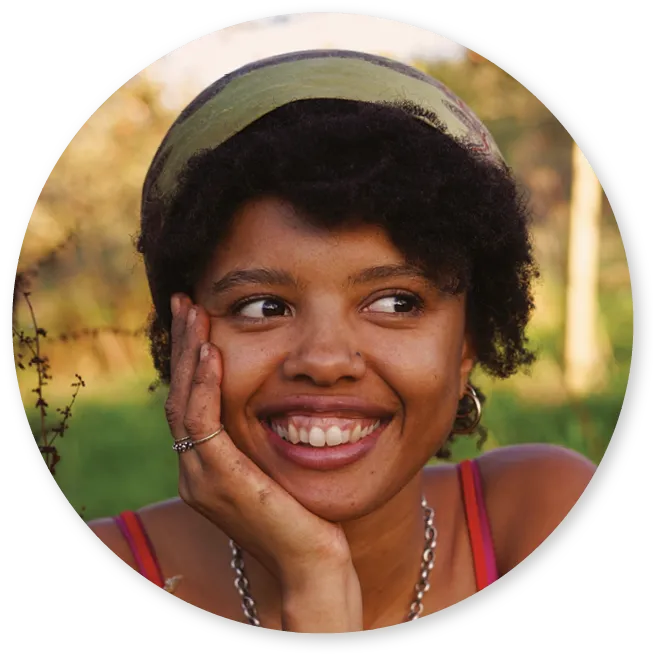
Poppy Okotcha is a British-Nigerian ecological gardener,
writer, and activist. She grew up between the English
countryside and South Africa, where she first learnt
to see gardens as magical, healing spaces. After starting
her career as a fashion model, she chose to change
direction and dedicate herself to sustainable living,
growing food, and sharing her knowledge with others.

Ressource affichée de l'autre côté.
Faites défiler pour voir la suite.
Faites défiler pour voir la suite.
Act out an interview with Poppy Okotcha.
A journalist for BBC Gardeners' World is interviewing Poppy about her journey from city life to community gardening. Act out the interview, answering questions with details from the text and your imagination. Don't forget to make the journalist react with surprise, admiration, and curiosity!
A journalist for BBC Gardeners' World is interviewing Poppy about her journey from city life to community gardening. Act out the interview, answering questions with details from the text and your imagination. Don't forget to make the journalist react with surprise, admiration, and curiosity!
Une erreur sur la page ? Une idée à proposer ?
Nos manuels sont collaboratifs, n'hésitez pas à nous en faire part.
j'ai une idée !
Oups, une coquille