Vue papier

Découvrez la vue papier en cliquant ici
Unit A
Activity 2
The mechanism of scapegoating
Ressource affichée de l'autre côté.
Faites défiler pour voir la suite.
Faites défiler pour voir la suite.
angt-unita-activity2.mp3
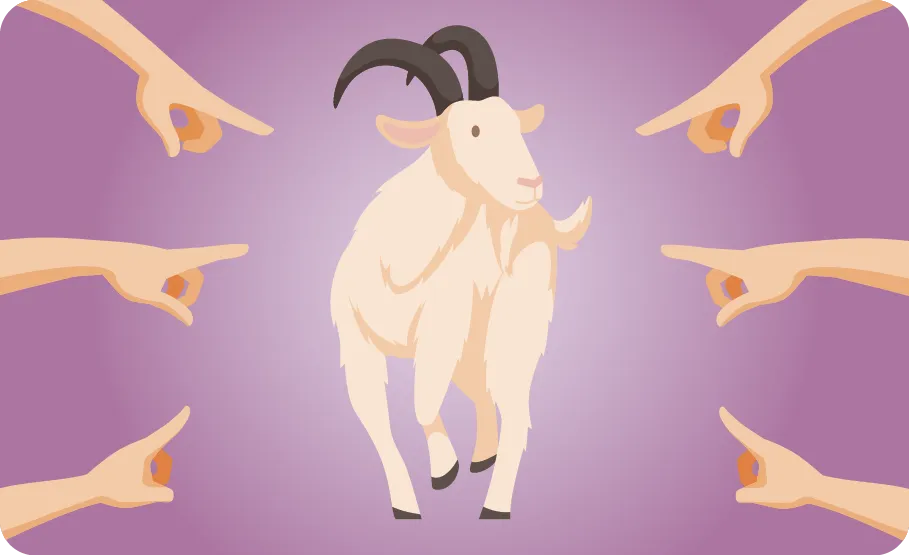
The ego defense of displacement plays an important role in scapegoating, in which uncomfortable feelings such as anger, frustration, envy, guilt, shame, and insecurity are displaced or redirected onto another, often more vulnerable, person or group. The scapegoats – outsiders, immigrants, minorities, “deviants” – are then persecuted, enabling the scapegoaters to discharge and distract from their negative feelings, which are replaced or overtaken by a crude but consoling sense of affirmation and self-righteous indignation.
The creation of a villain necessarily implies that of a hero, even if both are purely fictional.
Sometimes it is the villain, or villains, who are in need of an even greater villain. Especially in a time of crisis, unscrupulous leaders and politicians can cynically exploit the ancient and deep-rooted impulse to scapegoat to deflect and distract from their own inadequacies and evade, or seek to evade, their legitimate burden of blame and responsibility. [...]
A scapegoat usually implies a person or group, but the mechanism of scapegoating can also apply to non-human entities, whether objects, animals, or demons. Conversely, human scapegoats are to varying degrees dehumanized and objectified; some, such as witches in mediæval Europe, are quite literally demonized. The dehumanization of the scapegoat makes the scapegoating both more potent and more palatable, and can even lend it a sense of pre-ordained, cosmic inevitability.
According to the philosopher René Girard, owing to human nature, envy gradually builds up in a society until it reaches a tipping point, at which order and reason cede to mob rule, chaos, and violence. To quell this “madness of the crowds” which poses an existential threat to the society, an exposed or vulnerable person or group is singled out as a sink for all the bad feeling, and the bad feeling bred from the bad feeling.
The creation of a villain necessarily implies that of a hero, even if both are purely fictional.
Sometimes it is the villain, or villains, who are in need of an even greater villain. Especially in a time of crisis, unscrupulous leaders and politicians can cynically exploit the ancient and deep-rooted impulse to scapegoat to deflect and distract from their own inadequacies and evade, or seek to evade, their legitimate burden of blame and responsibility. [...]
A scapegoat usually implies a person or group, but the mechanism of scapegoating can also apply to non-human entities, whether objects, animals, or demons. Conversely, human scapegoats are to varying degrees dehumanized and objectified; some, such as witches in mediæval Europe, are quite literally demonized. The dehumanization of the scapegoat makes the scapegoating both more potent and more palatable, and can even lend it a sense of pre-ordained, cosmic inevitability.
According to the philosopher René Girard, owing to human nature, envy gradually builds up in a society until it reaches a tipping point, at which order and reason cede to mob rule, chaos, and violence. To quell this “madness of the crowds” which poses an existential threat to the society, an exposed or vulnerable person or group is singled out as a sink for all the bad feeling, and the bad feeling bred from the bad feeling.
Ressource affichée de l'autre côté.
Faites défiler pour voir la suite.
Faites défiler pour voir la suite.

Vidéo associée
Ressource affichée de l'autre côté.
Faites défiler pour voir la suite.
Faites défiler pour voir la suite.
PATH A
B1
1-A
Watch the video. Explain in your own words
what “scapegoating” means.
2-A
What problem is described? Which group is
blamed for it?
3-A
In what ways can scapegoating be
manipulative or misleading?
Ressource affichée de l'autre côté.
Faites défiler pour voir la suite.
Faites défiler pour voir la suite.
PATH B
B2
1-B
Read the text. What emotions lead individuals
or societies to scapegoat others?
2-B
Explain how dehumanization makes
scapegoating easier to accept.
3-B
How can leaders use scapegoating during
times of crisis? Why might they choose to?
Ressource affichée de l'autre côté.
Faites défiler pour voir la suite.
Faites défiler pour voir la suite.
Let's talk this out!
4
Share your findings. Sum up how scapegoating is used by those in power.
5
In your opinion, is scapegoating more dangerous today because of media and social networks? Why or why not?
Ressource affichée de l'autre côté.
Faites défiler pour voir la suite.
Faites défiler pour voir la suite.
Stop the Blame
As a social activist, you have decided to create an educational poster for a campaign called “Stop the Blame”.
Your goal is to raise awareness about the scapegoating process: Explain how individuals or groups can be unfairly targeted.
Show the process step by step, and give clear tips for recognising and resisting scapegoating.
As a social activist, you have decided to create an educational poster for a campaign called “Stop the Blame”.
Your goal is to raise awareness about the scapegoating process: Explain how individuals or groups can be unfairly targeted.
Show the process step by step, and give clear tips for recognising and resisting scapegoating.
Une erreur sur la page ? Une idée à proposer ?
Nos manuels sont collaboratifs, n'hésitez pas à nous en faire part.
j'ai une idée !
Oups, une coquille