Vue papier
Découvrez la vue papier en cliquant ici
Unit 3
Activity 2
America's hard history
Ressource affichée de l'autre côté.
Faites défiler pour voir la suite.
Faites défiler pour voir la suite.
angt-unit3-activity2.mp3
Wormsloe is often cited as one of Savannah's top attractions. A quick internet search describes it as a state park, famous for its avenue of oak trees dripping with Spanish moss, under which visitors line up to take pictures and even get married. Tripadvisor reviews call it “breathtaking,” “magical,” and “like a fairy tale.” You'd never know Wormsloe was actually a plantation that ran on the labor of enslaved people.
Many travelers approach plantations, a cornerstone of tourism in the South, as they would parks, museums, or historical sites: a beautiful place to learn something about local history before having a cocktail or going out to dinner. But plantations need to be experienced differently. Black people were enslaved, raped, tortured, and killed for hundreds of years on these lands. [...]
Rather than shy away from the painful truth, plantations must expose it. They are a vital educational resource with which to combat modern-day racism.
The institution of slavery “translates into virtually every kind of social and economic racial disparity that you might think of today in terms of education, net worth, health, and mortality,” says Bernard Powers, director of the Center for Study of Slavery in Charleston and consultant with Middleton Place plantation. “It's one thing to hear that. It's another thing to go to a plantation site where you can see where the deed was done, see the implements of oppression, see the chains.”
Plantations are uniquely equipped to offer such an impactful, immersive experience. If such tours no longer existed, Powers says, “we would be far closer to developing an amnesia about what happened in the past, and the way in which the past continues to dog us in the present.” [...]
The story of slavery is not confined at a 250-year period. Plantation tours should discuss the lives of African people before the transatlantic slave trade, the fact that plantations were built on land taken from Indigenous peoples, and the links between slavery, Jim Crow, mass incarceration, police brutality and other current events.
Many travelers approach plantations, a cornerstone of tourism in the South, as they would parks, museums, or historical sites: a beautiful place to learn something about local history before having a cocktail or going out to dinner. But plantations need to be experienced differently. Black people were enslaved, raped, tortured, and killed for hundreds of years on these lands. [...]
Rather than shy away from the painful truth, plantations must expose it. They are a vital educational resource with which to combat modern-day racism.
The institution of slavery “translates into virtually every kind of social and economic racial disparity that you might think of today in terms of education, net worth, health, and mortality,” says Bernard Powers, director of the Center for Study of Slavery in Charleston and consultant with Middleton Place plantation. “It's one thing to hear that. It's another thing to go to a plantation site where you can see where the deed was done, see the implements of oppression, see the chains.”
Plantations are uniquely equipped to offer such an impactful, immersive experience. If such tours no longer existed, Powers says, “we would be far closer to developing an amnesia about what happened in the past, and the way in which the past continues to dog us in the present.” [...]
The story of slavery is not confined at a 250-year period. Plantation tours should discuss the lives of African people before the transatlantic slave trade, the fact that plantations were built on land taken from Indigenous peoples, and the links between slavery, Jim Crow, mass incarceration, police brutality and other current events.
Ressource affichée de l'autre côté.
Faites défiler pour voir la suite.
Faites défiler pour voir la suite.
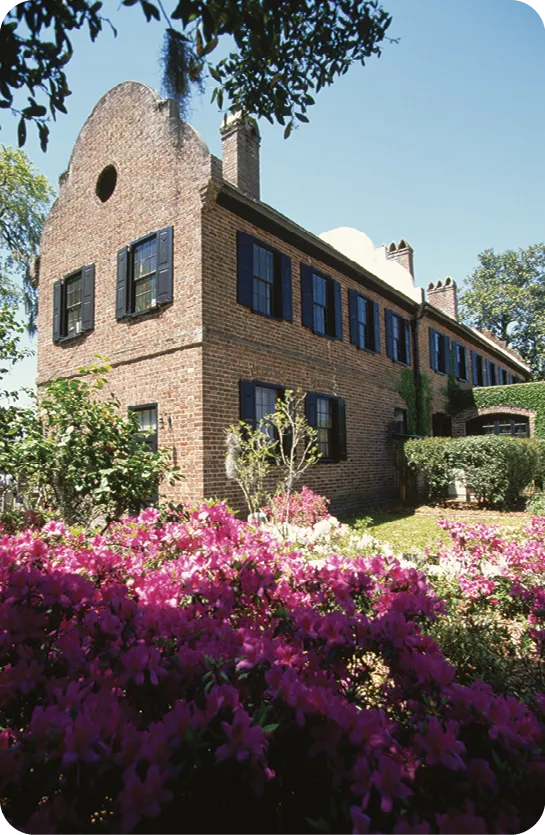
Middleton Place plantation, Charleston, South Carolina.
Ressource affichée de l'autre côté.
Faites défiler pour voir la suite.
Faites défiler pour voir la suite.
PATH A
B1
1-A
How do people perceive plantations at first sight?
2-A
What painful reality does the text highlight about
plantations?
3-A
According to Bernard Powers, what can visitors
learn by going to plantations?
Ressource affichée de l'autre côté.
Faites défiler pour voir la suite.
Faites défiler pour voir la suite.
PATH B
B2
1-B
According to the author, what should the goals
of plantation museums be?
2-B
How has the legacy of slavery been displayed in
these places? How could it be displayed now?
3-B
Pick two connections the author makes
between slavery and modern-day issues.
Ressource affichée de l'autre côté.
Faites défiler pour voir la suite.
Faites défiler pour voir la suite.
Let's talk this out!
4
Share your findings. Describe how the visitor's experience can differ depending on what is emphasized at plantations.
5
How important do you think it is for visitors to know the full history of plantations? Why?
Ressource affichée de l'autre côté.
Faites défiler pour voir la suite.
Faites défiler pour voir la suite.
Record an audio guide.
As a guide in a plantation, you record an introduction for the audio tour, to help the visitors look beyond the romanticized version they may have in mind.
As a guide in a plantation, you record an introduction for the audio tour, to help the visitors look beyond the romanticized version they may have in mind.
Une erreur sur la page ? Une idée à proposer ?
Nos manuels sont collaboratifs, n'hésitez pas à nous en faire part.
j'ai une idée !
Oups, une coquille