
Unit 5
Activity 1
The colonial legacy
Ressource affichée de l'autre côté.
Faites défiler pour voir la suite.
Faites défiler pour voir la suite.
1An ethical dilemma

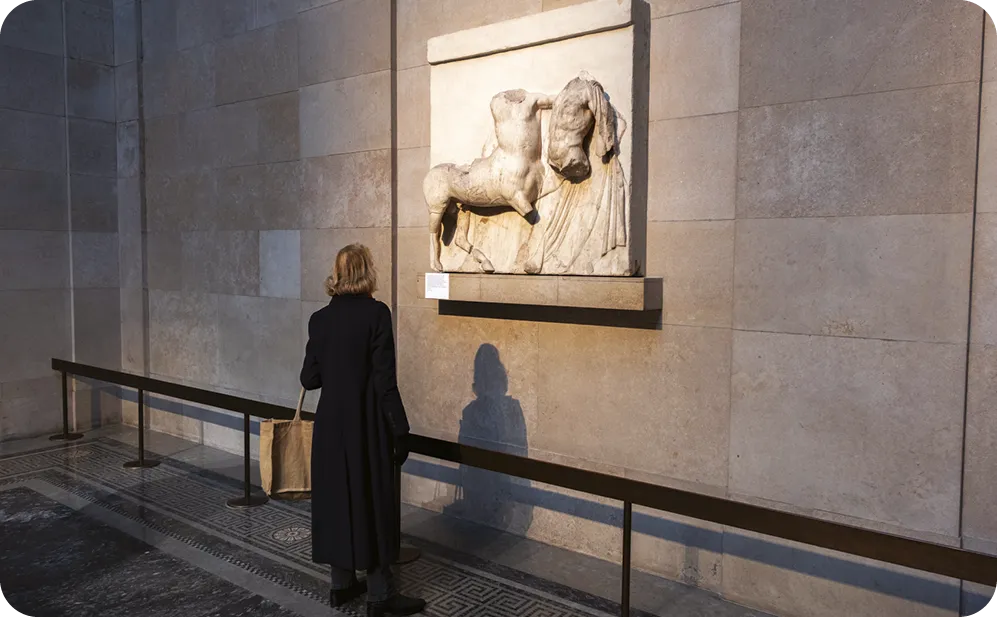
Parthenon Marbles, also known as the Elgin Marbles, on display at the British Museum, 2023.
Vidéo associée
From 0:00 to 2:43Ressource affichée de l'autre côté.
Faites défiler pour voir la suite.
Faites défiler pour voir la suite.
2Facing looted history

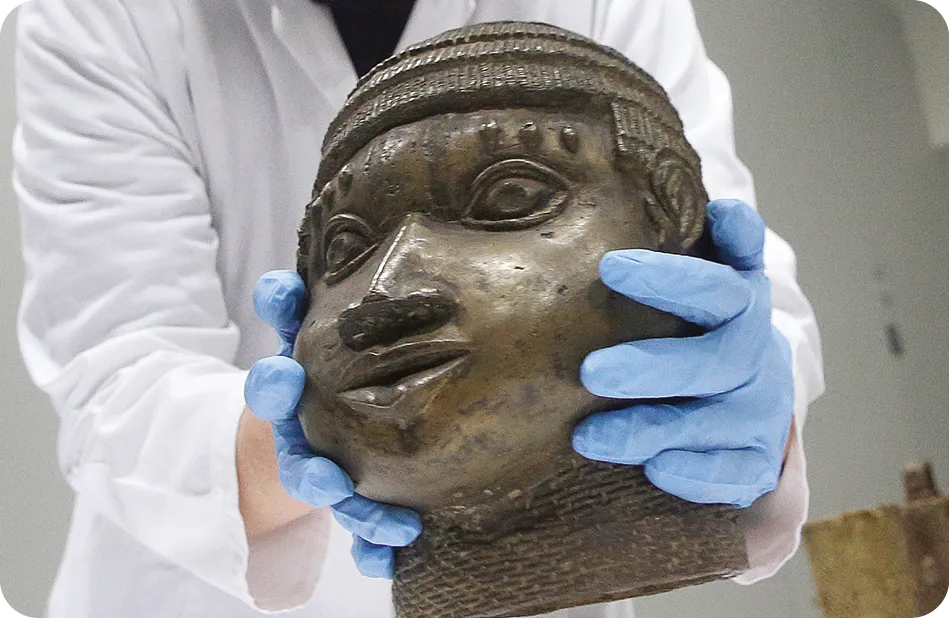
Benin Bronzes are packed for return to Nigeria, 2022.
Vidéo associée
From 0:00 to 4:14Ressource affichée de l'autre côté.
Faites défiler pour voir la suite.
Faites défiler pour voir la suite.
3
From trophy hunting to repatriation
angt-unit5-activity1-doc3.mp3
In the 1960s, [...] some museum curators embraced the chase for prized artifacts as if it were big game hunting.
Thomas Hoving, a Metropolitan Museum of Art curator who later became its director, took particular pride in his ability to outsmart rivals in the global pursuit of masterpieces. [...]
“My collecting style was pure piracy,” he boasted, “and I got a reputation as a shark.”
Today many U.S. museums are facing a reckoning for their aggressive tactics of the past. Attitudes have shifted, the Indiana Jones era is over, and there is tremendous pressure on museums to return any looted works acquired during the days when collecting could be careless and trophies at times trumped scruples.
Though the tide turned more than a decade ago, the pace of repatriations has only accelerated in recent years. In just the last few months, museums across America have returned dozens of antiquities to the countries from which they were taken.
The J. Paul Getty Museum in Los Angeles returned three precious terra cotta figures to Italy. The Denver Art Museum shipped four antiquities back to Cambodia. The Smithsonian Institution returned 29 Benin Bronzes to Nigeria. And the Manhattan district attorney's office seized 27 looted artifacts from the Met, which are headed back to Italy and Egypt.
“I do have sympathy,” said Elizabeth Marlowe, director of the museum studies program at Colgate University, "for museum directors and curators who were trained under different ethical norms and now find themselves in a situation where they very publicly have to rethink the ethical norms they are operating under. That said, 'It's time to step up, gentlemen.' It's a different landscape."
Thomas Hoving, a Metropolitan Museum of Art curator who later became its director, took particular pride in his ability to outsmart rivals in the global pursuit of masterpieces. [...]
“My collecting style was pure piracy,” he boasted, “and I got a reputation as a shark.”
Today many U.S. museums are facing a reckoning for their aggressive tactics of the past. Attitudes have shifted, the Indiana Jones era is over, and there is tremendous pressure on museums to return any looted works acquired during the days when collecting could be careless and trophies at times trumped scruples.
Though the tide turned more than a decade ago, the pace of repatriations has only accelerated in recent years. In just the last few months, museums across America have returned dozens of antiquities to the countries from which they were taken.
The J. Paul Getty Museum in Los Angeles returned three precious terra cotta figures to Italy. The Denver Art Museum shipped four antiquities back to Cambodia. The Smithsonian Institution returned 29 Benin Bronzes to Nigeria. And the Manhattan district attorney's office seized 27 looted artifacts from the Met, which are headed back to Italy and Egypt.
“I do have sympathy,” said Elizabeth Marlowe, director of the museum studies program at Colgate University, "for museum directors and curators who were trained under different ethical norms and now find themselves in a situation where they very publicly have to rethink the ethical norms they are operating under. That said, 'It's time to step up, gentlemen.' It's a different landscape."
Ressource affichée de l'autre côté.
Faites défiler pour voir la suite.
Faites défiler pour voir la suite.
Questions
1
Explain the “ethical dilemma” the journalist is facing at the British Museum.
2
Look for details on the history of the Benin Bronzes. How have the museums mentioned in the article addressed this history?
3
How did museums acquire artefacts in the past? Explain how attitudes have changed over time.
Ressource affichée de l'autre côté.
Faites défiler pour voir la suite.
Faites défiler pour voir la suite.
Background check
What ethical challenges do museums face when displaying objects acquired in the past from other cultures?Ressource affichée de l'autre côté.
Faites défiler pour voir la suite.
Faites défiler pour voir la suite.
Use one of the following verbs to write
a sentence about this page:
claim - argue - declare - report - reveal
claim - argue - declare - report - reveal
Une erreur sur la page ? Une idée à proposer ?
Nos manuels sont collaboratifs, n'hésitez pas à nous en faire part.
j'ai une idée !
Oups, une coquille