Unit 6
Activity 3
A bright new world
Ressource affichée de l'autre côté.
Faites défiler pour voir la suite.
Faites défiler pour voir la suite.
Group 1Margaret Atwood on the power of hope
Group 1
Ressource affichée de l'autre côté.
Faites défiler pour voir la suite.
Faites défiler pour voir la suite.
angt-unit6-activity3-group1.mp3
Margaret Atwood is often described as a prophet of doom, and for good reason. She is an unsparing observer and predictor of environmental catastrophes, anti-utopias, authoritarian regimes, and biotech run amok.
In other words, the author of the 1985 bestseller “The Handmaid's Tale” is not an obvious go-to choice for words of hope during this time of political fracturing, climate change, and a global pandemic.
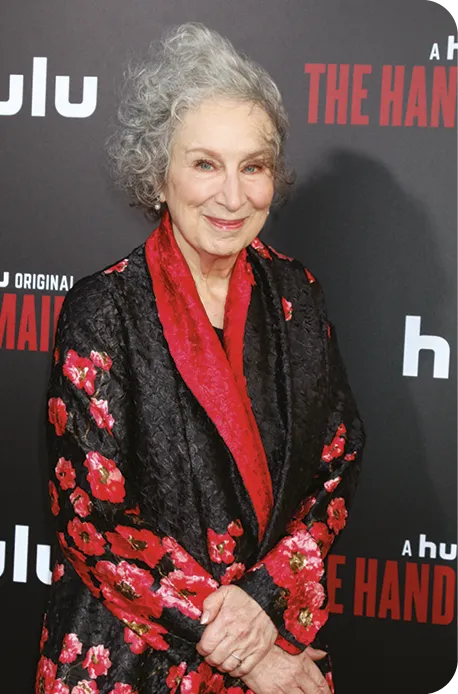
But Atwood offered some words of cautious encouragement and measured hope this week during her virtual dialogue with alumna and author Kate Schatz. [...]
“Believe it or not, but this is not the worst moment in the history of everything,” Atwood said.
“As you will notice by looking in the mirror, the human race has survived up until now,” she continued. “We're not robots yet, I don't think. I think hope is built in. It's something we have as human beings, and it's gotten us through a lot of very tight spots before. If you don't have hope, you don't work for something that's better because you don't think it's possible.”
Over the years, Atwood has said that for personal and political reasons, she'd hoped that “The Handmaid's Tale” would fade into irrelevance. She hoped its dark visions, and grim political scenarios, would drift far apart from present-day reality.
But no such luck. [The book] remains a constant political touchstone. [...]
In her dialogue with Schatz, Atwood often invoked the power of the humanities to help beleaguered humans address problems ranging from climate change to the insidious creeping of authoritarianism. In Atwood's view, the various disciplines of the humanities – from the close study of history and literature to the rigors of philosophy – are a path forward in times of chaos.
For instance, Atwood noted that humans now have the wherewithal to “turn this ship around” to address the climate crisis, which she linked to wars, mass migrations, and pandemics of the past. Atwood mentioned the far-ranging work of Project Drawdown, a nonprofit organization formed to avert climate disasters of the future.
“There are a lot of people working on (climate change solutions),” Atwood noted. “The problem is will. It can be done. Will we do it? Will we do it on time? It is a people thing. And that brings us right into the humanities.”
In other words, the author of the 1985 bestseller “The Handmaid's Tale” is not an obvious go-to choice for words of hope during this time of political fracturing, climate change, and a global pandemic.
But Atwood offered some words of cautious encouragement and measured hope this week during her virtual dialogue with alumna and author Kate Schatz. [...]
“Believe it or not, but this is not the worst moment in the history of everything,” Atwood said.
“As you will notice by looking in the mirror, the human race has survived up until now,” she continued. “We're not robots yet, I don't think. I think hope is built in. It's something we have as human beings, and it's gotten us through a lot of very tight spots before. If you don't have hope, you don't work for something that's better because you don't think it's possible.”
Over the years, Atwood has said that for personal and political reasons, she'd hoped that “The Handmaid's Tale” would fade into irrelevance. She hoped its dark visions, and grim political scenarios, would drift far apart from present-day reality.
But no such luck. [The book] remains a constant political touchstone. [...]
In her dialogue with Schatz, Atwood often invoked the power of the humanities to help beleaguered humans address problems ranging from climate change to the insidious creeping of authoritarianism. In Atwood's view, the various disciplines of the humanities – from the close study of history and literature to the rigors of philosophy – are a path forward in times of chaos.
For instance, Atwood noted that humans now have the wherewithal to “turn this ship around” to address the climate crisis, which she linked to wars, mass migrations, and pandemics of the past. Atwood mentioned the far-ranging work of Project Drawdown, a nonprofit organization formed to avert climate disasters of the future.
“There are a lot of people working on (climate change solutions),” Atwood noted. “The problem is will. It can be done. Will we do it? Will we do it on time? It is a people thing. And that brings us right into the humanities.”
Ressource affichée de l'autre côté.
Faites défiler pour voir la suite.
Faites défiler pour voir la suite.


Vidéo associée
Ressource affichée de l'autre côté.
Faites défiler pour voir la suite.
Faites défiler pour voir la suite.
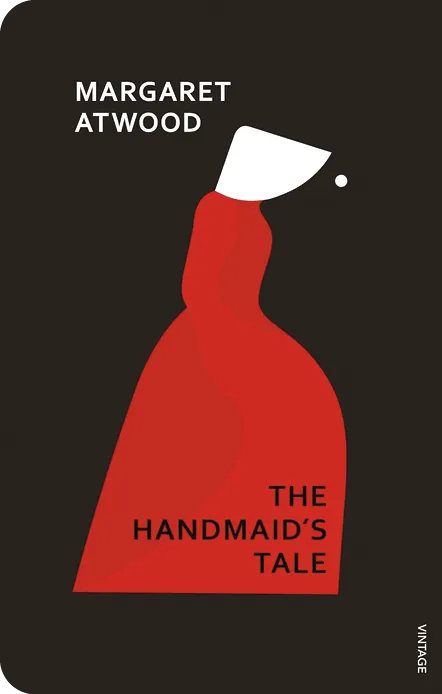
Margaret Atwood's most famous work, The Handmaid's Tale, imagines a totalitarian society where women's rights are stripped away and the state controls reproduction. The novel has been adapted into a popular TV series and has become a symbol in real-life activism, often referenced in marches and protests for women's rights.
Ressource affichée de l'autre côté.
Faites défiler pour voir la suite.
Faites défiler pour voir la suite.
➜ La traduction de « jouer »
play : participer à un jeu, pratiquer un sport ou jouer d'un instrument
act : jouer un rôle dans une pièce de théâtre ou un film
perform : interpréter une œuvre musicale, théâtrale ou artistique devant un public
gamble : parier de l'argent ou prendre un risque dans un jeu de hasard
act : jouer un rôle dans une pièce de théâtre ou un film
perform : interpréter une œuvre musicale, théâtrale ou artistique devant un public
gamble : parier de l'argent ou prendre un risque dans un jeu de hasard
À noter les expressions :
Your move! : à toi de jouer !
Play with fire : jouer avec le feu
Play along : jouer le jeu
Opportunity is knocking : il y a un coup à jouer
Your move! : à toi de jouer !
Play with fire : jouer avec le feu
Play along : jouer le jeu
Opportunity is knocking : il y a un coup à jouer
Ressource affichée de l'autre côté.
Faites défiler pour voir la suite.
Faites défiler pour voir la suite.
Questions
You are in charge of one document.
1
What characteristics of dystopia are described in your document? Give examples.
2
Pick out information about the novel and its screen adaptation, if applicable. You may go online to complete your research.
3
How do the authors show that hope can exist even in a dystopian or post-apocalyptic world?
Let's talk this out!
4
Present your document to the other groups. What do all three authors have in common? What ideas do they share?
5
According to all three authors, why is hope a necessity?
6
Which novel would you most like to read? Why?
Ressource affichée de l'autre côté.
Faites défiler pour voir la suite.
Faites défiler pour voir la suite.
Pick three adjectives
to describe one of the
novels on this page,
and use them to write
a catchy praise quote or
blurb for the front cover.
Ressource affichée de l'autre côté.
Faites défiler pour voir la suite.
Faites défiler pour voir la suite.
Retrouvez des fiches activité pour chaque groupe.
Ressource affichée de l'autre côté.
Faites défiler pour voir la suite.
Faites défiler pour voir la suite.
Dystopodcast!
You've been invited to take part in a special episode of the podcast “Bright New World”. In small groups, each of you will focus on one of the authors on this page. Present their work, compare perspectives, and explain how dystopia can be a source of hope.
You've been invited to take part in a special episode of the podcast “Bright New World”. In small groups, each of you will focus on one of the authors on this page. Present their work, compare perspectives, and explain how dystopia can be a source of hope.
Ressource affichée de l'autre côté.
Faites défiler pour voir la suite.
Faites défiler pour voir la suite.
EXCLU. PREMIUM
Retrouvez une activité alternative et des fiches activité pour chaque groupe.
Une erreur sur la page ? Une idée à proposer ?
Nos manuels sont collaboratifs, n'hésitez pas à nous en faire part.
j'ai une idée !
Oups, une coquille