
Unit 6
Book Club
Julia
Ressource affichée de l'autre côté.
Faites défiler pour voir la suite.
Faites défiler pour voir la suite.
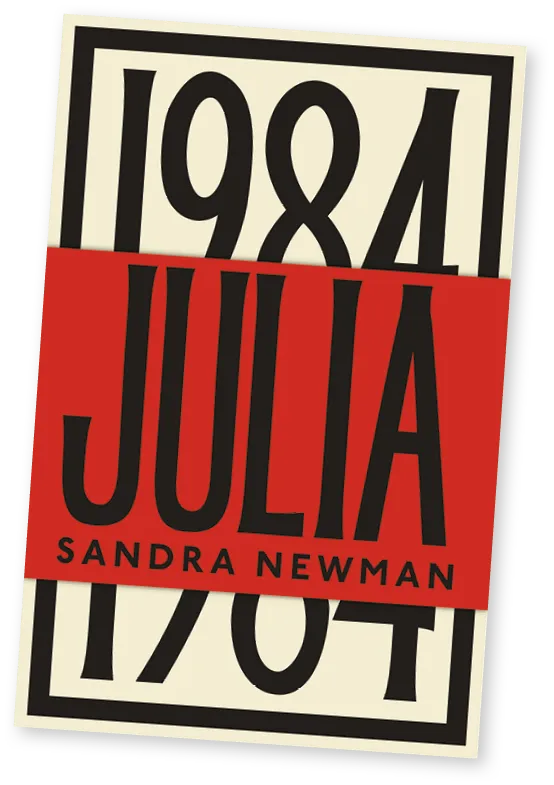
Over 70 years after George Orwell wrote 1984, Sandra Newman decided to give a voice to Julia, a female secondary character. It's 1984 and Julia Worthing works as a mechanic, fixing the novel-writing machines in the Fiction Department at the Ministry of Truth. Julia is a model citizen, collaborating with the regime whenever necessary, but she's also cheerfully cynical about it. She becomes intrigued by a colleague from the Records Department — a mid-level worker of the Outer Party called Winston Smith — when she sees him locking eyes with a superior…

Ressource affichée de l'autre côté.
Faites défiler pour voir la suite.
Faites défiler pour voir la suite.
Texte
Julia
Fiction, along with a dozen other departments, had its Hate in Records. Records had
the space; half the office had been cleared out in the Small Adjustment of '79. It also made
a nice break for Fiction, because they worked in the lightless depths, while Records was on
Floor Ten, with banks of windows on all four walls. The catch was that they weren't to use
lifts – healthy exercise, comrades! To add insult to injury, there were three “ghost” floors,
which had once contained bustling offices but now stood empty, so Floor Ten was really
Floor Thirteen. This meant not only three extra flights, but that you had to pass those
floors-of-the-dead.
Every landing on the stairs was dominated by a telescreen. Syme and Ampleforth, who struggled with the climb, kept pausing to comment in apparent fascination on whatever the telescreen was saying, while panting and mopping the sweat from their brows. Julia had a habit of smiling at each telescreen as she passed, imagining some bored man in surveillance being cheered by her appearance. Stairs held no terrors for her. At twenty-six, she'd never been stronger, and certainly never so well fed. Today she was especially lively after the long, dull hours of idleness, and trotted up, chattering with everyone she met, pressing hands and laughing at jokes. Syme's name for her was “Love-Me”, which sometimes gave her pause, but could have been far worse. Only at the end did she slow abruptly, when she saw she might overtake O'Brien. As a result, she was right on his heels when the group came pouring into Records.
The first thing she saw was Smith – Old Misery. He was moving chairs into rows, and, absorbed in this chore, looked surprisingly likeable. A lean man of roughly forty, very fair and grey-eyed, he resembled the man from the poster “Honour Our Intellectual Labourers”, though of course without the telescope. He appeared to be dreaming of something cold but fine. Perhaps he was thinking of music. He moved with obvious pleasure, despite his slight limp; you could see he liked to have physical purpose. But then he noticed Julia, and his mouth thinned with revulsion. It was startling how it changed him: hawk to reptile. [...]
Without giving it much thought, when Smith sat down, Julia went to sit directly behind him. She justified it to herself because it was the seat right by the windows. But when he stiffened, uncomfortable with her presence, she was meanly pleased. Beside her was a low bookshelf with only one book: an old Newspeak dictionary from 1981, now lightly rimed with dust. She imagined running her finger through the dust and writing on his nape with the dirt – perhaps a J for Julia – though of course she never would.
The only trouble was, from here, she could smell him. By all rights, he ought to smell like mildew, but he smelled like good male sweat. Then she noticed his hair, which was thick and fine and might be quite nice to touch. So unfair that the Party warped the good- looking ones. Let them take the Ampleforths and Symes, and leave the Smiths to her. Then, wouldn't you know, Margaret came to sit next to Smith, and O'Brien followed after and sat on Margaret's other side. Margaret and Smith ignored each other. All the Records people were like that. It was a treacherous job, reading oldthink all day, and Records workers kept each other at arm's length. But what troubled Julia now was the question of why O'Brien was tagging after Margaret. Surely he couldn't enjoy plain Margaret simpering and sighing at him?
Julia looked away – always the safest option when anyone was doing something peculiar – and gazed out of the bank of windows. At that moment, a scrap of newspaper sailed past, hectically spinning in the air, before it abruptly spread itself and dived to the rooftops far below. From this height, you couldn't tell prole neighbourhoods from Party neighbourhoods; that was always queer. It also took a moment to pick out the gaps where bombs had fallen; on the street, they were all around you, and London sometimes seemed more crater than city. There was a private-use fuel ban for daylight hours, and you could make out the rare wisps of smoke where the A1 dining centres were. Electricity cuts were in force as well, and the grubby, unlit windows of office buildings had the gloomy radiance of the sea.
Every landing on the stairs was dominated by a telescreen. Syme and Ampleforth, who struggled with the climb, kept pausing to comment in apparent fascination on whatever the telescreen was saying, while panting and mopping the sweat from their brows. Julia had a habit of smiling at each telescreen as she passed, imagining some bored man in surveillance being cheered by her appearance. Stairs held no terrors for her. At twenty-six, she'd never been stronger, and certainly never so well fed. Today she was especially lively after the long, dull hours of idleness, and trotted up, chattering with everyone she met, pressing hands and laughing at jokes. Syme's name for her was “Love-Me”, which sometimes gave her pause, but could have been far worse. Only at the end did she slow abruptly, when she saw she might overtake O'Brien. As a result, she was right on his heels when the group came pouring into Records.
The first thing she saw was Smith – Old Misery. He was moving chairs into rows, and, absorbed in this chore, looked surprisingly likeable. A lean man of roughly forty, very fair and grey-eyed, he resembled the man from the poster “Honour Our Intellectual Labourers”, though of course without the telescope. He appeared to be dreaming of something cold but fine. Perhaps he was thinking of music. He moved with obvious pleasure, despite his slight limp; you could see he liked to have physical purpose. But then he noticed Julia, and his mouth thinned with revulsion. It was startling how it changed him: hawk to reptile. [...]
Without giving it much thought, when Smith sat down, Julia went to sit directly behind him. She justified it to herself because it was the seat right by the windows. But when he stiffened, uncomfortable with her presence, she was meanly pleased. Beside her was a low bookshelf with only one book: an old Newspeak dictionary from 1981, now lightly rimed with dust. She imagined running her finger through the dust and writing on his nape with the dirt – perhaps a J for Julia – though of course she never would.
The only trouble was, from here, she could smell him. By all rights, he ought to smell like mildew, but he smelled like good male sweat. Then she noticed his hair, which was thick and fine and might be quite nice to touch. So unfair that the Party warped the good- looking ones. Let them take the Ampleforths and Symes, and leave the Smiths to her. Then, wouldn't you know, Margaret came to sit next to Smith, and O'Brien followed after and sat on Margaret's other side. Margaret and Smith ignored each other. All the Records people were like that. It was a treacherous job, reading oldthink all day, and Records workers kept each other at arm's length. But what troubled Julia now was the question of why O'Brien was tagging after Margaret. Surely he couldn't enjoy plain Margaret simpering and sighing at him?
Julia looked away – always the safest option when anyone was doing something peculiar – and gazed out of the bank of windows. At that moment, a scrap of newspaper sailed past, hectically spinning in the air, before it abruptly spread itself and dived to the rooftops far below. From this height, you couldn't tell prole neighbourhoods from Party neighbourhoods; that was always queer. It also took a moment to pick out the gaps where bombs had fallen; on the street, they were all around you, and London sometimes seemed more crater than city. There was a private-use fuel ban for daylight hours, and you could make out the rare wisps of smoke where the A1 dining centres were. Electricity cuts were in force as well, and the grubby, unlit windows of office buildings had the gloomy radiance of the sea.
Ressource affichée de l'autre côté.
Faites défiler pour voir la suite.
Faites défiler pour voir la suite.
a) What does having
“windows on all four
walls” imply?
Ressource affichée de l'autre côté.
Faites défiler pour voir la suite.
Faites défiler pour voir la suite.
b) What double
purpose does the
telescreen serve?
Ressource affichée de l'autre côté.
Faites défiler pour voir la suite.
Faites défiler pour voir la suite.
c) What is Julia's
personality like?
Ressource affichée de l'autre côté.
Faites défiler pour voir la suite.
Faites défiler pour voir la suite.
d) How does Smith
react when he sees
Julia?
Ressource affichée de l'autre côté.
Faites défiler pour voir la suite.
Faites défiler pour voir la suite.
e) How does Julia feel
about Smith?
Ressource affichée de l'autre côté.
Faites défiler pour voir la suite.
Faites défiler pour voir la suite.
f) What do we learn
about people working
in Records?
Ressource affichée de l'autre côté.
Faites défiler pour voir la suite.
Faites défiler pour voir la suite.
g) How is the city
divided?
Ressource affichée de l'autre côté.
Faites défiler pour voir la suite.
Faites défiler pour voir la suite.
h) What has happened
in London?
Ressource affichée de l'autre côté.
Faites défiler pour voir la suite.
Faites défiler pour voir la suite.
Sandra Newman was born in America but has lived in Germany, Russia,
Malaysia, and England. Her professions have ranged from academia
to professional gambling. She studied Creative Writing, and her first
novel, The Only Good Thing Anyone Has Ever Done, was shortlisted
for the Guardian First Book Award. Her third novel, The Country of Ice
Cream Star (2014), was nominated for the 2015 Folio Prize and the 2015
Baileys Women's Prize for Fiction. She currently lives in New York.


Ressource affichée de l'autre côté.
Faites défiler pour voir la suite.
Faites défiler pour voir la suite.
“Hello! May I Newspeak to you?”
You are part of a creative writing class at university and you have just read this extract from Julia. Your next assignment is to imagine Smith and Julia's first verbal exchange at the end of the meeting.
You are part of a creative writing class at university and you have just read this extract from Julia. Your next assignment is to imagine Smith and Julia's first verbal exchange at the end of the meeting.
Une erreur sur la page ? Une idée à proposer ?
Nos manuels sont collaboratifs, n'hésitez pas à nous en faire part.
j'ai une idée !
Oups, une coquille