Vue papier

Découvrez la vue papier en cliquant ici
Unit B
Activity 2
Speculating futures
Ressource affichée de l'autre côté.
Faites défiler pour voir la suite.
Faites défiler pour voir la suite.
angt-unitb-activity2.mp3

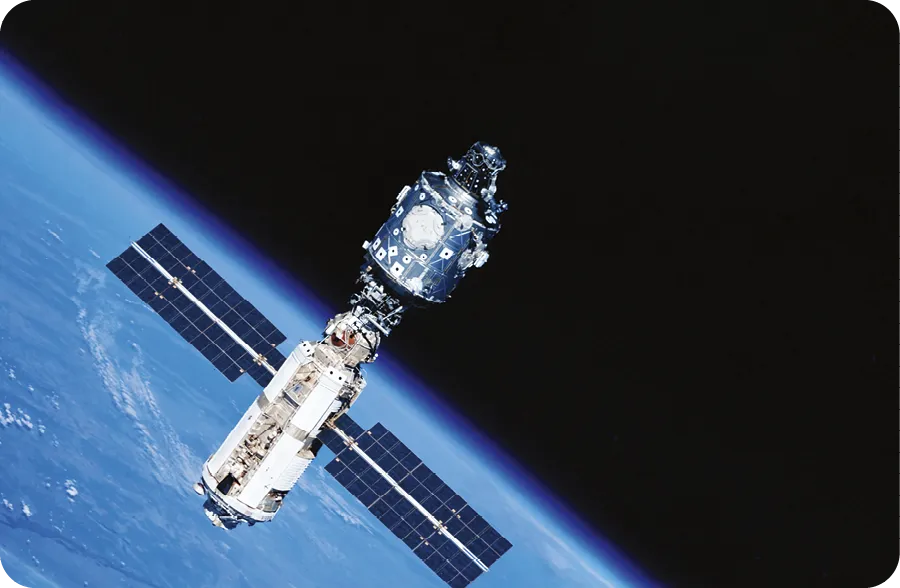
If there is something that we can be fairly sure of, it is that the future will be radically different to what we had imagined, and that it will demand adjustment. This is why authors of science fiction are consulted by organisations and governments: to help us think about the risks and challenges of the future in ways inaccessible to other disciplines. [...]
Science fiction has certainly already played a part in this narrative. Harnessing the Sun's energy has a long history in science fiction, and Arthur C. Clarke is often credited with coming up with the idea of the solar cell-powered geostationary communications satellite. NASA's satellite system, meanwhile, is crucial for monitoring climate change and can plausibly be traced back, in part, to science fiction's capacity for thinking about worlds and systems. And of course, spaceships and space stations – indeed, our expansion into space – is an invention of science fiction. [...]
The aim of science fiction is not to solve society's problems (though specific works of science fiction do offer solutions that we as readers are invited to critique, revise, advocate for, and even adopt); nor is science fiction about prediction. [...] Rather, the role of science fiction is to speculate on possibilities.
Science fiction, then, shouldn't be read in isolation. The fictional space is an imaginative realm for testing ideas and values, and for attempting to imagine futures that could inform our societies now. The genre seeks to push beyond the assumptions of a singular time and place by providing a range of alternative ways of conceiving ideas, contexts and relationships. Science fiction asks to be challenged; it asks for us to hold one story up against another, to consider and interrogate the worlds portrayed and what they might tell us about our stances on crucial contemporary issues.
Science fiction has certainly already played a part in this narrative. Harnessing the Sun's energy has a long history in science fiction, and Arthur C. Clarke is often credited with coming up with the idea of the solar cell-powered geostationary communications satellite. NASA's satellite system, meanwhile, is crucial for monitoring climate change and can plausibly be traced back, in part, to science fiction's capacity for thinking about worlds and systems. And of course, spaceships and space stations – indeed, our expansion into space – is an invention of science fiction. [...]
The aim of science fiction is not to solve society's problems (though specific works of science fiction do offer solutions that we as readers are invited to critique, revise, advocate for, and even adopt); nor is science fiction about prediction. [...] Rather, the role of science fiction is to speculate on possibilities.
Science fiction, then, shouldn't be read in isolation. The fictional space is an imaginative realm for testing ideas and values, and for attempting to imagine futures that could inform our societies now. The genre seeks to push beyond the assumptions of a singular time and place by providing a range of alternative ways of conceiving ideas, contexts and relationships. Science fiction asks to be challenged; it asks for us to hold one story up against another, to consider and interrogate the worlds portrayed and what they might tell us about our stances on crucial contemporary issues.
Ressource affichée de l'autre côté.
Faites défiler pour voir la suite.
Faites défiler pour voir la suite.
PATH A
B1
1-A
Why do governments and organisations
consult science fiction writers?
2-A
Find examples of real technologies that first
appeared in science fiction.
3-A
What does the author think is the main role
of science fiction? Quote the text.
Ressource affichée de l'autre côté.
Faites défiler pour voir la suite.
Faites défiler pour voir la suite.
PATH B
B2
1-B
Why does the author say the future will be
“radically different”? What does this imply
for society?
2-B
How does science fiction connect to climate change?
3-B
In your own words, explain the difference between
“speculating” and “predicting”.
Ressource affichée de l'autre côté.
Faites défiler pour voir la suite.
Faites défiler pour voir la suite.
Let's talk this out!
4
Share your findings. Summarise the author's main points about the role of science fiction and why it matters.
5
In what ways can science fiction be a useful tool for thinking about society? Can you think of examples beyond those listed in the text?
Ressource affichée de l'autre côté.
Faites défiler pour voir la suite.
Faites défiler pour voir la suite.
From reality to fiction
Imagine the future version of an existing technology for a tech exhibition. Present your invention, explaining: what it does, what makes it innovative, what problem(s) it solves and one possible challenge or ethical issue.
Imagine the future version of an existing technology for a tech exhibition. Present your invention, explaining: what it does, what makes it innovative, what problem(s) it solves and one possible challenge or ethical issue.
Une erreur sur la page ? Une idée à proposer ?
Nos manuels sont collaboratifs, n'hésitez pas à nous en faire part.
j'ai une idée !
Oups, une coquille