Vue papier
Découvrez la vue papier en cliquant ici
Case Study 7
Axe 3
Objet d'étude 2
Mr Bates vs The Post Office: storytelling for change
Ressource affichée de l'autre côté.
Faites défiler pour voir la suite.
Faites défiler pour voir la suite.
Create an exhibition panel.
The People's History Museum in Manchester is planning a new exhibition called Stories That Changed Britain. Your task is to create an exhibition panel focused on the television drama Mr Bates vs The Post Office. Explain how it has transformed a largely ignored scandal into a national conversation, and given a voice to ordinary people who were dismissed by powerful institutions. Can you show visitors that TV is not just entertainment, but a force that can challenge a class-based society?
The People's History Museum in Manchester is planning a new exhibition called Stories That Changed Britain. Your task is to create an exhibition panel focused on the television drama Mr Bates vs The Post Office. Explain how it has transformed a largely ignored scandal into a national conversation, and given a voice to ordinary people who were dismissed by powerful institutions. Can you show visitors that TV is not just entertainment, but a force that can challenge a class-based society?

Ressource affichée de l'autre côté.
Faites défiler pour voir la suite.
Faites défiler pour voir la suite.
1
From scandal to screen
angt-cs7-step1.mp3
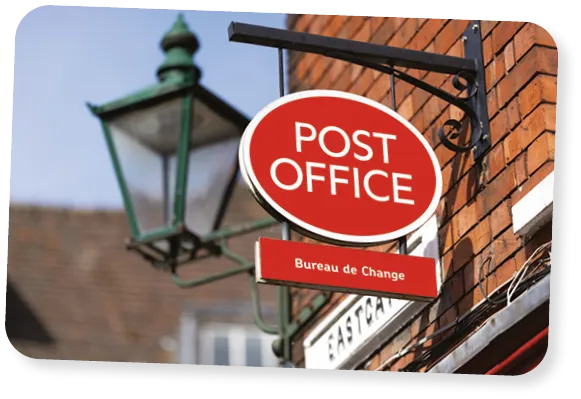
If you have been watching the news lately, then you might have heard of the Post Office Horizon IT scandal. From 1999 to 2015, more than 900 – sub-postmasters were prosecuted by the Post Office after faulty software wrongly recorded that money was missing from branches. The miscarriage of justice only seems to be coming to the fore of public consciousness now, a staggering ten years after the fact.
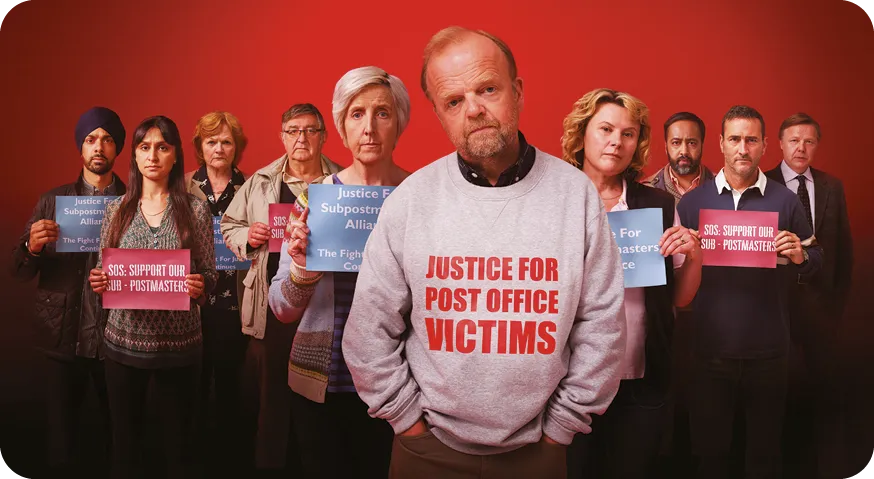
The four-part ITV drama, Mr Bates vs The Post Office is responsible for the sudden attention. The series recounts the true story of the legal battle between former sub-postmaster Alan Bates and over 700 sub-postmasters and mistresses.
To date it has been watched by a staggering 9.2 million viewers. The drama has stirred public indignation and pushed ministers to accelerate the justice process for the postal staff wrongly accused.
You might be surprised that a TV show has inspired this sort of reaction, rather than a serious journalistic investigation (the first of which broke the story in 2009). Or a public inquiry – which has been going on without much attention since 2022.
However, this isn't the first time dramas have been able to inspire public sentiment. Mr Bates is just one in a long tradition of British docudramas that have inspired real change. [...]
These docudramas operate by not solely focusing on the facts of the story, but by repositioning the context of the events. Often, they are framed as a David and Goliath battle where “little” people without power are pitted against powerful institutions.
In shifting the emphasis of the narrative from the straight facts to the people involved, docudramas have been able to “cut through” and reach an audience, keeping them engaged in a way other forms of communication about the issue haven't.
The four-part ITV drama, Mr Bates vs The Post Office is responsible for the sudden attention. The series recounts the true story of the legal battle between former sub-postmaster Alan Bates and over 700 sub-postmasters and mistresses.
To date it has been watched by a staggering 9.2 million viewers. The drama has stirred public indignation and pushed ministers to accelerate the justice process for the postal staff wrongly accused.
You might be surprised that a TV show has inspired this sort of reaction, rather than a serious journalistic investigation (the first of which broke the story in 2009). Or a public inquiry – which has been going on without much attention since 2022.
However, this isn't the first time dramas have been able to inspire public sentiment. Mr Bates is just one in a long tradition of British docudramas that have inspired real change. [...]
These docudramas operate by not solely focusing on the facts of the story, but by repositioning the context of the events. Often, they are framed as a David and Goliath battle where “little” people without power are pitted against powerful institutions.
In shifting the emphasis of the narrative from the straight facts to the people involved, docudramas have been able to “cut through” and reach an audience, keeping them engaged in a way other forms of communication about the issue haven't.
Ressource affichée de l'autre côté.
Faites défiler pour voir la suite.
Faites défiler pour voir la suite.

Vidéo associée
Ressource affichée de l'autre côté.
Faites défiler pour voir la suite.
Faites défiler pour voir la suite.
Step 1
1
Read the text. What was the Post Office Horizon IT scandal and who was affected?
2
How did the series bring attention to the event in ways that news reports hadn't?
3
Watch the trailer. What emotions does it convey? What does it reveal about the power of docudramas?
Action!
Write the first part of your exhibition panel that explains the facts of the Horizon scandal and introduces the drama Mr Bates vs The Post Office.
Ressource affichée de l'autre côté.
Faites défiler pour voir la suite.
Faites défiler pour voir la suite.
2
The power of storytelling
angt-cs7-step2.mp3
My doctoral research into British social realism looks at how individual characters are constructed and represented in film. Mr Bates vs The Post Office follows the plight of characters facing a social problem filmed in a naturalistic manner. Crucially, much like Ken Loach's 2016 film, I, Daniel Blake, it has generated not just public attention but also activism. [...]
The drama focuses on conventional aspects associated with social realism: injustice, law and order and poverty. Sub-postmaster Lee Castleton (Will Mellor) is privately prosecuted. The bankruptcy he suffers as a result of losing that case and being required to pay legal fees for the Post Office, affects his home life, his relationships and his mental health. [...]
While the realist element of the drama is not as strong as its social aspect, the camera is deployed in a way reminiscent of Loach. It lingers as an observer in the lives of these characters. Similarly, in I, Daniel Blake, the camera observes from a distance as Daniel comes up against structures of inequality and injustice. This offers a visceral insight into the torturous ordeal that ordinary people face. [...]
Blake is constructed to be an honest person, who, despite his health issues, has to find work due lack of communication between health professionals and the benefits system. So too, the regular and hardworking people, in Mr Bates vs The Post Office become victims of a system that does not communicate effectively, severely affecting their wellbeing.
Furthermore, as opposed to a faceless person in a news article or subject in a documentary, the actors involved in the drama – Toby Jones, Julie Hesmondhalgh, Shaun Dooley, Will Mellor, Ian Hart, Monica Dolan – are all familiar to the British public. Through their history with national television, and the diverse regional representation they achieve, their presence further enforces the drama's “this could happen to you” narrative. [...]
The show's writer Gwenyth Hughes has spoken at length about her investigative approach to writing what she underlines is a true story: “If you want to really get people's attention, tell them a story. And in this case, a true story.” Mr Bates vs The Post Office is a vital reminder of the power of fictional storytelling, rooted in real life, to give voice to ordinary people who have been marginalised and ignored.
The drama focuses on conventional aspects associated with social realism: injustice, law and order and poverty. Sub-postmaster Lee Castleton (Will Mellor) is privately prosecuted. The bankruptcy he suffers as a result of losing that case and being required to pay legal fees for the Post Office, affects his home life, his relationships and his mental health. [...]
While the realist element of the drama is not as strong as its social aspect, the camera is deployed in a way reminiscent of Loach. It lingers as an observer in the lives of these characters. Similarly, in I, Daniel Blake, the camera observes from a distance as Daniel comes up against structures of inequality and injustice. This offers a visceral insight into the torturous ordeal that ordinary people face. [...]
Blake is constructed to be an honest person, who, despite his health issues, has to find work due lack of communication between health professionals and the benefits system. So too, the regular and hardworking people, in Mr Bates vs The Post Office become victims of a system that does not communicate effectively, severely affecting their wellbeing.
Furthermore, as opposed to a faceless person in a news article or subject in a documentary, the actors involved in the drama – Toby Jones, Julie Hesmondhalgh, Shaun Dooley, Will Mellor, Ian Hart, Monica Dolan – are all familiar to the British public. Through their history with national television, and the diverse regional representation they achieve, their presence further enforces the drama's “this could happen to you” narrative. [...]
The show's writer Gwenyth Hughes has spoken at length about her investigative approach to writing what she underlines is a true story: “If you want to really get people's attention, tell them a story. And in this case, a true story.” Mr Bates vs The Post Office is a vital reminder of the power of fictional storytelling, rooted in real life, to give voice to ordinary people who have been marginalised and ignored.
Ressource affichée de l'autre côté.
Faites défiler pour voir la suite.
Faites défiler pour voir la suite.


Ressource affichée de l'autre côté.
Faites défiler pour voir la suite.
Faites défiler pour voir la suite.
Step 2
1
How does the way characters are portrayed in the docudrama make them relatable?
2
How does the docudrama make the audience care about the characters' struggles?
3
In what ways are Mr Bates vs the Post Office and I, Daniel Blake similar in their representation of social injustice?
4
How does Mr Bates vs The Post Office continue the tradition of British social realism?
Action!
Write the second part of your exhibition panel that explains how storytelling helps engage the audience and highlights the power of fiction.
Ressource affichée de l'autre côté.
Faites défiler pour voir la suite.
Faites défiler pour voir la suite.
Ready...
- Gather your notes from the documents. Pay attention to how the drama portrays ordinary people and social inequalities, and consider the power of storytelling.
Steady...
- Plan your exhibition panel. Select relevant images and organise the layout so it is clear and visually engaging for museum visitors.
Go!
- Write your panel: Explain the facts of the scandal, show how fiction gives voice to ordinary people, and highlight issues of class and power.
Une erreur sur la page ? Une idée à proposer ?
Nos manuels sont collaboratifs, n'hésitez pas à nous en faire part.
j'ai une idée !
Oups, une coquille