Vue papier

Découvrez la vue papier en cliquant ici
Case Study 9
Axe 4
Objet d'étude 4
Writing in the age of sensitivity readers
Ressource affichée de l'autre côté.
Faites défiler pour voir la suite.
Faites défiler pour voir la suite.
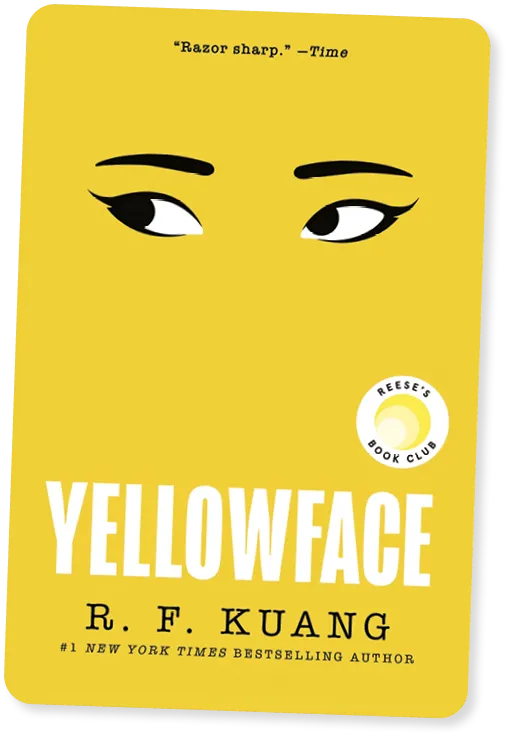
Give advice to a character in the novel Yellowface.
The novel Yellowface by R.F. Kuang tells the story of June Hayward, a writer whose new manuscript raises concerns during the publication process. Imagine that June turns to a group chat with fellow authors to talk through the situation and seek advice. After learning more about the issue, work together to write the conversation, showing the advice the authors give June and how it influences her decision.
The novel Yellowface by R.F. Kuang tells the story of June Hayward, a writer whose new manuscript raises concerns during the publication process. Imagine that June turns to a group chat with fellow authors to talk through the situation and seek advice. After learning more about the issue, work together to write the conversation, showing the advice the authors give June and how it influences her decision.

Ressource affichée de l'autre côté.
Faites défiler pour voir la suite.
Faites défiler pour voir la suite.
1
A character's dilemma
We only run into one wrinkle, a week before my copyedit pass is due.
Daniella emails me out of the blue: Hey June. Hope you've been well. Can you believe we're already six months out from publication? Wanted to bring up something to get your opinion – Candice suggested that we get a Chinese or Chinese diaspora sensitivity reader, and I know it's late in the process, but do you want us to look into things for you?
Sensitivity readers are readers who provide cultural consulting and critiques on manuscripts for a fee. Say, for example, a white author writes a book that involves a Black character. The publisher might then hire a Black sensitivity reader to check whether the textual representations are consciously, or unconsciously, racist. They've gotten more and more popular in the past few years, as more and more white authors have been criticized for employing racist tropes and stereotypes. It's a nice way to avoid getting dragged on Twitter, though sometimes it backfires – I've heard horror stories of at least two writers who were forced to withdraw their books from publication because of a single subjective opinion.
I don't see why, I write back. I'm pretty comfortable with the research I did.
A response instantly pings my inbox. It's Candice, following up. I feel strongly we ought to hire a reader familiar with the history and language. June is not Chinese diaspora, and we run the risk of doing real harm if we don't check any of the Chinese phrases, naming variations, or textual recounting of racism with a reader better suited to catch mistakes.
I groan.
Daniella emails me out of the blue: Hey June. Hope you've been well. Can you believe we're already six months out from publication? Wanted to bring up something to get your opinion – Candice suggested that we get a Chinese or Chinese diaspora sensitivity reader, and I know it's late in the process, but do you want us to look into things for you?
Sensitivity readers are readers who provide cultural consulting and critiques on manuscripts for a fee. Say, for example, a white author writes a book that involves a Black character. The publisher might then hire a Black sensitivity reader to check whether the textual representations are consciously, or unconsciously, racist. They've gotten more and more popular in the past few years, as more and more white authors have been criticized for employing racist tropes and stereotypes. It's a nice way to avoid getting dragged on Twitter, though sometimes it backfires – I've heard horror stories of at least two writers who were forced to withdraw their books from publication because of a single subjective opinion.
I don't see why, I write back. I'm pretty comfortable with the research I did.
A response instantly pings my inbox. It's Candice, following up. I feel strongly we ought to hire a reader familiar with the history and language. June is not Chinese diaspora, and we run the risk of doing real harm if we don't check any of the Chinese phrases, naming variations, or textual recounting of racism with a reader better suited to catch mistakes.
I groan.
Ressource affichée de l'autre côté.
Faites défiler pour voir la suite.
Faites défiler pour voir la suite.


Vidéo associée
From 1:55 to 3:09
Ressource affichée de l'autre côté.
Faites défiler pour voir la suite.
Faites défiler pour voir la suite.
R.F. Kuang is best known for her fantasy novels Babel and Katabasis. Her contemporary novel Yellowface departs from her usual genre to examine cultural tensions in the publishing world.
Ressource affichée de l'autre côté.
Faites défiler pour voir la suite.
Faites défiler pour voir la suite.
Step 1
1
Listen to the podcast, and sum up what you have learnt about the plot and characters in Yellowface.
2
Read the excerpt from the novel. What request does June's editor make? Why?
3
How does June react to the suggestion? What does this reveal about her personality?
Action!
After reading the editor's email, June turns to her authors' group chat to vent. Record the voice memo she sends them.
Ressource affichée de l'autre côté.
Faites défiler pour voir la suite.
Faites défiler pour voir la suite.
2
The sensitivity debate
angt-cs9-step2.mp3
Until a few years ago, only publishing industry insiders would have understood the role of the sensitivity reader. Then came American Dirt. The Jeanine Cummins novel sold to a U.S. publisher for a seven-figure advance, was chosen for Oprah's Book Club, and was touted as “the new Grapes of Wrath”. On the book's release in 2020, early readers noted that the white author's depiction of Mexican people was, at best, flawed, inaccurate, and riddled with stereotypes and, at worst, simply racist.
A sensitivity reader is an additional editor who works alongside the publishing house staffer who acquired the rights to your book. This individual will conduct a very specific read of the manuscript, and offer notes on characters from marginalised groups, or elements which may cause offence. The argument goes that if American Dirt had been sufficiently scrutinised by a reader of Mexican heritage, some of the furore could have been avoided.
The publishing industry is split over the increased usage of sensitivity readers. Lionel Shriver said she would rather quit writing than have her work scrutinised. John Boyne tweeted: “No serious writer would ever allow their work to be so sanitised.” Kate Clanchy claimed sensitivity readers “sullied my memoir to suit their agenda”, and parted ways with the publisher who employed such professionals. [...]
When writing my forthcoming adult debut, Her Majesty's Royal Coven, I created a character called Leonie, a mixed-race woman from Leeds. [...]
There were elements of Leonie that were very familiar to me. Like her, I'm from Yorkshire, I'm queer, and I am ambitious. Unlike Leonie, I am white.
So, to the surprise of my UK publisher, I petitioned to get a sensitivity reader. If I was to include Leonie in my book, I wanted to know I had done her, and myself, justice. My publishers agreed so I sent my manuscript to a sensitivity reader, herself a mixed-race woman, and I waited to hear her thoughts.
A sensitivity reader is an additional editor who works alongside the publishing house staffer who acquired the rights to your book. This individual will conduct a very specific read of the manuscript, and offer notes on characters from marginalised groups, or elements which may cause offence. The argument goes that if American Dirt had been sufficiently scrutinised by a reader of Mexican heritage, some of the furore could have been avoided.
The publishing industry is split over the increased usage of sensitivity readers. Lionel Shriver said she would rather quit writing than have her work scrutinised. John Boyne tweeted: “No serious writer would ever allow their work to be so sanitised.” Kate Clanchy claimed sensitivity readers “sullied my memoir to suit their agenda”, and parted ways with the publisher who employed such professionals. [...]
When writing my forthcoming adult debut, Her Majesty's Royal Coven, I created a character called Leonie, a mixed-race woman from Leeds. [...]
There were elements of Leonie that were very familiar to me. Like her, I'm from Yorkshire, I'm queer, and I am ambitious. Unlike Leonie, I am white.
So, to the surprise of my UK publisher, I petitioned to get a sensitivity reader. If I was to include Leonie in my book, I wanted to know I had done her, and myself, justice. My publishers agreed so I sent my manuscript to a sensitivity reader, herself a mixed-race woman, and I waited to hear her thoughts.
Ressource affichée de l'autre côté.
Faites défiler pour voir la suite.
Faites défiler pour voir la suite.
Step 2
1
List the main arguments in favour of using sensitivity readers.
2
What concerns or criticisms do authors and publishers raise about sensitivity readers?
3
Select the arguments that could be used to give advice to June.
Action!
Continue the story in the group chat, as the authors discuss the pros and cons of hiring a sensitivity reader.
Ressource affichée de l'autre côté.
Faites défiler pour voir la suite.
Faites défiler pour voir la suite.
3
An author's experience

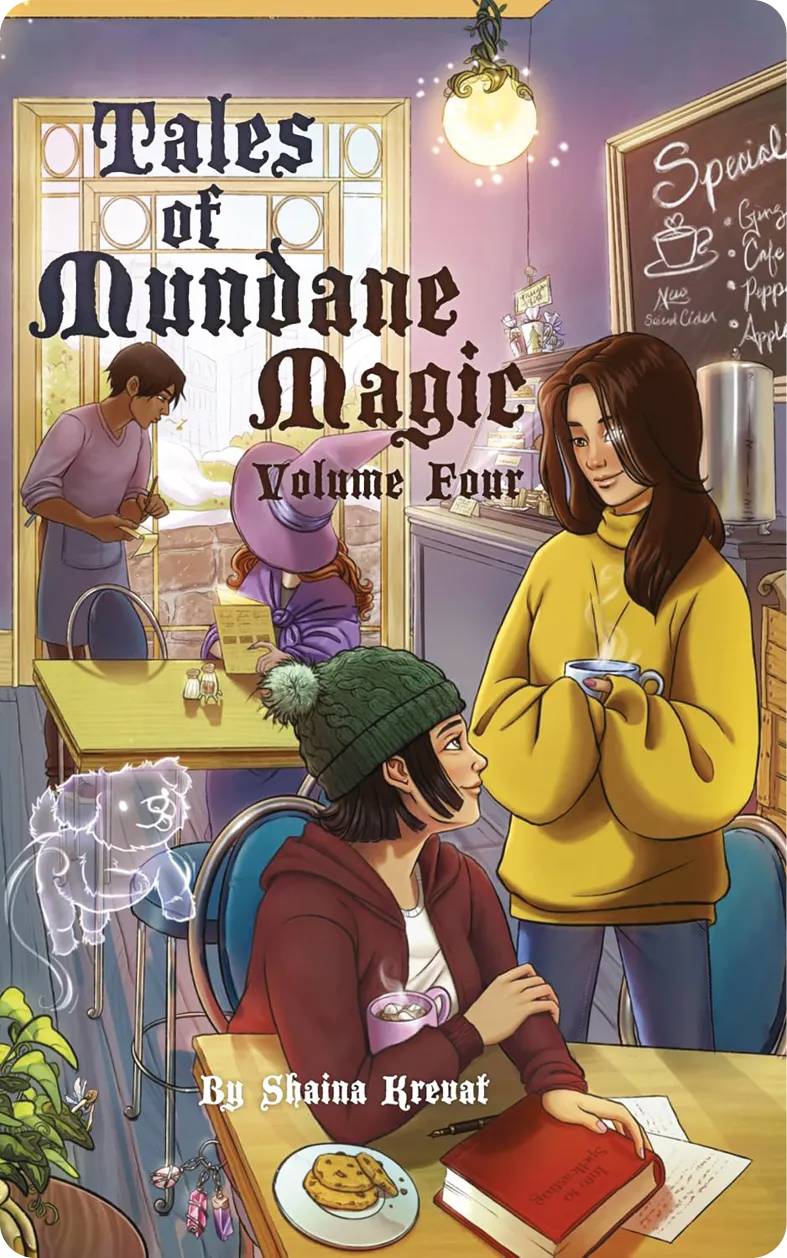
Shaina Krevat, Tales of Mundane Magic, Volume Four, 2023.
Vidéo associée
From 0:00 to 2:39Ressource affichée de l'autre côté.
Faites défiler pour voir la suite.
Faites défiler pour voir la suite.
Ready...
- Gather your notes from the documents. Make sure you understand the context of the novel and the arguments for and against hiring a sensitivity reader.
Steady...
- Decide which perspective each of you will bring to the discussion. Think of the advice you would give June and how she could respond.
Go!
- Write the dialogue in the group chat. Write comments, respond to others, and work together to help the main character make a decision about the manuscript.
Une erreur sur la page ? Une idée à proposer ?
Nos manuels sont collaboratifs, n'hésitez pas à nous en faire part.
j'ai une idée !
Oups, une coquille