Vue papier
Découvrez la vue papier en cliquant ici
Case Study 10
Axe 4
Objet d'étude 1
Singing for Irish
Ressource affichée de l'autre côté.
Faites défiler pour voir la suite.
Faites défiler pour voir la suite.
Play the role of IMLÉ on a talk show.
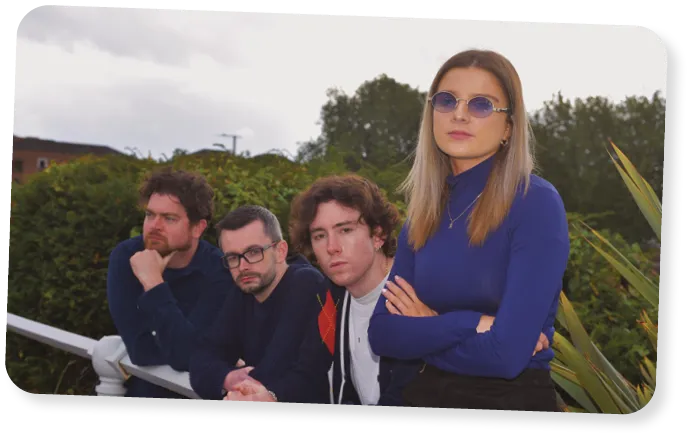
You are members of the Irish music collective IMLÉ. Your band has been invited on The Graham Norton Show to promote the release of your new single. During the interview, Graham Norton asks why you choose to sing in Irish. Explain to him and the other guests why keeping the Irish language alive matters today.
You are members of the Irish music collective IMLÉ. Your band has been invited on The Graham Norton Show to promote the release of your new single. During the interview, Graham Norton asks why you choose to sing in Irish. Explain to him and the other guests why keeping the Irish language alive matters today.

Ressource affichée de l'autre côté.
Faites défiler pour voir la suite.
Faites défiler pour voir la suite.
1
An bhfuil Gaeilge agat? Do you speak Irish?
angt-cs10-step1.mp3
The UK is being urged by Europe's leading human rights organisation to push ahead with strategies to promote the use of Irish and Ulster Scots languages in Northern Ireland despite continued tensions over the issue.
The Council of Europe experts also want to see the strengthening of teaching of all minority languages in the UK including Cornish, Scots, Scottish Gaelic, Welsh and Manx Gaelic in the Isle of Man. [...]
Their recommendation comes as the hit movie Kneecap, about the eponymous Belfast republican Irish language rap trio, made by the former Daily Star journalist Rich Peppiatt, continues to enthral audiences and drive home its subtext over the loss of indigenous languages.
Legislation to enhance and develop the use of both Irish and Ulster Scots in language, arts and literature was passed [...] after a long battle resulting in the Identity and Language Act 2022. [...]
The Council of Europe [...] says the government should “without delay” implement “fully” the Identity and Language Act 2022 as well as devise a plan for the recruitment of Irish language teachers. [...]
Minority language broadcasting was one way to promote language understanding and use, as non-English-language TV stations such as S4C and BBC Alba already show.
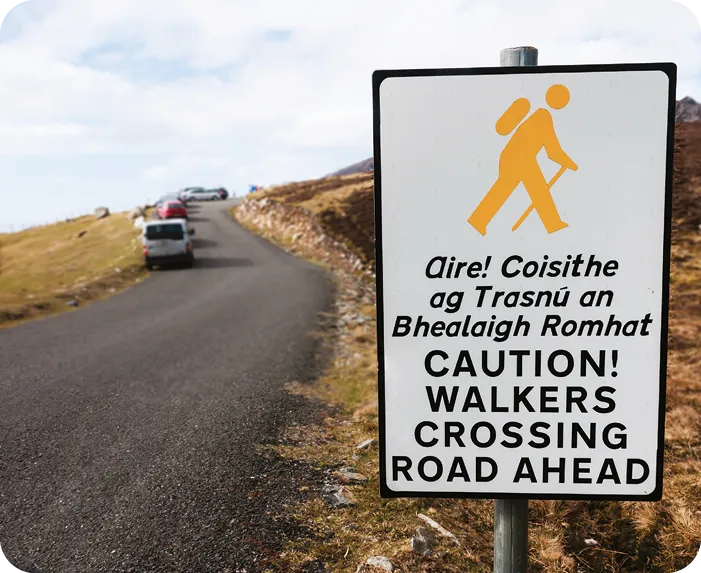
Further recommendations including a call to ensure the translation into Irish of the most important laws in Northern Ireland and a move to remove local authority barriers to bilingual signage so that traditional Irish place names can be used in towns and roads.
The Council of Europe experts also want to see the strengthening of teaching of all minority languages in the UK including Cornish, Scots, Scottish Gaelic, Welsh and Manx Gaelic in the Isle of Man. [...]
Their recommendation comes as the hit movie Kneecap, about the eponymous Belfast republican Irish language rap trio, made by the former Daily Star journalist Rich Peppiatt, continues to enthral audiences and drive home its subtext over the loss of indigenous languages.
Legislation to enhance and develop the use of both Irish and Ulster Scots in language, arts and literature was passed [...] after a long battle resulting in the Identity and Language Act 2022. [...]
The Council of Europe [...] says the government should “without delay” implement “fully” the Identity and Language Act 2022 as well as devise a plan for the recruitment of Irish language teachers. [...]
Minority language broadcasting was one way to promote language understanding and use, as non-English-language TV stations such as S4C and BBC Alba already show.
Further recommendations including a call to ensure the translation into Irish of the most important laws in Northern Ireland and a move to remove local authority barriers to bilingual signage so that traditional Irish place names can be used in towns and roads.
Ressource affichée de l'autre côté.
Faites défiler pour voir la suite.
Faites défiler pour voir la suite.

Vidéo associée
From 0:00 to 2:35Ressource affichée de l'autre côté.
Faites défiler pour voir la suite.
Faites défiler pour voir la suite.
Step 1
1
Watch the video. Sum up what you have learnt about Celtic languages in the British Isles. Why do you think they have survived despite the English language being dominant?
2
Read the text. Quote reasons why the UK should promote Irish and other minority languages.
3
Identify the measures recommended by the Council of Europe to support minority languages in the UK.
Action!
Prepare show notes to help you answer questions about the Irish language: its history, the current situation, and measures taken.
Ressource affichée de l'autre côté.
Faites défiler pour voir la suite.
Faites défiler pour voir la suite.
2
A Celtic revival
angt-cs10-step2.mp3

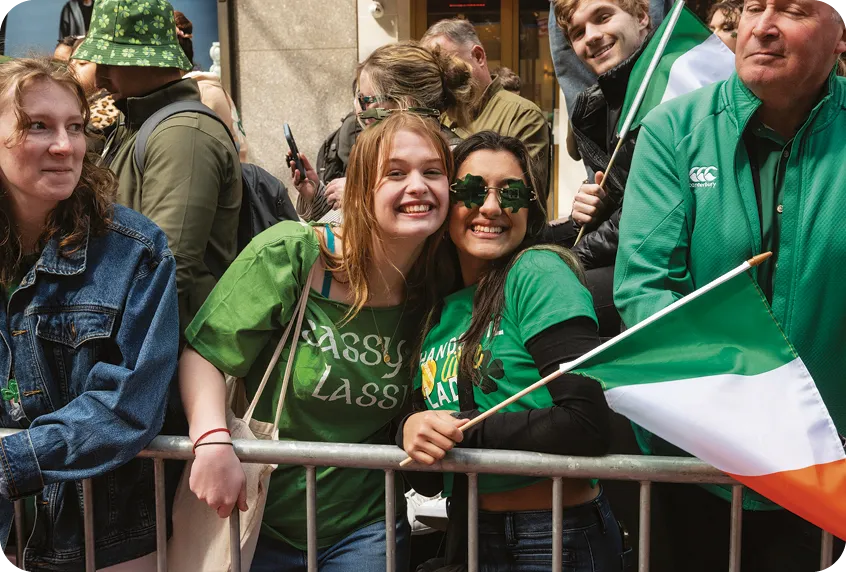
Across Ireland, English is playing second fiddle to Irish in emerging arts scenes. Even though fewer than 2% of the population speak it daily, Irish is hip; the preferred language of young poets at bilingual spoken-word nights such as REIC (which Ní É runs) or Seanchoíche (meaning storytelling). It is being blared out in metal, techno and hip-hop. [...]
Irish culture has always travelled well but there is a remarkable confidence in it right now. The big progressive gains of the past decade from referendums on equal marriage and abortion, plus the receding of painful theocratic and political histories, have fostered a space for artists, and a young generation to shape a new kind of national identity. [...]
Artists are drawn to Irish because it feels so box-fresh. Irish language music can be wildly experimental; hip-hop from Kerry-based rapper Súil Amháin, progressive metal like west Cork's Corr Mhóna or the Belfast-based Huartan's “tradtronica”, traditional songs set to electronica. “When you're writing music [in English], you feel like you're doing something that's already happened,” says Cian Mac Cárthaigh, founder of the IMLÉ collective, which blends electronica and R&B in the first language. “With Irish, there's so many ways to say the same thing. The language is so rich, and depending on who is singing it, it can be totally different. I feel a kind of freedom in Irish.”
Irish language music is still pigeonholed, says Mac Cárthaigh, with airplay still reserved for special occasions like St Patrick's Day. But internationally, the appetite for minority language art is changing. IMLÉ soundtrack a Netflix show out later this year and the collective's latest U.S. and European tour dates have drawn a diverse crowd, not just Irish abroad supporting a band from home. [...] Local Eurovision fans have been encouraging IMLÉ to enter the competition, in the hope an Irish language entry would stand out. “If the music is good it will translate,” says Mác Carthaigh, who doesn't rule out a run in 2025.
Irish culture has always travelled well but there is a remarkable confidence in it right now. The big progressive gains of the past decade from referendums on equal marriage and abortion, plus the receding of painful theocratic and political histories, have fostered a space for artists, and a young generation to shape a new kind of national identity. [...]
Artists are drawn to Irish because it feels so box-fresh. Irish language music can be wildly experimental; hip-hop from Kerry-based rapper Súil Amháin, progressive metal like west Cork's Corr Mhóna or the Belfast-based Huartan's “tradtronica”, traditional songs set to electronica. “When you're writing music [in English], you feel like you're doing something that's already happened,” says Cian Mac Cárthaigh, founder of the IMLÉ collective, which blends electronica and R&B in the first language. “With Irish, there's so many ways to say the same thing. The language is so rich, and depending on who is singing it, it can be totally different. I feel a kind of freedom in Irish.”
Irish language music is still pigeonholed, says Mac Cárthaigh, with airplay still reserved for special occasions like St Patrick's Day. But internationally, the appetite for minority language art is changing. IMLÉ soundtrack a Netflix show out later this year and the collective's latest U.S. and European tour dates have drawn a diverse crowd, not just Irish abroad supporting a band from home. [...] Local Eurovision fans have been encouraging IMLÉ to enter the competition, in the hope an Irish language entry would stand out. “If the music is good it will translate,” says Mác Carthaigh, who doesn't rule out a run in 2025.
Ressource affichée de l'autre côté.
Faites défiler pour voir la suite.
Faites défiler pour voir la suite.
Step 2
1
Give examples showing that Irish and other Celtic languages are becoming more popular.
2
How does the article explain this surge in popularity?
3
Why do artists such as Cian Mac Cárthaigh choose to create music in Irish?
4
Find quotes that show how Irish music can reach a global audience.
Action!
Before the show, Graham Norton asks you to send a voice memo to introduce your band. Go online to complete your research before recording it.
Ressource affichée de l'autre côté.
Faites défiler pour voir la suite.
Faites défiler pour voir la suite.
Ready...
- Collect your notes about IMLÉ, their songs, and how they use Irish, as well as what you learnt about the Irish language.
Steady...
- Finalise your show notes with key facts, quotes, and personal stories. Add a few pop culture examples to show you are part of a movement!
Go!
- Record your answer to Graham Norton's question. Remember that it is a TV show and that it should be entertaining!
Une erreur sur la page ? Une idée à proposer ?
Nos manuels sont collaboratifs, n'hésitez pas à nous en faire part.
j'ai une idée !
Oups, une coquille