Vue papier

Découvrez la vue papier en cliquant ici
Unit 13
Book Club
Bournville
Ressource affichée de l'autre côté.
Faites défiler pour voir la suite.
Faites défiler pour voir la suite.
Bournville is a novel set in the suburb of Bournville, near Birmingham, home to a famous chocolate factory that shapes the lives of its community. The story begins in 1945 with eleven-year-old Mary, whose childhood unfolds in streets scented with chocolate. As Mary grows up, she lives through seventy-five years of British history, from the Queen's Coronation and the 1966 World Cup to royal weddings, Brexit and Covid-19. Through her life the novel traces the transformation of both a family and a nation.

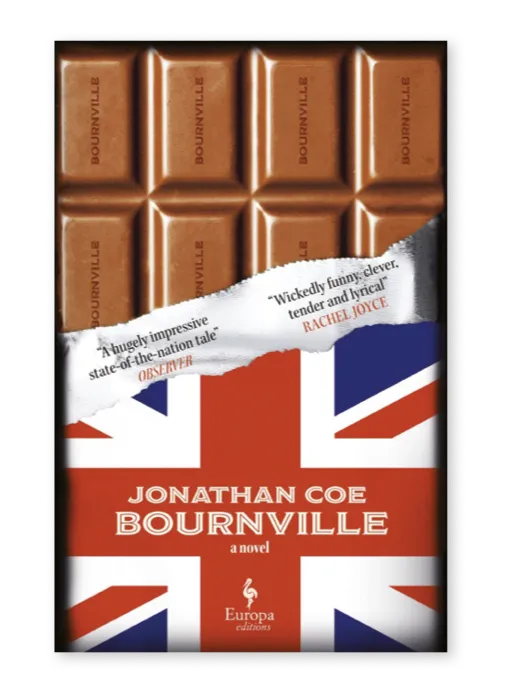
Book cover of Bournville.
Ressource affichée de l'autre côté.
Faites défiler pour voir la suite.
Faites défiler pour voir la suite.

Ressource affichée de l'autre côté.
Faites défiler pour voir la suite.
Faites défiler pour voir la suite.
Texte
Bournville
A visit to the cinema in Porthmadog, one evening in the early summer of 1969, had
marked
the start of a family tradition. Since that day, when all three of Mary's sons had
fallen under the spell of Thunderball, they had measured out the 1970s in James Bond
films. On Her Majesty's Secret Service was the first one they had seen as a family, in
the spring of 1970. Martin in particular was captivated by its pristine snowscapes,
by the notion of an Alpine hideaway populated entirely by beautiful women, and
by the unexpected,
devastating melancholy of the film's final scene. Mary had complained
that George Lazenby was not as sexy as Sean Connery, and was relieved when Connery
returned for Diamonds Are Forever. They saw it one Saturday afternoon in central
Birmingham, a wintry
day in mid-January 1972, and although fans would not judge
the film kindly in the decades to come, to escape for two hours from the freezing drizzle
that whipped along New Street into the sunshine of the Nevada desert and the glamour
of Las Vegas was blissful. Live and Let Die, released in July 1973 and consumed by the
Lamb family on their caravan holiday near Plymouth the next month, saw Roger Moore
replacing Sean Connery, at which point Mary abandoned the franchise. She thought he was
too old, too English, too posh, insufficiently serious and insufficiently masculine, and from
then on, watching these films would be a ritual shared only between the men of the family.
The Man With the Golden Gun made a perfect post Christmas treat in December 1974, at
the end of a year which Jack, Martin and Peter had thoroughly enjoyed, but Geoffrey had
found alarming: oil prices had soared in the wake of the Yom Kippur war, the trade unions
had flexed their muscles, the IRA had killed twenty-one people in a Birmingham pub
and a Labour government had been elected. Under the influence of these developments
Geoffrey slipped into a mood of chronic apprehension, and the film itself was not involving
enough or memorable enough to snap him out of it.
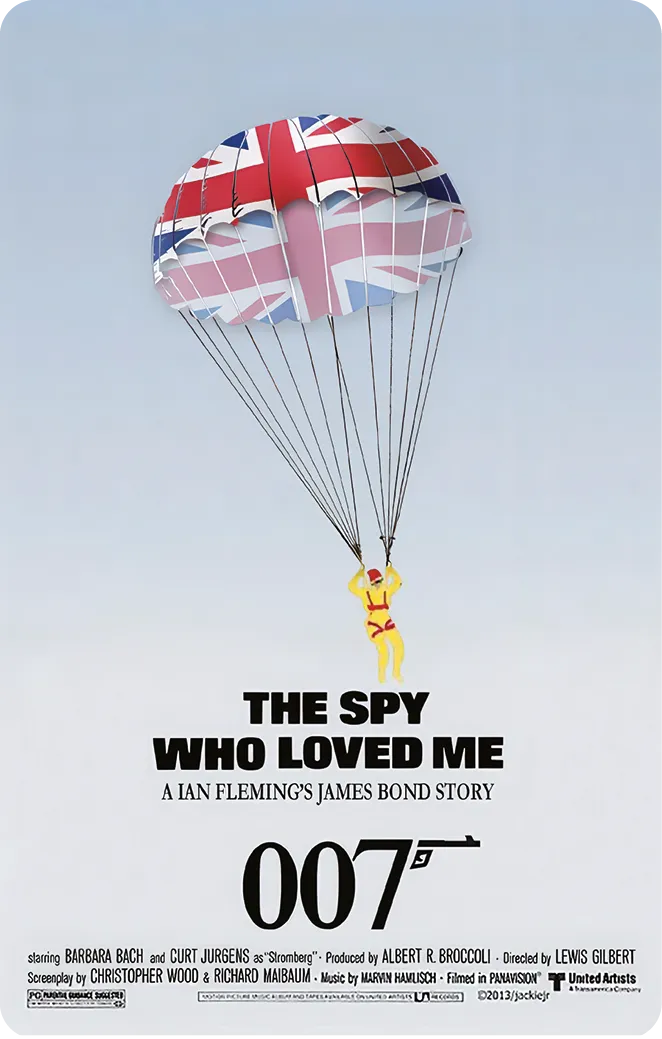
But two and a half years later came The Spy Who Loved Me, and with this instalment Bond truly came to the rescue of his country. It was released, in fact, at a moment of fleeting, sunbathed national optimism. The Queen's Silver Jubilee (twenty-five years since she came to the throne! Twenty-five!) had been celebrated with souvenirs, street parties and boisterous singing of the national anthem even as the Sex Pistols' “God Save the Queen” was climbing almost to the top of the charts. It was somehow wonderfully revealing of the national character that these two songs could be on everybody's lips at the same time. The jubilee celebrations were succeeded in early July by two miraculous events: Virginia Wade winning the women's singles championship for Britain at Wimbledon, and Peter Lamb passing his Grade 8 Violin exam with distinction. Geoffrey and the boys were already feeling chipper, then, when they filed into the dress circle of the Odeon New Street one balmy night towards the end of that month. The cinema was packed. Buoyed up by the news of recent weeks, the audience's first big laugh of appreciation – along with a scattered round of applause – came after just two minutes, when Bond […] on being told by the lucky female in question that “I need you, James,” answered, “So does England,” with a charmingly rueful smile. But the audience response to this line was nothing compared to what came next. Escaping his pursuers on skis and hurling himself over the edge of a snowy precipice, Bond went into freefall and was well on his way to certain death when the backpack he was carrying opened out into a life-saving parachute and this parachute revealed itself – joy of joys – to consist of an enormous Union Jack. The crowd in the cinema went wild. People were rising to their feet, punching the air and raising cheers that filled the auditorium and probably spilled into the street outside.
But two and a half years later came The Spy Who Loved Me, and with this instalment Bond truly came to the rescue of his country. It was released, in fact, at a moment of fleeting, sunbathed national optimism. The Queen's Silver Jubilee (twenty-five years since she came to the throne! Twenty-five!) had been celebrated with souvenirs, street parties and boisterous singing of the national anthem even as the Sex Pistols' “God Save the Queen” was climbing almost to the top of the charts. It was somehow wonderfully revealing of the national character that these two songs could be on everybody's lips at the same time. The jubilee celebrations were succeeded in early July by two miraculous events: Virginia Wade winning the women's singles championship for Britain at Wimbledon, and Peter Lamb passing his Grade 8 Violin exam with distinction. Geoffrey and the boys were already feeling chipper, then, when they filed into the dress circle of the Odeon New Street one balmy night towards the end of that month. The cinema was packed. Buoyed up by the news of recent weeks, the audience's first big laugh of appreciation – along with a scattered round of applause – came after just two minutes, when Bond […] on being told by the lucky female in question that “I need you, James,” answered, “So does England,” with a charmingly rueful smile. But the audience response to this line was nothing compared to what came next. Escaping his pursuers on skis and hurling himself over the edge of a snowy precipice, Bond went into freefall and was well on his way to certain death when the backpack he was carrying opened out into a life-saving parachute and this parachute revealed itself – joy of joys – to consist of an enormous Union Jack. The crowd in the cinema went wild. People were rising to their feet, punching the air and raising cheers that filled the auditorium and probably spilled into the street outside.
Ressource affichée de l'autre côté.
Faites défiler pour voir la suite.
Faites défiler pour voir la suite.
a) When and where does the extract start?
Ressource affichée de l'autre côté.
Faites défiler pour voir la suite.
Faites défiler pour voir la suite.
b) What attracts Martin in James Bond films?
Ressource affichée de l'autre côté.
Faites défiler pour voir la suite.
Faites défiler pour voir la suite.
c) Why is James Bond no longer of interest for Mary?
Ressource affichée de l'autre côté.
Faites défiler pour voir la suite.
Faites défiler pour voir la suite.
d) What is the impact of the political context on the mood of British people at the time?
Ressource affichée de l'autre côté.
Faites défiler pour voir la suite.
Faites défiler pour voir la suite.
e) What events helped bring the British nation together?
Ressource affichée de l'autre côté.
Faites défiler pour voir la suite.
Faites défiler pour voir la suite.
f) What British values does James Bond embody?
Ressource affichée de l'autre côté.
Faites défiler pour voir la suite.
Faites défiler pour voir la suite.
g) How does the audience react at the sight of the flag?
Ressource affichée de l'autre côté.
Faites défiler pour voir la suite.
Faites défiler pour voir la suite.
Jonathan Coe is a British writer and novelist born on
19 August 1961 in Lickey, a suburb of Birmingham.
He published his first novel, The Accidental Woman, in 1987.
He has received many prizes in different countries, including
the Costa Novel Award and the Médicis. Several of his novels
have been adapted on TV, in films, and in BBC radio dramas.


Ressource affichée de l'autre côté.
Faites défiler pour voir la suite.
Faites défiler pour voir la suite.
Write a scene for the next James Bond film.
The kingdom is in danger; Agent 007 is called to the rescue. Choose a new actor to embody your hero and imagine a scene featuring the Union Jack. Think about what the flag represents in your scene: patriotism, union, disunion, or something else entirely? Use its symbolism to add depth to your scene and make it cinematic and unforgettable!
The kingdom is in danger; Agent 007 is called to the rescue. Choose a new actor to embody your hero and imagine a scene featuring the Union Jack. Think about what the flag represents in your scene: patriotism, union, disunion, or something else entirely? Use its symbolism to add depth to your scene and make it cinematic and unforgettable!