Vue papier
Découvrez la vue papier en cliquant ici
Unit 14
Activity 3
Iconic BBC shows
Ressource affichée de l'autre côté.
Faites défiler pour voir la suite.
Faites défiler pour voir la suite.
Group 1Peaky Blinders: Flat cap nation
Group 1
Ressource affichée de l'autre côté.
Faites défiler pour voir la suite.
Faites défiler pour voir la suite.
angt-unit14-activity3-group1.mp3
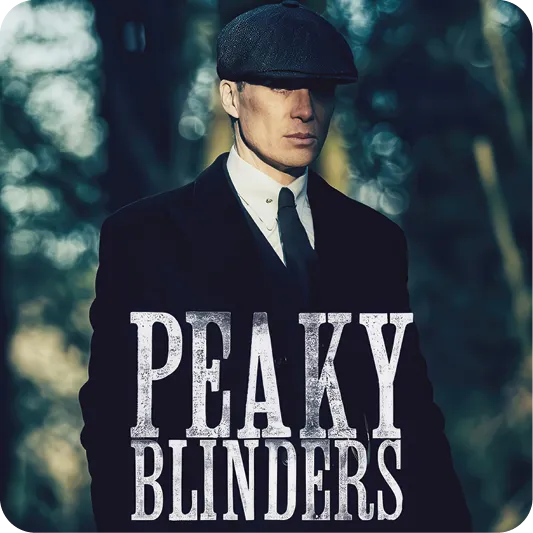
In the space of six series, the crime drama set in 1920s Birmingham has become a ratings hit, spawning theme pubs, fashion lines and festivals. How did it become a cross-cultural phenomenon?
Since it landed on BBC Two in 2013, Peaky Blinders has become a huge popular hit while somehow retaining cult appeal. [...]
Milligan was immediately sucked in. In the first series, set in 1919, a working-class family with Irish Traveller and Romany Gypsy heritage, amazing cheekbones and battlefield trauma from the first world war, fight and scheme (and invariably murder) their way out of poverty in the Small Heath slums of Birmingham. Eventually, they build a criminal empire and Tommy becomes an MP.
“The Shelbys are a family that do bad things but they're trying to survive,” says Milligan, a youthful 61.
[...] He is old enough to feel nostalgic about what he sees as a lost British era, but at Peaky events he's struck by how many younger fans feel the same way.
“A lot of youngsters are drawn in by the gangster glamour,” says Carl Chinn, a professor of community history at the University of Birmingham, who grew up in the city in a family of backstreet bookmakers. His great-grandfather was a real-life Peaky Blinder. [...]
Peaky's biggest impact has been in Birmingham itself, where civic pride is fierce but rarely projected. “I think as technology and the economy moves on, a lot of people like to think about the origins of this place,” says Andy Street, another Birmingham boy and now mayor of the West Midlands. “There is a real affection that the show has tapped into.”
Since it landed on BBC Two in 2013, Peaky Blinders has become a huge popular hit while somehow retaining cult appeal. [...]
Milligan was immediately sucked in. In the first series, set in 1919, a working-class family with Irish Traveller and Romany Gypsy heritage, amazing cheekbones and battlefield trauma from the first world war, fight and scheme (and invariably murder) their way out of poverty in the Small Heath slums of Birmingham. Eventually, they build a criminal empire and Tommy becomes an MP.
“The Shelbys are a family that do bad things but they're trying to survive,” says Milligan, a youthful 61.
[...] He is old enough to feel nostalgic about what he sees as a lost British era, but at Peaky events he's struck by how many younger fans feel the same way.
“A lot of youngsters are drawn in by the gangster glamour,” says Carl Chinn, a professor of community history at the University of Birmingham, who grew up in the city in a family of backstreet bookmakers. His great-grandfather was a real-life Peaky Blinder. [...]
Peaky's biggest impact has been in Birmingham itself, where civic pride is fierce but rarely projected. “I think as technology and the economy moves on, a lot of people like to think about the origins of this place,” says Andy Street, another Birmingham boy and now mayor of the West Midlands. “There is a real affection that the show has tapped into.”
Ressource affichée de l'autre côté.
Faites défiler pour voir la suite.
Faites défiler pour voir la suite.
Ressource affichée de l'autre côté.
Faites défiler pour voir la suite.
Faites défiler pour voir la suite.
Questions
You are in charge of one text.
1
Pick out information on the TV show: genre, date, storyline, etc. What makes it popular?
2
Identify how it reflects British society, history or culture. Give examples.
3
How does it make its audience feel? Why do you think it appeals to viewers?
Let's talk this out!
4
Present your document to the other groups. What similarities and differences do you notice in the way the three programmes reflect British culture?
5
In your opinion, how can fictional shows influence the way viewers think about British society and identity?
6
If you had to recommend one show to someone who wants to understand Britain, which would it be and why?
Ressource affichée de l'autre côté.
Faites défiler pour voir la suite.
Faites défiler pour voir la suite.
Find three adjectives
to describe one of
the series, and use
them to write a onesentence
review.
Ressource affichée de l'autre côté.
Faites défiler pour voir la suite.
Faites défiler pour voir la suite.
Write an article presenting top BBC shows.
You are creating a BBC guide for new viewers abroad to introduce them to British culture through television. Pick three shows (from this page or others you know) and write an article about your selection, including fun facts and examples.
You are creating a BBC guide for new viewers abroad to introduce them to British culture through television. Pick three shows (from this page or others you know) and write an article about your selection, including fun facts and examples.
Une erreur sur la page ? Une idée à proposer ?
Nos manuels sont collaboratifs, n'hésitez pas à nous en faire part.
j'ai une idée !
Oups, une coquille