Vue papier
Découvrez la vue papier en cliquant ici
Unit 1
Book Club
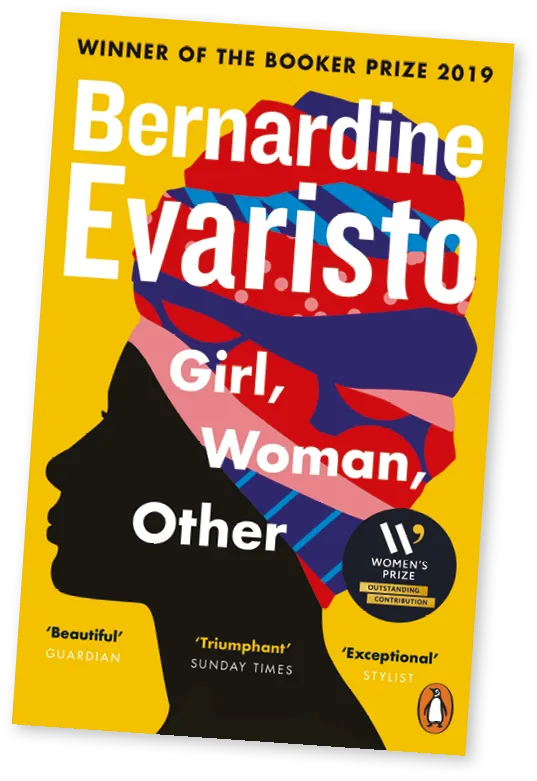
Girl, Woman, Other
Ressource affichée de l'autre côté.
Faites défiler pour voir la suite.
Faites défiler pour voir la suite.
Girl, Woman, Other follows the lives of twelve Black British women across generations. One character, Winsome, is part of the Windrush generation: she migrated from the Caribbean to Britain, experiencing both hope and hardship. The novel blends voices and perspectives using a fluid, poetic style with minimal punctuation to reflect the rhythm of oral storytelling. Spanning different time periods, it offers a rich portrait of Black British identity and the legacy of Windrush.
Ressource affichée de l'autre côté.
Faites défiler pour voir la suite.
Faites défiler pour voir la suite.
Texte
Girl, Woman, Other
tell me about how you and Grandad met, Rachel asks her out of the blue, stroking Madison's back who's perched sleepily, precariously on her lap
Winsome must look taken aback because Rachel adds, I want to know your stories to pass on to Madison when she's older, Nana, I want to know what it was like when you were a person in your own right
Winsome has listened to her grandchildren since they could speak, and they've never asked about her
she understands that young people are consumed by themselves, and her role is to comfort and reassure and be caring towards them when their parents are cross with them
Winsome likes the fact that Rachel is curious enough to know who her grandmother was before she was a mother, when she was a person in her own right, as she described it
except she has never been, first she was a daughter, then a wife and mother, and now also a grandmother and great-grandmother.
I met your grandfather soon after I arrived in England in the fifties, Rachel, at a West Indian gathering in a pub in Ladbroke Grove where I found myself sitting next to none other than Clovis Robinson from Six Men's Fishing Bay
our fathers were fishermen, but we only knew of each other at a distance
it took travelling thousands of miles for us to properly connect, he's already been in England two years
he told me, it hard here, girl, it hard [...]
we married and moved into a room in Tooting where we shared a sink curtained off in the hallway, and toilet in a cardboard cubicle, with a house full of other tenants
we started saving for a house because ordinary people could afford to buy houses in London in those days if they saved for long enough
then Clovis had the dam chupid idea that we use our savings and head off for the south-west of England
he's heard it was warmer there and he could find work as a fisherman [...]
one evening we sat on a windy harbour eating fish and chips out of filthy newspaper, which is how English people used to eat it, yes, you can screw up your face, it was a disgusting custom
I tried to persuade him to give up on his silly pipe dream and return to London
he said, Winnie, I want to try the small islands of the Scilly Isles further south where it's warmer, and there must be lots of work for fishermen
Clovis, if that's what you want, why don't we return home where we belong?
Winnie, I mek up mi mind, I got to try this place, I have a hunch [...]
imagine us, Rachel, over sixty years ago, a coloured man and woman, Clovis six foot four with me a foot shorter, wearing my smart dress, coat and heels because we had to look respectable, a suitcase each, walking down country lanes where it seemed most people had never seen coloured people before [...]
you can't work here, they said, when Clovis asked down at the quay
you can't eat here, they said, when we entered a little caff
you can't drink here, the barman said when we entered a pub
you can't sleep here because your colour will come off on the sheets, said the woman who had a sign for lodgings in her window, people was that rude and ignorant back then, they spoke their mind and didn't care that they hurt you because there was no anti-discrimination law to stop them [...]
however, Rachel, one thing I learnt from my time down there, is that if you stay somewhere long enough, and behave in a civilized manner, people will get used to you
Mrs Beresford, an elderly widow, who lived a few doors down, was the first to have a proper chat [...]
she introduced me to Mrs Wright and Mrs Missingham, both from the local church, at a special tea she laid on for me and the children after school one day
it was my first time in an English person's home, i remember it clear as daylight and wanting a home like this for my family [...]
she showed me how to toast crumpets over the coal fire
how to make proper tea using proper milk and not condensed
how to put the milk in last and not first
Mrs Beresford
invited us to church and when my family of five entered the drive, her and Mrs Wright and Mrs Missingham greeted us as if we was long lost friends
they each took a child protectively by the hand
and walked us in
Winsome must look taken aback because Rachel adds, I want to know your stories to pass on to Madison when she's older, Nana, I want to know what it was like when you were a person in your own right
Winsome has listened to her grandchildren since they could speak, and they've never asked about her
she understands that young people are consumed by themselves, and her role is to comfort and reassure and be caring towards them when their parents are cross with them
Winsome likes the fact that Rachel is curious enough to know who her grandmother was before she was a mother, when she was a person in her own right, as she described it
except she has never been, first she was a daughter, then a wife and mother, and now also a grandmother and great-grandmother.
I met your grandfather soon after I arrived in England in the fifties, Rachel, at a West Indian gathering in a pub in Ladbroke Grove where I found myself sitting next to none other than Clovis Robinson from Six Men's Fishing Bay
our fathers were fishermen, but we only knew of each other at a distance
it took travelling thousands of miles for us to properly connect, he's already been in England two years
he told me, it hard here, girl, it hard [...]
we married and moved into a room in Tooting where we shared a sink curtained off in the hallway, and toilet in a cardboard cubicle, with a house full of other tenants
we started saving for a house because ordinary people could afford to buy houses in London in those days if they saved for long enough
then Clovis had the dam chupid idea that we use our savings and head off for the south-west of England
he's heard it was warmer there and he could find work as a fisherman [...]
one evening we sat on a windy harbour eating fish and chips out of filthy newspaper, which is how English people used to eat it, yes, you can screw up your face, it was a disgusting custom
I tried to persuade him to give up on his silly pipe dream and return to London
he said, Winnie, I want to try the small islands of the Scilly Isles further south where it's warmer, and there must be lots of work for fishermen
Clovis, if that's what you want, why don't we return home where we belong?
Winnie, I mek up mi mind, I got to try this place, I have a hunch [...]
imagine us, Rachel, over sixty years ago, a coloured man and woman, Clovis six foot four with me a foot shorter, wearing my smart dress, coat and heels because we had to look respectable, a suitcase each, walking down country lanes where it seemed most people had never seen coloured people before [...]
you can't work here, they said, when Clovis asked down at the quay
you can't eat here, they said, when we entered a little caff
you can't drink here, the barman said when we entered a pub
you can't sleep here because your colour will come off on the sheets, said the woman who had a sign for lodgings in her window, people was that rude and ignorant back then, they spoke their mind and didn't care that they hurt you because there was no anti-discrimination law to stop them [...]
however, Rachel, one thing I learnt from my time down there, is that if you stay somewhere long enough, and behave in a civilized manner, people will get used to you
Mrs Beresford, an elderly widow, who lived a few doors down, was the first to have a proper chat [...]
she introduced me to Mrs Wright and Mrs Missingham, both from the local church, at a special tea she laid on for me and the children after school one day
it was my first time in an English person's home, i remember it clear as daylight and wanting a home like this for my family [...]
she showed me how to toast crumpets over the coal fire
how to make proper tea using proper milk and not condensed
how to put the milk in last and not first
Mrs Beresford
invited us to church and when my family of five entered the drive, her and Mrs Wright and Mrs Missingham greeted us as if we was long lost friends
they each took a child protectively by the hand
and walked us in
Ressource affichée de l'autre côté.
Faites défiler pour voir la suite.
Faites défiler pour voir la suite.
a) What strikes you when you look at the beginning and at the end of the sentences? How do you interpret this choice?
Ressource affichée de l'autre côté.
Faites défiler pour voir la suite.
Faites défiler pour voir la suite.
b) Who are the characters in this excerpt? How are they related?
Ressource affichée de l'autre côté.
Faites défiler pour voir la suite.
Faites défiler pour voir la suite.
c) Girl, Woman, Other: what are the other possible statuses females can have in this story?
Ressource affichée de l'autre côté.
Faites défiler pour voir la suite.
Faites défiler pour voir la suite.
d) What is the effect of the youth of free indirect speech?
Ressource affichée de l'autre côté.
Faites défiler pour voir la suite.
Faites défiler pour voir la suite.
e) How can you tell Winsome was a foreigner in England?
Ressource affichée de l'autre côté.
Faites défiler pour voir la suite.
Faites défiler pour voir la suite.
f) Why are people surprised by Winsome and Clovis' appearance?
Ressource affichée de l'autre côté.
Faites défiler pour voir la suite.
Faites défiler pour voir la suite.
g) What is the literary device used here?
Ressource affichée de l'autre côté.
Faites défiler pour voir la suite.
Faites défiler pour voir la suite.
h) Who helped Winsome fit in in her new English neighbourhood?
Ressource affichée de l'autre côté.
Faites défiler pour voir la suite.
Faites défiler pour voir la suite.
i) How did meeting this character impact Winsome?
Ressource affichée de l'autre côté.
Faites défiler pour voir la suite.
Faites défiler pour voir la suite.
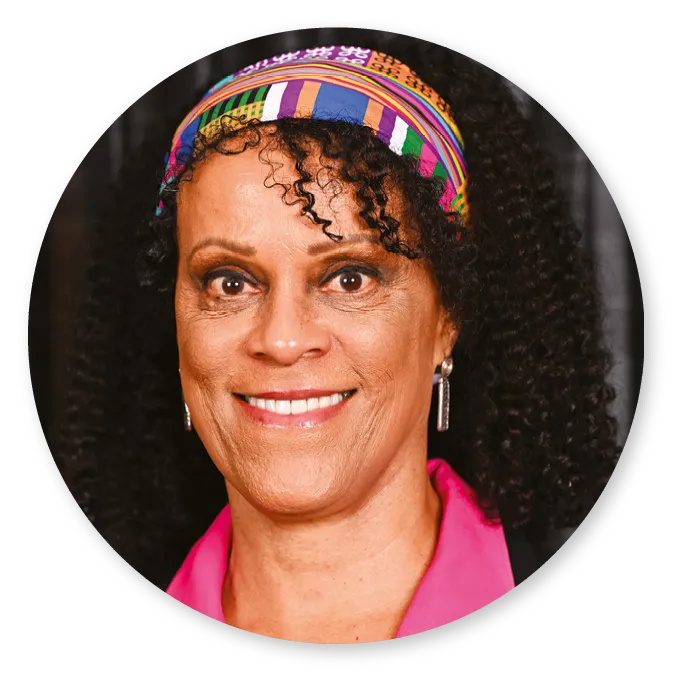
Bernardine Evaristo was born in 1959 to an English mother and a Nigerian father. She is a novelist, critic, poet, playwright, and academic. Girl, Woman, Other is her eighth novel and gives a voice to twelve Black British women whose lives are interconnected. She calls this “fusion fiction” and experiments with a specific style with a rather personal use of punctuation and sometimes a poetic layout of the pages.

Ressource affichée de l'autre côté.
Faites défiler pour voir la suite.
Faites défiler pour voir la suite.
Write down a personal story one of your relatives told you once.
Ask a woman you love, “Who are you? Girl, woman, other?”. Take notes when she answers and then use them to write a short story. Change the names and add fictional elements if you prefer.
Ask a woman you love, “Who are you? Girl, woman, other?”. Take notes when she answers and then use them to write a short story. Change the names and add fictional elements if you prefer.
Une erreur sur la page ? Une idée à proposer ?
Nos manuels sont collaboratifs, n'hésitez pas à nous en faire part.
j'ai une idée !
Oups, une coquille