
Unit 5
Spotlight
Lincoln, the Great Emancipator?
Ressource affichée de l'autre côté.
Faites défiler pour voir la suite.
Faites défiler pour voir la suite.
Lincoln,
the Great Emancipator?
For decades, historians have argued for the agency of Black Americans in securing their own liberation during the Civil
War. But time and time again, Lincoln is touted by his most well-known monikers, The Great Emancipator or Savior of the Union. His entire presidential legacy is often summarized in an easy one-liner: “Lincoln freed the slaves.”
Lincoln is perhaps one of the few presidents who require constant revisiting. This Juneteenth, I'm honored to revisit Lincoln's personal and political legacy, particularly focusing on how he faced the deadliest and most consequential war in U.S. history. Equally important, it emphasizes the role of Black leaders, abolitionists, and political activists who convinced Lincoln to transform the nation. Their voices and contributions to emancipation and equality have resonance today.
I am always hopeful for an era of nuance, a moment in which Americans can hold the complexities of people in full view. Lincoln remains complicated and inconsistent. He was for restoring the Union at all costs, even if that meant preserving the institution of slavery. In his first inaugural address, he spoke in support of the Fugitive Slave Law, a provision that allowed slaveholders to retrieve their human property. Lincoln proposed compensation for slaveholders and deportation or colonization for African Americans. While he was anti-slavery, he was not an abolitionist, and he did not believe in the equality of the races.
Lincoln is flawed, but he was also willing to reflect, pivot, and listen. I appreciate Lincoln the most for his willingness to understand upon the encouragement of Black leaders and their White allies to extend freedom, citizenship, and voting rights to African Americans. History reveals that people, particularly those with the least access to power, politically or economically, can and should hold elected officials accountable.
Lincoln is perhaps one of the few presidents who require constant revisiting. This Juneteenth, I'm honored to revisit Lincoln's personal and political legacy, particularly focusing on how he faced the deadliest and most consequential war in U.S. history. Equally important, it emphasizes the role of Black leaders, abolitionists, and political activists who convinced Lincoln to transform the nation. Their voices and contributions to emancipation and equality have resonance today.
I am always hopeful for an era of nuance, a moment in which Americans can hold the complexities of people in full view. Lincoln remains complicated and inconsistent. He was for restoring the Union at all costs, even if that meant preserving the institution of slavery. In his first inaugural address, he spoke in support of the Fugitive Slave Law, a provision that allowed slaveholders to retrieve their human property. Lincoln proposed compensation for slaveholders and deportation or colonization for African Americans. While he was anti-slavery, he was not an abolitionist, and he did not believe in the equality of the races.
Lincoln is flawed, but he was also willing to reflect, pivot, and listen. I appreciate Lincoln the most for his willingness to understand upon the encouragement of Black leaders and their White allies to extend freedom, citizenship, and voting rights to African Americans. History reveals that people, particularly those with the least access to power, politically or economically, can and should hold elected officials accountable.
Ressource affichée de l'autre côté.
Faites défiler pour voir la suite.
Faites défiler pour voir la suite.

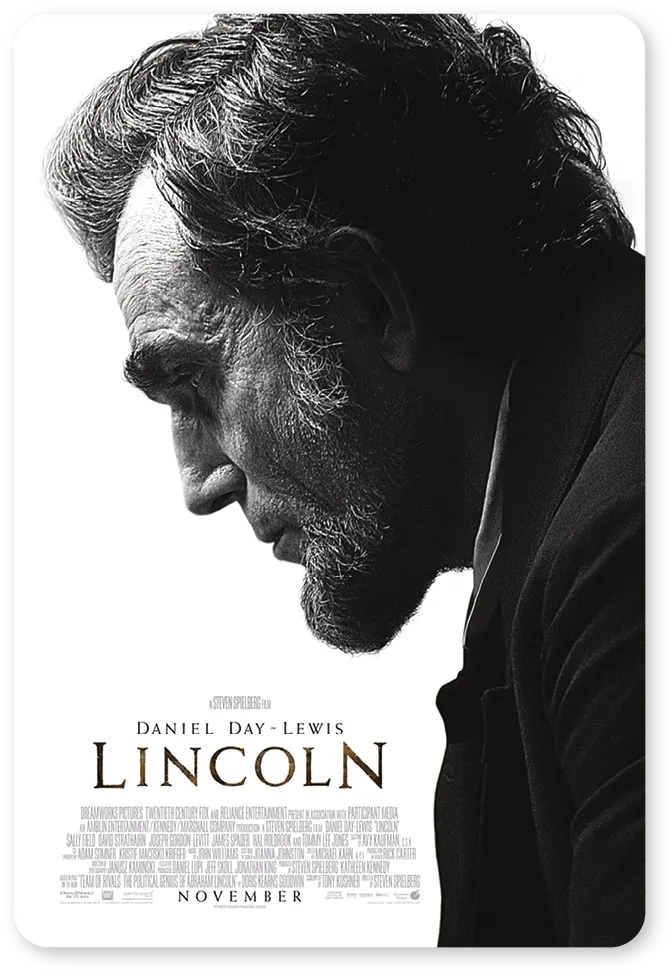
Poster for the film Lincoln, Steven Spielberg, 2012.
Vidéo associée
Ressource affichée de l'autre côté.
Faites défiler pour voir la suite.
Faites défiler pour voir la suite.
Path A
B1
1-A
Give three adjectives to describe how President Lincoln is represented in the trailer.
2-A
Give three adjectives to describe the music in the trailer.
3-A
Do these adjectives still apply when you have finished reading the text? What's different?
Ressource affichée de l'autre côté.
Faites défiler pour voir la suite.
Faites défiler pour voir la suite.
Path B
B1+
1-B
How is President Lincoln portrayed in the trailer?
2-B
How is President Lincoln portrayed in the text?
3-B
Contrast the two portrayals.
Ressource affichée de l'autre côté.
Faites défiler pour voir la suite.
Faites défiler pour voir la suite.
Let's talk this out!
4
After studying both documents, what do you conclude about the way President Lincoln is remembered today?
5
What are your thoughts about the way TV shows and films represent politics and politicians?
Ressource affichée de l'autre côté.
Faites défiler pour voir la suite.
Faites défiler pour voir la suite.
Asking the tough questions
You are a film critic for The Atlantic. You will be interviewing Steven Spielberg next month. Prepare your questions about his portrayal of President Lincoln in his 2012 movie. They should explore not only what the film shows, but also what it chooses not to show.
You are a film critic for The Atlantic. You will be interviewing Steven Spielberg next month. Prepare your questions about his portrayal of President Lincoln in his 2012 movie. They should explore not only what the film shows, but also what it chooses not to show.
Une erreur sur la page ? Une idée à proposer ?
Nos manuels sont collaboratifs, n'hésitez pas à nous en faire part.
j'ai une idée !
Oups, une coquille