Vue papier
Découvrez la vue papier en cliquant ici
Unit B
Tech Exploration
Cyanotype impressions
Ressource affichée de l'autre côté.
Faites défiler pour voir la suite.
Faites défiler pour voir la suite.
1 Botany in blue

Vidéo associée
From 0:58 to 4:08
Ressource affichée de l'autre côté.
Faites défiler pour voir la suite.
Faites défiler pour voir la suite.
2 Where art meets chemistry
ang1-unitb-techexploration.mp3
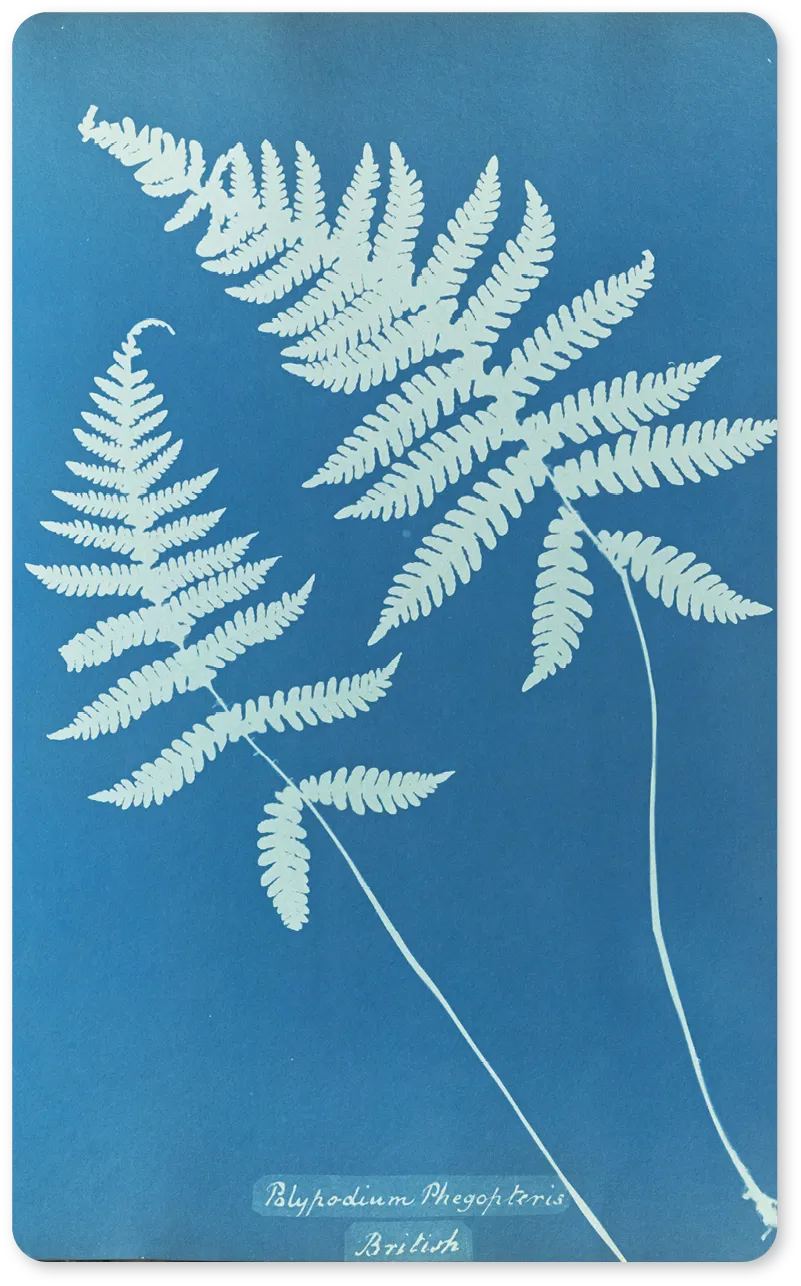
Cyanotype photography is a camera-less technique that
involves laying an object on paper coated with a solution of
iron salts before exposing it to UV light and washing with
water to create stunning white and Prussian blue images. [...]
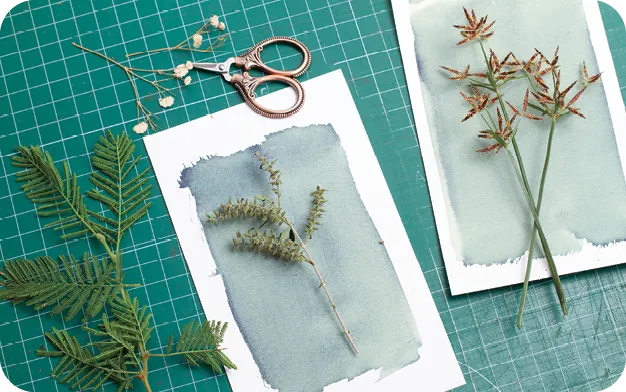
When ferric ammonium citrate or ferric ammonium oxalate
is mixed with potassium ferricyanide, it becomes sensitive to
UV light. These chemicals can be painted onto paper or fabric and left to dry in a dark room. Once dry, objects can be arranged onto the paper and placed in the sun. The UV rays from the sun react with the chemicals on the paper to create the recognisable cyan-blue background.
Where the paper has been covered with an object it will remain
white. Once the chemicals are rinsed off with water, fixing
the print so it is no longer sensitive to the sun, you are left with
a beautiful print.
Ressource affichée de l'autre côté.
Faites défiler pour voir la suite.
Faites défiler pour voir la suite.

Ressource affichée de l'autre côté.
Faites défiler pour voir la suite.
Faites défiler pour voir la suite.
The word cyanotype /saɪˈænətaɪp/ comes from the Greek “kyanos”, meaning “dark blue”, which is also the origin of cyan, the name of a blue pigment used in painting. The suffix -type means “impression” or “mark”, so cyanotype literally means “blue impression”.
Ressource affichée de l'autre côté.
Faites défiler pour voir la suite.
Faites défiler pour voir la suite.
Communication
1-A
What are your impressions of the artwork?
How does it differ from a botanical drawing?
2-A
Why is this technique called cyanotype?
What is the value of this technique?
3-A
Compare this process with photography.
If necessary, go online for further research.
Ressource affichée de l'autre côté.
Faites défiler pour voir la suite.
Faites défiler pour voir la suite.
Science
1-B
What are your impressions of the artwork?
How does it differ from a photograph?
2-B
List the chemicals and materials needed for
the technique, and explain how it works.
3-B
Describe or draw the steps of the reaction
process.
Cliquez pour accéder à un outil de dessin
Ressource affichée de l'autre côté.
Faites défiler pour voir la suite.
Faites défiler pour voir la suite.
Communication
Design a magazine page showcasing cyanotype as an art form.
You may explore the history of
cyanotype, its use in photography or printmaking,
and/or tell the story of Anna Atkins as a pioneering
artist. Write short articles, select striking visual
elements and plan the layout. Your page should draw
readers in and make them want to learn more!
Cliquez ici pour avoir accès à un espace de dessin
Science
Design a magazine page explaining the technique of cyanotype.
A famous magazine has decided to devote
a special issue to cyanotype. Design a magazine page
focusing on this technique. Make it as clear as possible
so it can be understood by people who are not experts
in chemistry!
Cliquez ici pour avoir accès à un espace de dessin
Une erreur sur la page ? Une idée à proposer ?
Nos manuels sont collaboratifs, n'hésitez pas à nous en faire part.
j'ai une idée !
Oups, une coquille