Vue papier
Découvrez la vue papier en cliquant ici
Unit B
Book Club
Ressource affichée de l'autre côté.
Faites défiler pour voir la suite.
Faites défiler pour voir la suite.
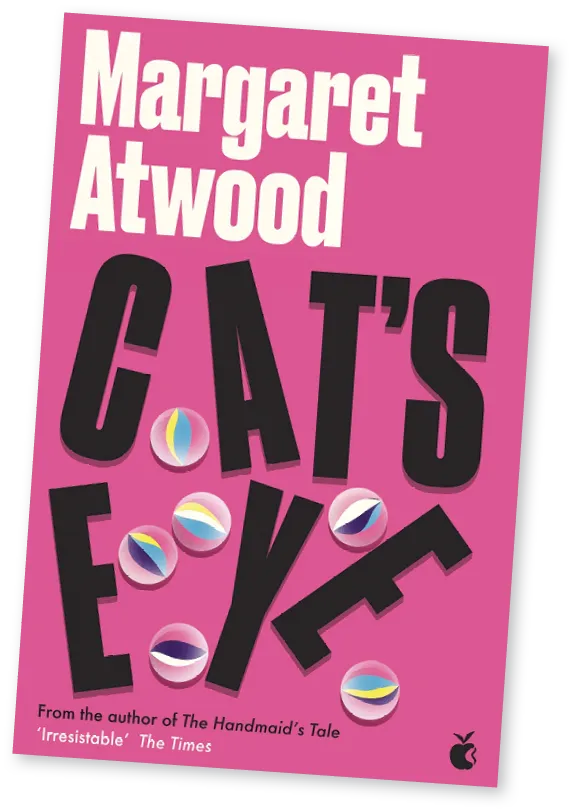
Cat's Eye is the story of Elaine Risley, a fictional painter who
returns to Toronto, the city of her youth, for a retrospective of
her art. Her reflections on her identity as an artist alternate with
her recollections from childhood and her teenage years. She is
particularly haunted by her memories of a trio of girls who were
both cruel and kind to her, led by the charismatic Cordelia.

Ressource affichée de l'autre côté.
Faites défiler pour voir la suite.
Faites défiler pour voir la suite.
Texte
Cat's Eye
Alongside my real life I have a career, which may not qualify as exactly real. I am
a painter. I even put that on my passport, in a moment of bravado, since the other choice
would have been housewife. It's an unlikely thing for me to have become; on some days
it still makes me cringe. Respectable people do not become painters: only overblown,
pretentious, theatrical people. The word artist embarrasses me; I prefer painter, because
it's more like a valid job. An artist is a tawdry, lazy sort of thing to be, as most people in
this country will tell you. If you say you are a painter, you will be looked at strangely. [...]
Most of the time though I exult, and think I have had a narrow escape. My career is why I'm here, on this futon, under this duvet. I'm having a retrospective, my first. The name of the gallery is Sub-Versions, one of those puns that used to delight me before they became so fashionable. I ought to be pleased by this retrospective, but my feelings are mixed; I don't like admitting I'm old enough and established enough to have such a thing, even at an alternative gallery run by a bunch of women. I find it improbable, and ominous: first the retrospective, then the morgue. But also I'm cheesed off because the Art Gallery of Ontario wouldn't do it. Their bias is towards dead, foreign men. [...]
I pull on my powder-blue sweatsuit, my disguise as a non-artist, and go down the four flights of stairs, trying to look brisk and purposeful. I could be a businesswoman out jogging, I could be a bank manager, on her day off. [...]
I decide I'll go and have a look at the gallery, which I have never seen because all of this has been arranged by phone and mail. I don't intend to go in, make myself known, not yet. I just want to look at it from the outside. I'll walk past, glance casually, pretending to be a housewife, a tourist, someone window-shopping. Galleries are frightening places, places of evaluation, of judgment. I have to work up to them.
But before I reach the gallery I come to a wall of plywood, concealing a demolition. [...] Beside this there's a poster. Or not a poster, more like a flyer: a violent shade of purple, with green accents and black lettering. RISLEY IN RETROSPECT, it says; just the last name, like a boy. The name is mine and so is the face, more or less. It's the photo I sent the gallery. Except that now I have a moustache.
Whoever drew this moustache knew what he was doing. Or she: nothing precludes that. It's a curled, flowing moustache, like a cavalier's, with a graceful goatee to match. It goes with my hair.
I suppose I should be worried about this moustache. Is it just doodling, or is it political commentary, an act of aggression? [...] I can remember drawing such moustaches myself, and the spite that went into them, the desire to ridicule, to deflate, and the feeling of power. It was defacing, it was taking away someone's face. If I were younger I'd resent it.
As it is, I study the moustache and think: That looks sort of good. The moustache is like a costume. I examine it from several angles, as if I'm considering buying one for myself. It casts a different light. I think about men and their facial hair, and the opportunities for disguise and concealment they have always at their disposal. I think about moustache-covered men, and about how naked they must feel with the thing shaved off. How diminished. A lot of people would look better in a moustache.
Then, suddenly, I feel wonder. I have achieved, finally, a face that a moustache can be drawn on, a face that attracts moustaches. A public face, a face worth defacing. This is an accomplishment. I have made something of myself, something or other, after all.
I wonder if Cordelia will see this poster. I wonder if she'll recognize me, despite the moustache. Maybe she'll come to the opening. She'll walk in through the door and I will turn, wearing black as a painter should, looking successful, holding a glass of only moderately bad wine. I won't spill a drop.
Most of the time though I exult, and think I have had a narrow escape. My career is why I'm here, on this futon, under this duvet. I'm having a retrospective, my first. The name of the gallery is Sub-Versions, one of those puns that used to delight me before they became so fashionable. I ought to be pleased by this retrospective, but my feelings are mixed; I don't like admitting I'm old enough and established enough to have such a thing, even at an alternative gallery run by a bunch of women. I find it improbable, and ominous: first the retrospective, then the morgue. But also I'm cheesed off because the Art Gallery of Ontario wouldn't do it. Their bias is towards dead, foreign men. [...]
I pull on my powder-blue sweatsuit, my disguise as a non-artist, and go down the four flights of stairs, trying to look brisk and purposeful. I could be a businesswoman out jogging, I could be a bank manager, on her day off. [...]
I decide I'll go and have a look at the gallery, which I have never seen because all of this has been arranged by phone and mail. I don't intend to go in, make myself known, not yet. I just want to look at it from the outside. I'll walk past, glance casually, pretending to be a housewife, a tourist, someone window-shopping. Galleries are frightening places, places of evaluation, of judgment. I have to work up to them.
But before I reach the gallery I come to a wall of plywood, concealing a demolition. [...] Beside this there's a poster. Or not a poster, more like a flyer: a violent shade of purple, with green accents and black lettering. RISLEY IN RETROSPECT, it says; just the last name, like a boy. The name is mine and so is the face, more or less. It's the photo I sent the gallery. Except that now I have a moustache.
Whoever drew this moustache knew what he was doing. Or she: nothing precludes that. It's a curled, flowing moustache, like a cavalier's, with a graceful goatee to match. It goes with my hair.
I suppose I should be worried about this moustache. Is it just doodling, or is it political commentary, an act of aggression? [...] I can remember drawing such moustaches myself, and the spite that went into them, the desire to ridicule, to deflate, and the feeling of power. It was defacing, it was taking away someone's face. If I were younger I'd resent it.
As it is, I study the moustache and think: That looks sort of good. The moustache is like a costume. I examine it from several angles, as if I'm considering buying one for myself. It casts a different light. I think about men and their facial hair, and the opportunities for disguise and concealment they have always at their disposal. I think about moustache-covered men, and about how naked they must feel with the thing shaved off. How diminished. A lot of people would look better in a moustache.
Then, suddenly, I feel wonder. I have achieved, finally, a face that a moustache can be drawn on, a face that attracts moustaches. A public face, a face worth defacing. This is an accomplishment. I have made something of myself, something or other, after all.
I wonder if Cordelia will see this poster. I wonder if she'll recognize me, despite the moustache. Maybe she'll come to the opening. She'll walk in through the door and I will turn, wearing black as a painter should, looking successful, holding a glass of only moderately bad wine. I won't spill a drop.
Ressource affichée de l'autre côté.
Faites défiler pour voir la suite.
Faites défiler pour voir la suite.
a) What are the two
main occupations of
the narrator? Which
one does she consider
“real”?
Ressource affichée de l'autre côté.
Faites défiler pour voir la suite.
Faites défiler pour voir la suite.
b) How does the
narrator feel about
the words “artist”
and “painter”?
Ressource affichée de l'autre côté.
Faites défiler pour voir la suite.
Faites défiler pour voir la suite.
c) Why does she have
mixed feelings about
her retrospective?
Ressource affichée de l'autre côté.
Faites défiler pour voir la suite.
Faites défiler pour voir la suite.
d) Why is she annoyed
with the Art Gallery
of Ontario?
Ressource affichée de l'autre côté.
Faites défiler pour voir la suite.
Faites défiler pour voir la suite.
e) What does the
powder-blue sweatsuit
represent for her?
Ressource affichée de l'autre côté.
Faites défiler pour voir la suite.
Faites défiler pour voir la suite.
f) Why does she
hesitate to enter the
Sub-Versions gallery?
Ressource affichée de l'autre côté.
Faites défiler pour voir la suite.
Faites défiler pour voir la suite.
g) What is striking
about the poster
she sees?
Ressource affichée de l'autre côté.
Faites défiler pour voir la suite.
Faites défiler pour voir la suite.
h) How does her
reaction to the
mustache evolve?
Ressource affichée de l'autre côté.
Faites défiler pour voir la suite.
Faites défiler pour voir la suite.
i) What does the
mustache symbolise?
Ressource affichée de l'autre côté.
Faites défiler pour voir la suite.
Faites défiler pour voir la suite.
j) What does she
mean by “a face
worth defacing”? Is it
positive or negative?
Ressource affichée de l'autre côté.
Faites défiler pour voir la suite.
Faites défiler pour voir la suite.
k) How does she want
Cordelia to perceive
her at the opening?
Ressource affichée de l'autre côté.
Faites défiler pour voir la suite.
Faites défiler pour voir la suite.
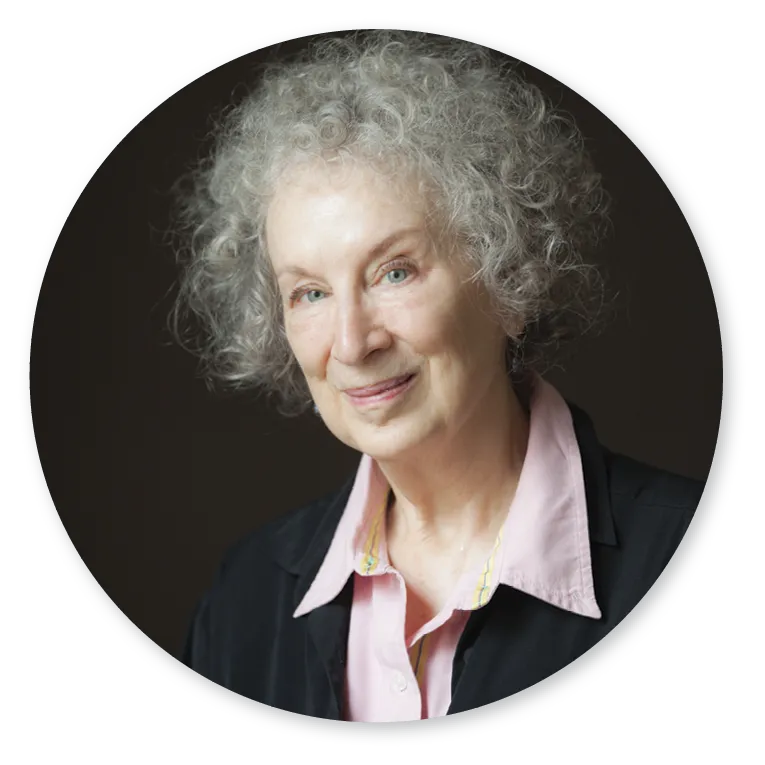
Margaret Atwood is a Canadian novelist and poet born
in 1939 in Ottawa. Her best-known work is the 1985 dystopian
novel The Handmaid's Tale. Atwood's works encompass
a variety of themes, including gender and identity, religion
and myth, the power of language, climate change, and
politics. From speculative fiction and fairytale adaptations
to essays or more realistic novels like Cat's Eye, she can write
in seemingly any genre!

Ressource affichée de l'autre côté.
Faites défiler pour voir la suite.
Faites défiler pour voir la suite.
Act out the opening night.
Imagine the conversation between the narrator and her childhood friend, Cordelia, who came to the opening after seeing the poster. They haven't seen each other in many years and Cordelia wants to know about Elaine's life as an artist, while Elaine tries to appear confident.Une erreur sur la page ? Une idée à proposer ?
Nos manuels sont collaboratifs, n'hésitez pas à nous en faire part.
j'ai une idée !
Oups, une coquille