Vue papier

Découvrez la vue papier en cliquant ici
Unit 12
Activity 1
Do we nurture nature?
Ressource affichée de l'autre côté.
Faites défiler pour voir la suite.
Faites défiler pour voir la suite.
1The earth and us

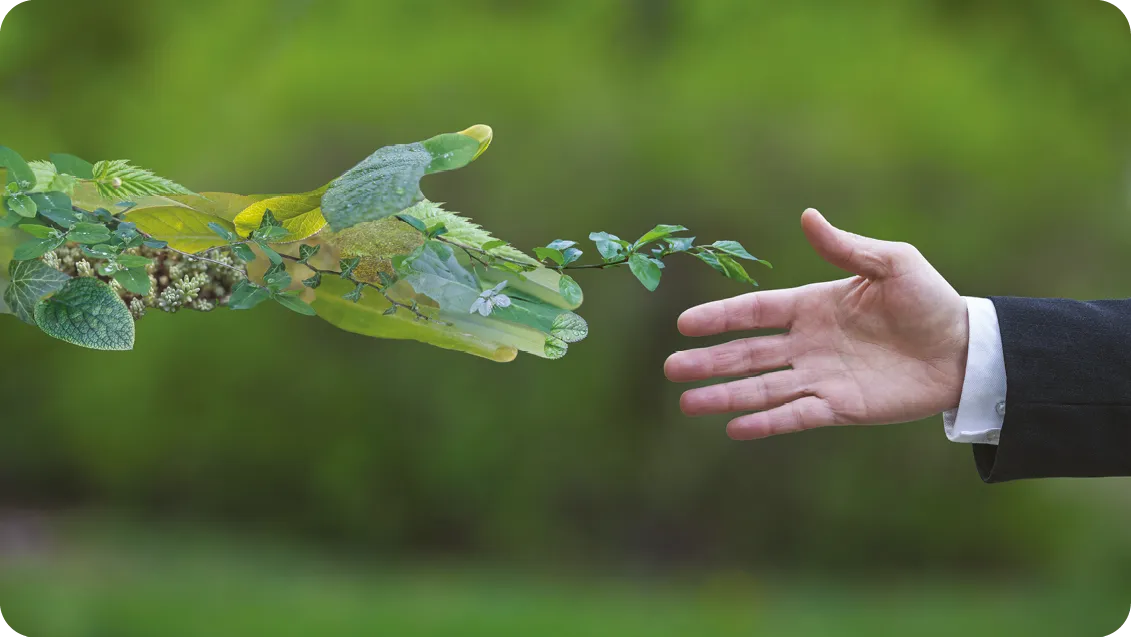
“Is it time to reassess our relationship with nature?”, BBC Ideas, 2020.
Vidéo associée
Ressource affichée de l'autre côté.
Faites défiler pour voir la suite.
Faites défiler pour voir la suite.
2
What has brought us to be here?
ang1-unit12-activity1.mp3
The technology and progress triggered by the Industrial Revolution has enabled humanity to be phenomenally successful in our domination and exploitation of nature, resulting in a system of economic growth based on consumption. For some, this economic growth has driven high incomes, education, quality infrastructure, living longer, and has lifted people out of poverty. High incomes allow us to consume more, fuelling more economic growth and allowing us to consume more, and so the cycle continues with our societies and economies depending on, indeed addicted to, never ending growth that draws on the limited resources of the natural world.
Additionally, we have developed a way of assessing a nation's success in terms of the financial flows of the economy – GDP. However, GDP gives no way of accounting for the shared resources (clean water, pollination of crops, fertile fishing grounds, healthy communities) on which businesses and the economy depend, or the costs of pollution that comes from production and waste. We call these “externalities” – unaccounted-for and unpaid-for resources, where local environments and communities regularly pay the price for their exploitation. And it turns out that GDP ignores many crucial ways that humanity is thriving: clean air, health, happiness, life span, gender equality, education.
But has all of this made us happy? As we separated ourselves from nature, as we have insulated ourselves from our environment, from nature and its impacts, as we became more able to dominate, degrade and exploit nature, every indicator suggests this has been to the detriment of our own mental wellbeing as well as our understanding of and attitudes towards nature.
Additionally, we have developed a way of assessing a nation's success in terms of the financial flows of the economy – GDP. However, GDP gives no way of accounting for the shared resources (clean water, pollination of crops, fertile fishing grounds, healthy communities) on which businesses and the economy depend, or the costs of pollution that comes from production and waste. We call these “externalities” – unaccounted-for and unpaid-for resources, where local environments and communities regularly pay the price for their exploitation. And it turns out that GDP ignores many crucial ways that humanity is thriving: clean air, health, happiness, life span, gender equality, education.
But has all of this made us happy? As we separated ourselves from nature, as we have insulated ourselves from our environment, from nature and its impacts, as we became more able to dominate, degrade and exploit nature, every indicator suggests this has been to the detriment of our own mental wellbeing as well as our understanding of and attitudes towards nature.
Ressource affichée de l'autre côté.
Faites défiler pour voir la suite.
Faites défiler pour voir la suite.
Questions
1
How do indigenous and western views of nature differ?
2
What are the main benefits and problems caused by human, industrial and economic growth?
3
What changes or actions give you hope that humans can reconnect with and protect the Earth?
Ressource affichée de l'autre côté.
Faites défiler pour voir la suite.
Faites défiler pour voir la suite.
Background check
How does the way we live conflict with respecting our environment?Ressource affichée de l'autre côté.
Faites défiler pour voir la suite.
Faites défiler pour voir la suite.
The word Anthropocene /ˈænθrəpəsiːn/ comes from the Greek anthropos (human) and -cene (recent, new), meaning “the age of humans.” It describes the current era in which human activity, like industry, agriculture, and urbanization, have become dominant.
Ressource affichée de l'autre côté.
Faites défiler pour voir la suite.
Faites défiler pour voir la suite.
Word Chain Game!
Taking turns with a partner, say a word that echoes today's lesson. Each word needs to start with the last letter of the previous one. Good luck!
Taking turns with a partner, say a word that echoes today's lesson. Each word needs to start with the last letter of the previous one. Good luck!
Une erreur sur la page ? Une idée à proposer ?
Nos manuels sont collaboratifs, n'hésitez pas à nous en faire part.
j'ai une idée !
Oups, une coquille