Vue papier
Découvrez la vue papier en cliquant ici
Case Study 12
Axe 5
Objet d'étude 3
Weathering the storm
Ressource affichée de l'autre côté.
Faites défiler pour voir la suite.
Faites défiler pour voir la suite.
Create a podcast episode about Hurricane Katrina.
You are the host of a special podcast episode for the anniversary of Hurricane Katrina. Your mission is to guide your listeners through the stories of New Orleans residents, showing their fears, struggles, and resilience. Craft an episode that makes your audience feel the storm, understand its impact, and hear the strength of the people who lived through it.
Vidéo associée
Ressource affichée de l'autre côté.
Faites défiler pour voir la suite.
Faites défiler pour voir la suite.
1How disaster unfolded

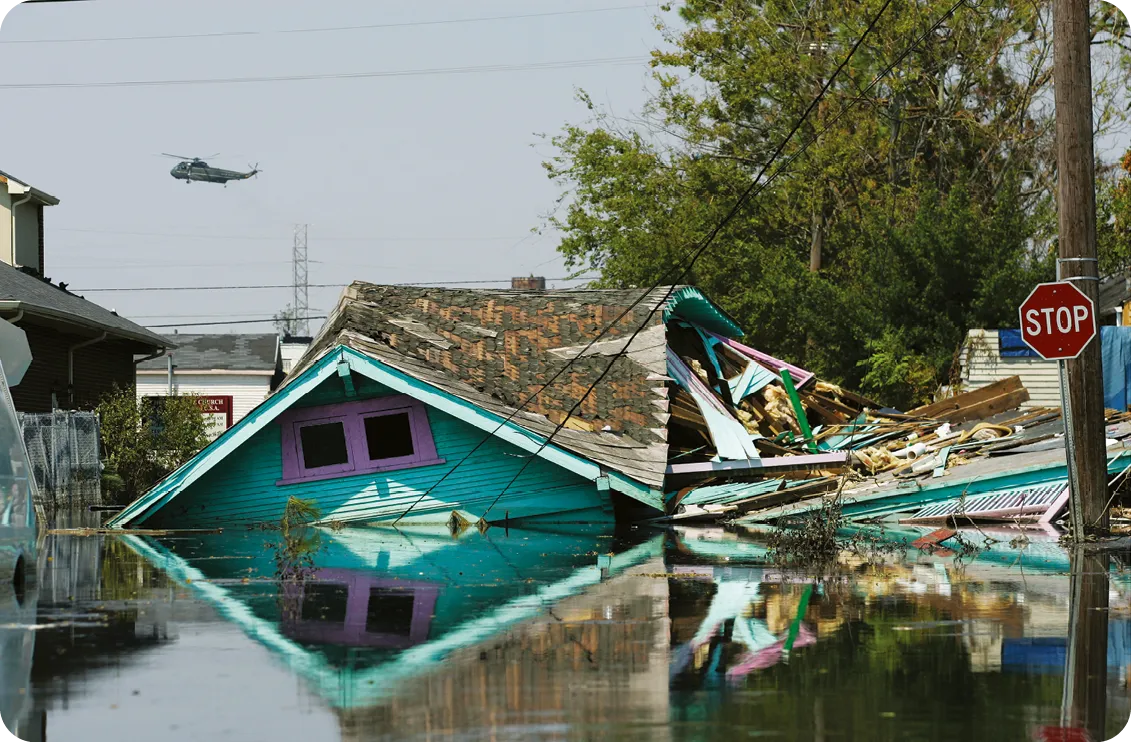
Remains of a house in the flooded Ninth Ward neighborhood of New Orleans after Hurricane Katrina, September 2005.
Vidéo associée
Ressource affichée de l'autre côté.
Faites défiler pour voir la suite.
Faites défiler pour voir la suite.
Step 1
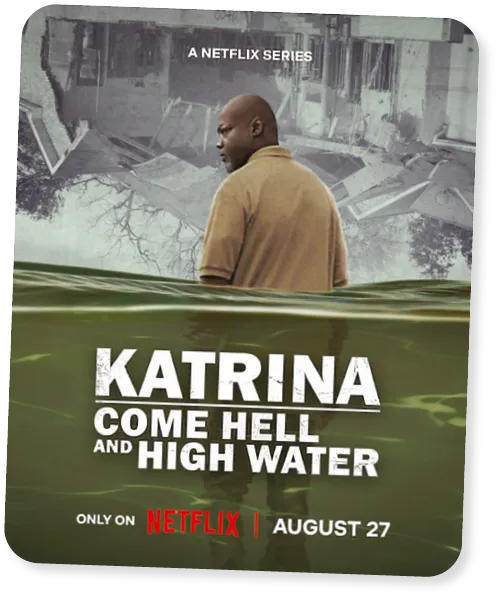
Watch the documentary trailer.
1
What images or words strike you the most? What do they suggest about the impact of Hurricane Katrina?
Watch the news segment.
2
Draw a timeline of how the events unfolded.
3
Identify some impacts of the hurricane.
Action!
Record your introduction for the podcast. Focus on one striking fact and one emotional moment from the videos to grab your listeners' attention.
Cliquez pour accéder à un module d'enregistrement audio
Enregistreur audio
Ressource affichée de l'autre côté.
Faites défiler pour voir la suite.
Faites défiler pour voir la suite.
2Rebuilding neighborhoods

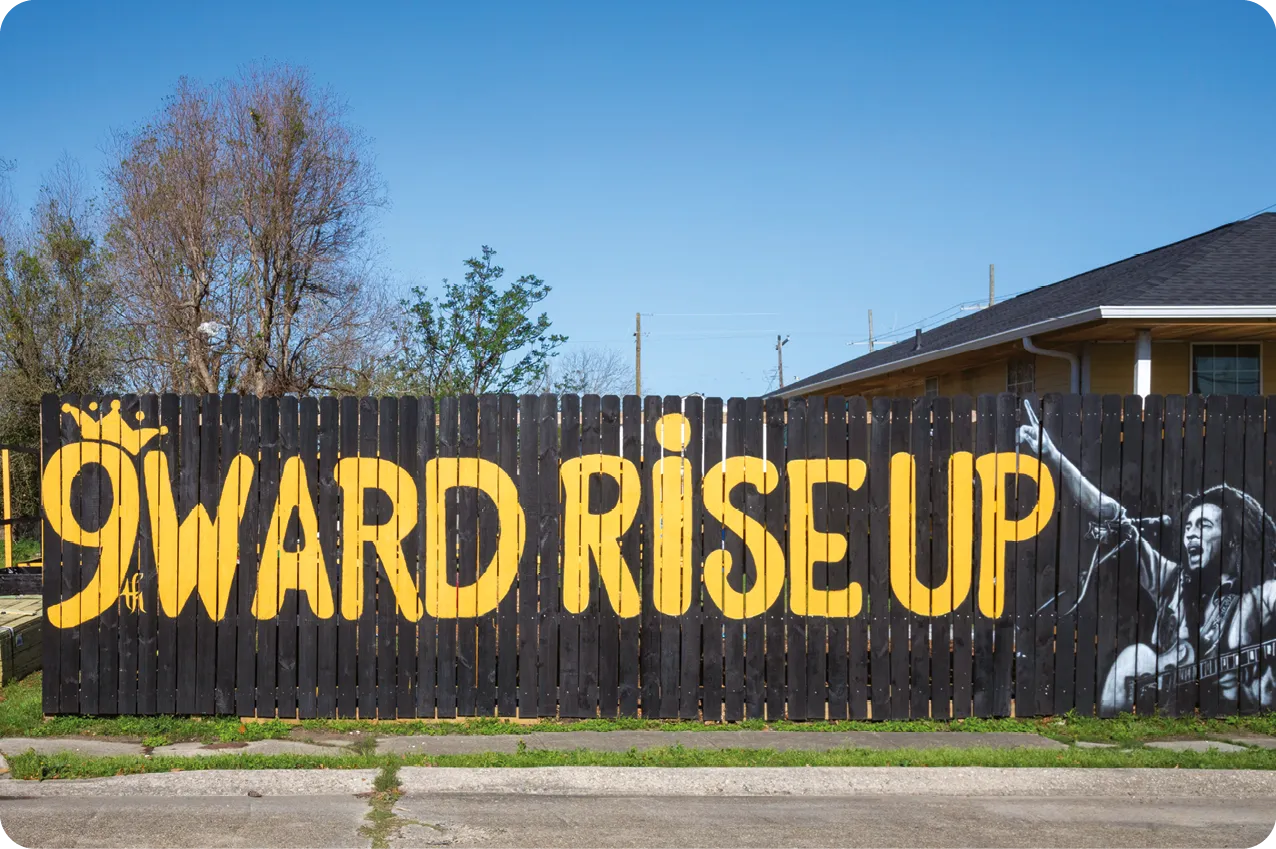
A fence mural in the Ninth Ward, March 2025.
Vidéo associée
From 00:00 to 2:47
and 4:42 to 6:29
Ressource affichée de l'autre côté.
Faites défiler pour voir la suite.
Faites défiler pour voir la suite.
Step 2
1
What major actions did the community take to restore the Lower Ninth Ward after Katrina?
2
How does the video show the community's resilience and efforts to prepare for future disasters?
Action!
Choose one inspiring story or project from the video and write a few sentences to include in your podcast episode, highlighting hope and recovery.
Ressource affichée de l'autre côté.
Faites défiler pour voir la suite.
Faites défiler pour voir la suite.
3Katrina children remember
Katrina children
remember
The scene before me appeared and disappeared and reappeared again with every breath I took, the hot air from my lungs fogging the gas mask that fit snugly over my face. My mother, father, and little sister stood in front of me wearing hazmat suits. It was October 2005, and we'd been among the first in Gentilly, our New Orleans neighborhood, to receive permission to return to our home after Hurricane Katrina. I was nervous. Gentilly had sat beneath up to eight feet of water for weeks. I didn't know what I would see, or how I would feel.
Our neighborhood had never been this quiet before. There had always been kids riding bikes, or someone playing music from their car or their front porch or their shoulder with a bass line that made the street vibrate. There had always been the sound of a basketball colliding with concrete as boys went in search of a court and a hoop and a game. Squirrels had always scurried through trees, where birds sang. Now there were no birds, no balls, no squirrels, no bikes. Only an eerie silence.
A silver car with clouded windows had crashed into the trunk of the old oak tree in front of our home, its hood bent into a crooked crescent. Branches from that old oak – some as thick as bodies – were scattered across the street and the yard. On the boarded-up win- dow next to our door was a spray-painted orange X, a symbol used by search-and-rescue teams that could be seen throughout New Orleans in the days and weeks after the storm. Each quadrant of the X had a different number. The top quadrant showed the time and date the house had been searched; the left one identified which team had conducted the search; the right indicated any hazards found inside; and the bottom was for the number of people, dead or alive, found there. Our bottom quadrant read “0,” but I am still haunted by the orange spray paint on homes we passed that said something else.
The search-and-rescue team had smashed the glass next to our door in order to open it. It remained ajar. As we entered the house, the smell bombarded us, indifferent to our masks. I had never encountered anything so pungent in my life; it physically knocked me back beyond the doorframe.
When I stepped inside again, I saw that the walls were covered with mold. Blue-green spores were everywhere. The floorboards were warped; some had come loose. The refrigerator door hung open, rotten food spilling out. The television in the living room was face down on the floor. My mother's wedding dress, which had been designed and sewed by a local seamstress who had made dresses for generations of Black New Orleans women, lay ruined on the floor beneath the stairwell.
Our neighborhood had never been this quiet before. There had always been kids riding bikes, or someone playing music from their car or their front porch or their shoulder with a bass line that made the street vibrate. There had always been the sound of a basketball colliding with concrete as boys went in search of a court and a hoop and a game. Squirrels had always scurried through trees, where birds sang. Now there were no birds, no balls, no squirrels, no bikes. Only an eerie silence.
A silver car with clouded windows had crashed into the trunk of the old oak tree in front of our home, its hood bent into a crooked crescent. Branches from that old oak – some as thick as bodies – were scattered across the street and the yard. On the boarded-up win- dow next to our door was a spray-painted orange X, a symbol used by search-and-rescue teams that could be seen throughout New Orleans in the days and weeks after the storm. Each quadrant of the X had a different number. The top quadrant showed the time and date the house had been searched; the left one identified which team had conducted the search; the right indicated any hazards found inside; and the bottom was for the number of people, dead or alive, found there. Our bottom quadrant read “0,” but I am still haunted by the orange spray paint on homes we passed that said something else.
The search-and-rescue team had smashed the glass next to our door in order to open it. It remained ajar. As we entered the house, the smell bombarded us, indifferent to our masks. I had never encountered anything so pungent in my life; it physically knocked me back beyond the doorframe.
When I stepped inside again, I saw that the walls were covered with mold. Blue-green spores were everywhere. The floorboards were warped; some had come loose. The refrigerator door hung open, rotten food spilling out. The television in the living room was face down on the floor. My mother's wedding dress, which had been designed and sewed by a local seamstress who had made dresses for generations of Black New Orleans women, lay ruined on the floor beneath the stairwell.
Ressource affichée de l'autre côté.
Faites défiler pour voir la suite.
Faites défiler pour voir la suite.
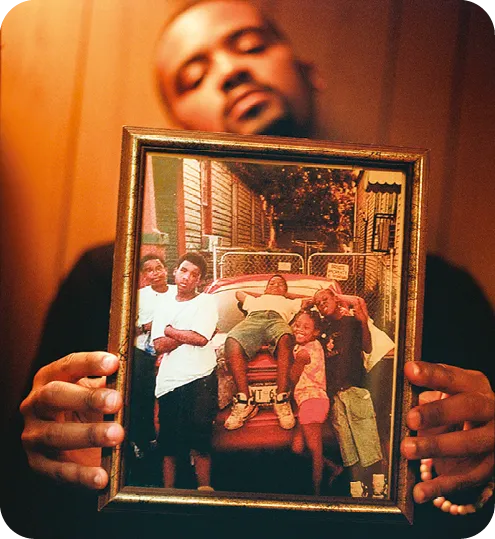
“Katrina Babies”, HBO, 2022.
Vidéo associée
Ressource affichée de l'autre côté.
Faites défiler pour voir la suite.
Faites défiler pour voir la suite.
Step 3
Read the text.
1
How does the author describe returning to the home in Gentilly? What emotions and images stand out most?
Watch the video.
2
Choose a quote that you found powerful and share it with another pupil.
3
How did Hurricane Katrina affect the lives and sense of identity of the children in New Orleans?
Action!
Inspired by these personal stories, create a moving first-person account imagining you were a child or teenager during Hurricane Katrina.
Ressource affichée de l'autre côté.
Faites défiler pour voir la suite.
Faites défiler pour voir la suite.
Ready...
- Gather your notes and select the most striking moments and quotes to shape your podcast episode.
Steady...
- Outline your episode, deciding the order of stories, facts, and emotional moments.
Go!
- Record your podcast so that your audience might understand what the survivors of the hurricane have gone through.
Une erreur sur la page ? Une idée à proposer ?
Nos manuels sont collaboratifs, n'hésitez pas à nous en faire part.
j'ai une idée !
Oups, une coquille