
Unit 15
Book Club
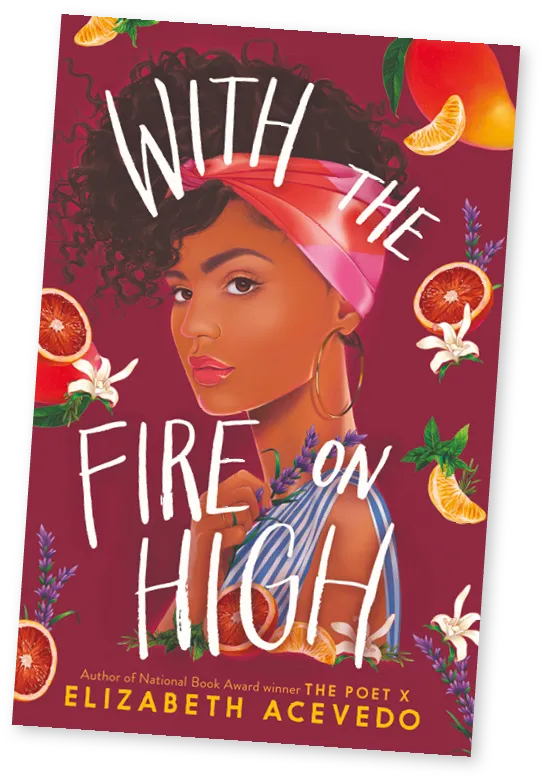
With the Fire On High
Ressource affichée de l'autre côté.
Faites défiler pour voir la suite.
Faites défiler pour voir la suite.
With the Fire On High is a story about Emoni Santiago, a 17-year-old girl who is
part of the Caribbean diaspora, as her family comes from Puerto Rico, but lives in
the United States. In the book, Emoni faces many challenges: she's a high school
student, a young mother, and she dreams of becoming a chef. At the beginning of
the book, Emoni is juggling a lot in her life. She lives with her grandmother, who
helps take care of her daughter. Although her life is full of responsibilities, Emoni's
passion for cooking helps her feel connected to her roots and to her family's culture.
Ressource affichée de l'autre côté.
Faites défiler pour voir la suite.
Faites défiler pour voir la suite.
Texte
£
I come from a place in Philadelphia that reminds me of a Charles Dickens book we
read in English. The Tale of Two Cities one that's set in Paris and London during and
after the French Revolution. But the place I come from ain't nowhere close to Europe.
I'm from Fairhill. It sounds pretty, don't it? And for a lot of outsiders, the name is the
only pretty thing about it.
Most folks are Puerto Rican. Julio tells me this neighborhood has the highest rate of Puerto Ricans outside of the island. I don't know why, though. It doesn't look anything like pictures of the island I've seen. Blocks and blocks of two-story row houses, concrete, fenced-in yards, and vacant lots. People have had a lot to say about our neck of the woods, but in general, they should probably keep their neck out our business. This part of North Philly has one of the highest crime rates in the city, or at least that's what the newspaper reports. They call us part of the Badlands, but when you stay here, you know there's a lot more goodness than is reported in the news.
Sure, we have gang fights that happen to the soundtrack of gunshots, but we also have dance crews that perform at the summer block parties. We have el Centro de Oro, the strip of Puerto Rican shops where you can get everything from oversized flags to island spices to hand-carved mortar and pestles. We have corner-store owners who hand out candy during Halloween, and the barbershop on the block that keeps a cooler of cold water out front in the summer. We got the rec center where most of us grew up doing our homework, where I received teen-parenting classes and counseling while pregnant, and we got the cultural center a few blocks over that has art workshops, free English lessons, and even brings in live bands for concerts.
Maybe it's more than just a tale of two cities; it's a tale of two neighborhoods. […]
'Buela comes into the kitchen and turns on the radio. The sound of Marc Anthony1 wailing alongside an orchestra fills the kitchen. I would wrap my soul in a bow and sell it with the quickness to be able to cook for Marc Anthony. That man can sing. 'Buela pulls out the herbs that she gets directly from el campo in Puerto Rico and sets them on the counter. The sweet-smelling yerba buena, the Caribbean oregano. She hands me the knives before I ask for them, cleans the cutting board before I realize I need it rinsed.
Some days, when my feelings are like this, like a full pot of water with the fire on high, I don't know what to cook. Plans and ideas escape my mind and instead I let my heart and hands take control, guided by a voice on the inside that tells me what goes where.
I push aside, or maybe I push forward, all the things I feel. […]
My hands move on their own, grabbing and slicing and mincing. And 'Buela and I are making music alongside the radio, the clanging of pans, the mortar against the pestle, our voices humming.
When all the sounds stop, including the radio, it's like I'm waking out of a fog. The stove is turned off. 'Buela wipes down the counter and folds the dishrag before turning to me. I lift the pot lids and see that I've made a fragrant yellow rice with cilantro. Somehow, black-eyed peas found their way into the rice, but I can tell from the smell that it works. The chicken looks juicy, and smothered in onions, it's cooked perfectly without a thermometer. The green salad with a spinach base is crisp. Not a complicated meal, but one made for comfort.
I plate 'Buela's portion using one of the lessons I learned from the cularts textbook: the starch on the bottom and the protein on top, sauce spooned over both; a separate bowl for the salad.
After the first bite, she closes her eyes, and when she opens them, she is in tears. She laughs when she wipes her eyes. “Look at me crying! Like this doesn't happen every time, nena.”
I don't often ask questions about how people react to the food I cook. It makes my belly squeeze tight to know my dishes might have an effect I don't mean them to have; like something inside me left my body and entered into the pots and pans without a permission slip. But today I need to know. “What did it make you feel, 'Buela?”
She squeezes her napkin in her hand and doesn't look at me as she moves her fork around the plate with the other. “It brought back a memory of being a little girl and staring out at the ocean. And wanting so badly to jump right in and swim far, far away, and being scared that if the water ever went above my neck it would swallow me whole and never spit me back out.”
I nod and take a bite of my own food. No memories spring up, no new feelings. The only thing that happens is my taste buds respond to the tangy and salty notes.
“Even that memory, of longing for what I was afraid of, warms me up. Like a candle being lit from the inside. You were given magic, nena.”
I let go of a breath I didn't know I'd been holding. I don't know much about pathogens and storing sugar, but damn if I don't know how to cook good food that makes people hungry for more, that makes people remember food is meant to feed more than an empty belly. It's also meant to nourish your heart. And that's one thing you won't ever learn from no textbook.
1. Marc Anthony is a famous Puerto Rican singer.
Most folks are Puerto Rican. Julio tells me this neighborhood has the highest rate of Puerto Ricans outside of the island. I don't know why, though. It doesn't look anything like pictures of the island I've seen. Blocks and blocks of two-story row houses, concrete, fenced-in yards, and vacant lots. People have had a lot to say about our neck of the woods, but in general, they should probably keep their neck out our business. This part of North Philly has one of the highest crime rates in the city, or at least that's what the newspaper reports. They call us part of the Badlands, but when you stay here, you know there's a lot more goodness than is reported in the news.
Sure, we have gang fights that happen to the soundtrack of gunshots, but we also have dance crews that perform at the summer block parties. We have el Centro de Oro, the strip of Puerto Rican shops where you can get everything from oversized flags to island spices to hand-carved mortar and pestles. We have corner-store owners who hand out candy during Halloween, and the barbershop on the block that keeps a cooler of cold water out front in the summer. We got the rec center where most of us grew up doing our homework, where I received teen-parenting classes and counseling while pregnant, and we got the cultural center a few blocks over that has art workshops, free English lessons, and even brings in live bands for concerts.
Maybe it's more than just a tale of two cities; it's a tale of two neighborhoods. […]
'Buela comes into the kitchen and turns on the radio. The sound of Marc Anthony1 wailing alongside an orchestra fills the kitchen. I would wrap my soul in a bow and sell it with the quickness to be able to cook for Marc Anthony. That man can sing. 'Buela pulls out the herbs that she gets directly from el campo in Puerto Rico and sets them on the counter. The sweet-smelling yerba buena, the Caribbean oregano. She hands me the knives before I ask for them, cleans the cutting board before I realize I need it rinsed.
Some days, when my feelings are like this, like a full pot of water with the fire on high, I don't know what to cook. Plans and ideas escape my mind and instead I let my heart and hands take control, guided by a voice on the inside that tells me what goes where.
I push aside, or maybe I push forward, all the things I feel. […]
My hands move on their own, grabbing and slicing and mincing. And 'Buela and I are making music alongside the radio, the clanging of pans, the mortar against the pestle, our voices humming.
When all the sounds stop, including the radio, it's like I'm waking out of a fog. The stove is turned off. 'Buela wipes down the counter and folds the dishrag before turning to me. I lift the pot lids and see that I've made a fragrant yellow rice with cilantro. Somehow, black-eyed peas found their way into the rice, but I can tell from the smell that it works. The chicken looks juicy, and smothered in onions, it's cooked perfectly without a thermometer. The green salad with a spinach base is crisp. Not a complicated meal, but one made for comfort.
I plate 'Buela's portion using one of the lessons I learned from the cularts textbook: the starch on the bottom and the protein on top, sauce spooned over both; a separate bowl for the salad.
After the first bite, she closes her eyes, and when she opens them, she is in tears. She laughs when she wipes her eyes. “Look at me crying! Like this doesn't happen every time, nena.”
I don't often ask questions about how people react to the food I cook. It makes my belly squeeze tight to know my dishes might have an effect I don't mean them to have; like something inside me left my body and entered into the pots and pans without a permission slip. But today I need to know. “What did it make you feel, 'Buela?”
She squeezes her napkin in her hand and doesn't look at me as she moves her fork around the plate with the other. “It brought back a memory of being a little girl and staring out at the ocean. And wanting so badly to jump right in and swim far, far away, and being scared that if the water ever went above my neck it would swallow me whole and never spit me back out.”
I nod and take a bite of my own food. No memories spring up, no new feelings. The only thing that happens is my taste buds respond to the tangy and salty notes.
“Even that memory, of longing for what I was afraid of, warms me up. Like a candle being lit from the inside. You were given magic, nena.”
I let go of a breath I didn't know I'd been holding. I don't know much about pathogens and storing sugar, but damn if I don't know how to cook good food that makes people hungry for more, that makes people remember food is meant to feed more than an empty belly. It's also meant to nourish your heart. And that's one thing you won't ever learn from no textbook.
1. Marc Anthony is a famous Puerto Rican singer.
Ressource affichée de l'autre côté.
Faites défiler pour voir la suite.
Faites défiler pour voir la suite.
a) Where does Emoni
live? Where does her
family come from?
Ressource affichée de l'autre côté.
Faites défiler pour voir la suite.
Faites défiler pour voir la suite.
b) Identify positive
and negative elements
about Emoni's
neighborhood.
Ressource affichée de l'autre côté.
Faites défiler pour voir la suite.
Faites défiler pour voir la suite.
c) Why does she say
it's “a tale of two
neighborhoods”?
Ressource affichée de l'autre côté.
Faites défiler pour voir la suite.
Faites défiler pour voir la suite.
d) What does the
choice of music and
herbs highlight?
Ressource affichée de l'autre côté.
Faites défiler pour voir la suite.
Faites défiler pour voir la suite.
e) What is Emoni's
process when cooking?
How does she decide
what to make?
Ressource affichée de l'autre côté.
Faites défiler pour voir la suite.
Faites défiler pour voir la suite.
f) How does cooking
make her feel?
Ressource affichée de l'autre côté.
Faites défiler pour voir la suite.
Faites défiler pour voir la suite.
g) How does she check
if her dish is good?
Ressource affichée de l'autre côté.
Faites défiler pour voir la suite.
Faites défiler pour voir la suite.
h) Why is her
grandmother
emotional after
tasting the food?
Ressource affichée de l'autre côté.
Faites défiler pour voir la suite.
Faites défiler pour voir la suite.
i) What does her
grandmother's memory
about the ocean
symbolize in her life?
Ressource affichée de l'autre côté.
Faites défiler pour voir la suite.
Faites défiler pour voir la suite.
j) What is the
significance of food
and cooking for Emoni
and her abuela?
Ressource affichée de l'autre côté.
Faites défiler pour voir la suite.
Faites défiler pour voir la suite.
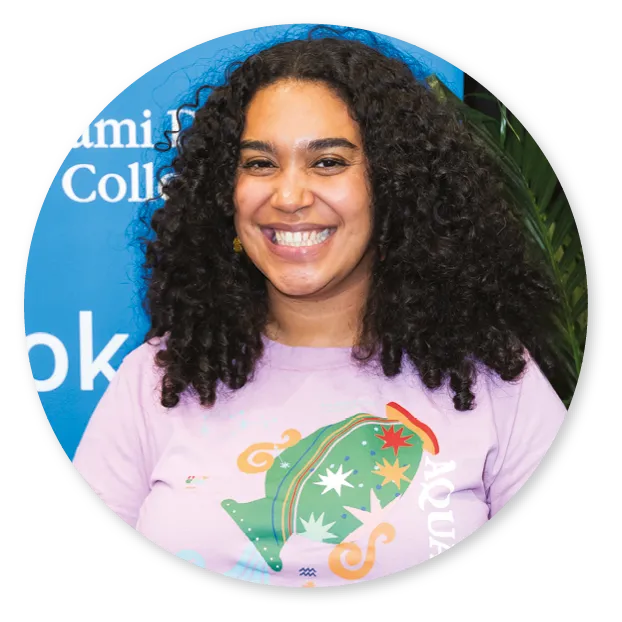
Elizabeth Acevedo is a Dominican-American author whose work is deeply
influenced by her Caribbean roots. Born to Dominican parents in New York
City, her writing explores the themes of identity, family, and cultural
heritage. Acevedo's Caribbean background shapes her storytelling, with a
strong emphasis on the power of language and the immigrant experience.
Her other works are The Poet X (2018) and Clap When You Land (2020).

Ressource affichée de l'autre côté.
Faites défiler pour voir la suite.
Faites défiler pour voir la suite.
Write Emoni's gratitude speech.
Emoni has just won a cooking contest and is standing on stage with her trophy. Now it's time to deliver a speech! Imagine how she would thank her grandmother for sharing her culture and her love for cooking.Une erreur sur la page ? Une idée à proposer ?
Nos manuels sont collaboratifs, n'hésitez pas à nous en faire part.
j'ai une idée !
Oups, une coquille