Unit 15
Language in Progress
Ressource affichée de l'autre côté.
Faites défiler pour voir la suite.
Faites défiler pour voir la suite.
Le prétérit v. le present perfect
Ressource affichée de l'autre côté.
Faites défiler pour voir la suite.
Faites défiler pour voir la suite.
Le prétérit


- Des actions qui ont commencé et qui se sont terminées dans le passé.
- Le moment de l'action est connu.
- Indicateurs : yesterday, last year, in 2021, 7 months ago, etc.
Fire Rush, by Jacqueline Crooks, came out last year.
She wrote the book in 2022.
She wrote the book in 2022.
Le present perfect


- Des actions qui ont commencé dans le passé mais qui continuent ou maintiennent un lien avec le présent.
- Le moment de l'action n'est pas forcément connu.
- Indicateurs : ever, never, until now, already, etc.
I have read literature since I was a young girl.
Literature has always been an important carrier of Caribbean culture.
Literature has always been an important carrier of Caribbean culture.
Ressource affichée de l'autre côté.
Faites défiler pour voir la suite.
Faites défiler pour voir la suite.
Si nécessaire, prenez le temps de réviser le point de grammaire plus en détail.
►
►
Ressource affichée de l'autre côté.
Faites défiler pour voir la suite.
Faites défiler pour voir la suite.
1 Conjuguez les verbes entre parenthèses, en choisissant entre l'emploi du prétérit ou du present perfect.
a) Many Caribbean people
b) The Miami Carnival
c) Bob Marley
d) She
Ressource affichée de l'autre côté.
Faites défiler pour voir la suite.
Faites défiler pour voir la suite.
2Conjuguez les verbes entre parenthèses en justifiant le temps choisi.
a) The Miami Carnival
Ressource affichée de l'autre côté.
Faites défiler pour voir la suite.
Faites défiler pour voir la suite.
Les adverbes
Ressource affichée de l'autre côté.
Faites défiler pour voir la suite.
Faites défiler pour voir la suite.
Les adverbes sont des mots qui peuvent modifier un verbe, un adjectif, ou un autre adverbe. Ils sont invariables (ils ne changent jamais). En anglais, les adverbes ont – souvent, pas toujours – la terminaison -ly. Ils peuvent se placer au début ou a la fin d'une phrase ou bien à côté de ce qu'ils modifient.
annually
festively
firstly
independently
festively
firstly
independently
often
yesterday
meanwhile
nowadays
yesterday
meanwhile
nowadays
Ressource affichée de l'autre côté.
Faites défiler pour voir la suite.
Faites défiler pour voir la suite.
3Complétez les phrases suivantes avec l'adverbe qui convient : firstly, then, later, meanwhile et nowadays.
a) , many people from the Caribbean have migrated to other countries, sharing their rich culture.
b) , the Caribbean diaspora plays an important role in preserving their traditions and heritage.
c) , after slavery was abolished, many Caribbean nations gained independence.
d) , the Caribbean islands were inhabited by Indigenous peoples like the Caribs and the Arawaks.
e) European colonisation began, and , the islands became central to the transatlantic slave trade.
Ressource affichée de l'autre côté.
Faites défiler pour voir la suite.
Faites défiler pour voir la suite.
Vocabulary in Progress
Ressource affichée de l'autre côté.
Faites défiler pour voir la suite.
Faites défiler pour voir la suite.
1. No man is an island → No one can succeed
or survive in isolation
2. Bridge the gap → Connect or reduce the differences between two groups, ideas, or cultures
3. Turn the tide → Reverse a negative situation or bring about significant change
4. Fish out of water → Someone who feels uncomfortable or out of place in a new or unfamiliar environment
5. Roots run deep → Connections to one's heritage, family, or culture are strong and enduring
2. Bridge the gap → Connect or reduce the differences between two groups, ideas, or cultures
3. Turn the tide → Reverse a negative situation or bring about significant change
4. Fish out of water → Someone who feels uncomfortable or out of place in a new or unfamiliar environment
5. Roots run deep → Connections to one's heritage, family, or culture are strong and enduring
Ressource affichée de l'autre côté.
Faites défiler pour voir la suite.
Faites défiler pour voir la suite.
4 Complétez les phrases suivantes avec l'expression idiomatique qui convient.
a) After moving to Miami, she felt like a , struggling to adapt to her new surroundings.
b) To bring together the different generations in the diaspora, it's important to .
c) Thanks to new initiatives celebrating Caribbean culture, we hope to and change outdated stereotypes.
d) For many Caribbean Americans, their , no matter how far they live from home.
e) He always reminds others that , emphasising the importance of the community.
Ressource affichée de l'autre côté.
Faites défiler pour voir la suite.
Faites défiler pour voir la suite.
5Trouvez les mots qui correspondent à ces définitions dans la carte mentale .
a) Accept willingly and enthusiastically →
b) The dispersion or spread of a people from their original homeland →
c) To feel comfortable and accepted in a group or place; to be part of something →
d) The place, family, or culture you come from; your origins →
e) History, traditions, and qualities that a country has had →
Ressource affichée de l'autre côté.
Faites défiler pour voir la suite.
Faites défiler pour voir la suite.
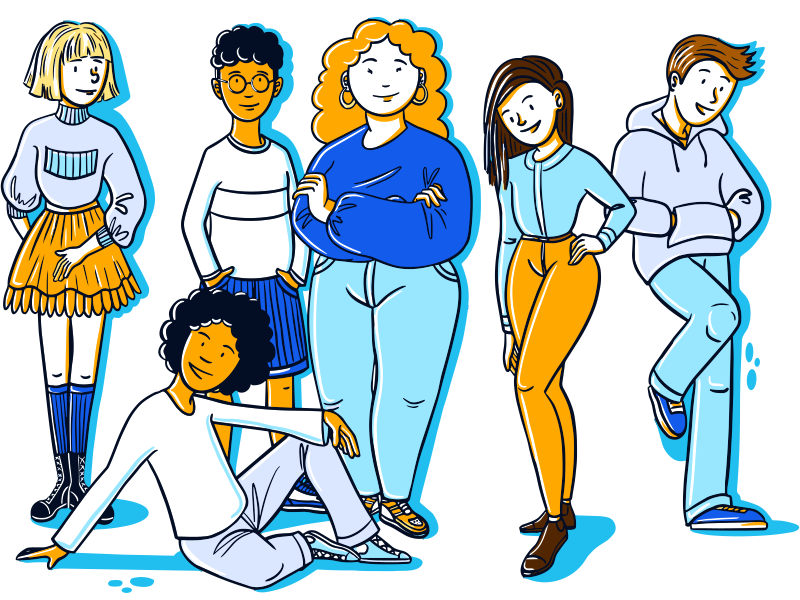
6Décrivez l'image suivante à l'aide du vocabulaire de l'unité.


Ressource affichée de l'autre côté.
Faites défiler pour voir la suite.
Faites défiler pour voir la suite.
From French to English
Ressource affichée de l'autre côté.
Faites défiler pour voir la suite.
Faites défiler pour voir la suite.
7La traduction de « depuis » • Traduisez les phrases suivantes en anglais.
a) Les musiciens jouent de la musique reggae depuis leur arrivée à Miami.
Ressource affichée de l'autre côté.
Faites défiler pour voir la suite.
Faites défiler pour voir la suite.
Music of English
Ressource affichée de l'autre côté.
Faites défiler pour voir la suite.
Faites défiler pour voir la suite.
La règle de prononciation de -ed au passé
La règle de prononciation de -ed au passé
La terminaison -ed, qui marque le passé des verbes réguliers, peut se prononcer de trois façons différentes, selon le son final du verbe.
- /t/ après un son sourd (comme /p/, /k/, /f/, /s/, /ʃ/, /tʃ/).
helped → /helpt/, laughed → /læft/ - /d/ après un son sonore (comme /l/, /n/, /v/, /g/, voyelles...).
played → /pleɪd/, opened → /ˈəʊpənd/ - /ɪd/ si le verbe se termine déjà par le son /t/ ou /d/.
wanted → /ˈwɒntɪd/, needed → /ˈniːdɪd/
►
Ressource affichée de l'autre côté.
Faites défiler pour voir la suite.
Faites défiler pour voir la suite.
8
Entraînez-vous à dire les phrases suivantes en prononçant le -ed correctement et enregistrez-vous.
a) This creole woman visited her homeland only once.
b) These artists used art to denounce society and express their convictions.
c) This artist infused her music with a sense of spirituality.
d) Bob Marley is considered an icon of Jamaican music.
Cliquez pour accéder à un module d'enregistrement audio
Enregistreur audio
Ressource affichée de l'autre côté.
Faites défiler pour voir la suite.
Faites défiler pour voir la suite.
In small groups, create an A4-sized street art poster
inspired by Caribbean artistic styles, including
key words from the chapter. Present your work to
the class, then vote for the one that will be displayed
in your school library.
Une erreur sur la page ? Une idée à proposer ?
Nos manuels sont collaboratifs, n'hésitez pas à nous en faire part.
j'ai une idée !
Oups, une coquille