Unit 15
Final Project
Ressource affichée de l'autre côté.
Faites défiler pour voir la suite.
Faites défiler pour voir la suite.
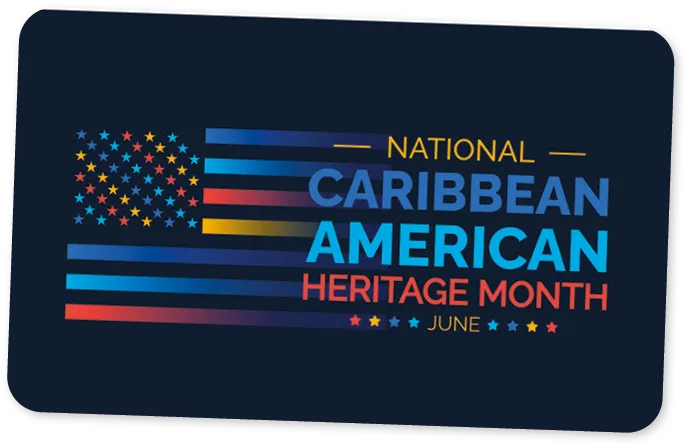
June marks Caribbean American Heritage Month, a time to celebrate the culture, history, and contributions of Caribbean communities in the United States. You are contributing to this celebration as a student journalist for the official Caribbean American Heritage Month website.
Ressource affichée de l'autre côté.
Faites défiler pour voir la suite.
Faites défiler pour voir la suite.
Write an article for Caribbean American Heritage Month.
Write an article that explores how the Caribbean diaspora has enriched American society. Focus on how Caribbean music, food, values, and people have influenced life in the U.S. Help readers discover and appreciate the vibrant impact of Caribbean culture today!
Ressource affichée de l'autre côté.
Faites défiler pour voir la suite.
Faites défiler pour voir la suite.
Let's do it!
- Research the Caribbean diaspora. Look into the contributions of Caribbean communities to American culture (music, literature, festivals, food, or historical figures).
- Pick a focus. Choose one or two strong examples that show how Caribbean heritage has influenced life in the United States.
- Find a catchy headline. Create an engaging title that reflects your article's message and grabs attention.
- Write your article. Introduce Caribbean American Heritage Month, explain why it matters today, and highlight some examples.
- Conclude with a personal reflection to celebrate this rich heritage.
Ressource affichée de l'autre côté.
Faites défiler pour voir la suite.
Faites défiler pour voir la suite.
Niveau A2 | Niveau A2+ | Niveau B1 | Niveau B1+ | Vers B2 | |
|---|---|---|---|---|---|
| Réalisation de la tâche | |||||
| Cohérence et organisation | |||||
| Recevabilité linguistique | |||||
| Contenus culturels |
Ressource affichée de l'autre côté.
Faites défiler pour voir la suite.
Faites défiler pour voir la suite.
➤ Préparation
- Faites des recherches sur la thématique. Appuyez-vous sur les documents étudiés en classe, mais n'hésitez pas à chercher d'autres sources fiables : sites culturels, podcasts, articles ou interviews liés à la culture caribéenne aux États-Unis.
- Organisez vos idées. Structurez votre article avec une introduction qui capte l'attention du lecteur, un développement clair, avec un ou deux exemples concrets (personnalité, plat, tradition, événement, etc.), une conclusion qui résume ou ouvre sur une question.
➤ Rédaction
- Choisissez un titre. Il doit être accrocheur pour attirer l'attention, et refléter le sujet traité en donnant assez d'informations.
- Adaptez les temps verbaux : utilisez le prétérit pour parler d'événements passés et le present perfect pour montrer leur impact aujourd'hui.
- Variez votre vocabulaire : utilisez des mots de liaison et un lexique précis et riche pour rendre votre texte fluide et captivant.
- Ajoutez un visuel (photo, citation, chiffre clé, etc.) pour illustrer vos propos et rendre votre article plus vivant.
- Relisez-vous attentivement : vérifiez la grammaire, l'orthographe, la ponctuation et la clarté des paragraphes pour assurer une bonne cohérence du texte.
Ressource affichée de l'autre côté.
Faites défiler pour voir la suite.
Faites défiler pour voir la suite.
Linking words:
To introduce an idea: To begin with, First of all, In the first place
To add information: In addition, What's more
To give an example: For example, For instance, Such as
To express a consequence: As a result, Therefore, This is why
To contrast: However, On the one hand... On the other hand, Although
To conclude:To sum up, In conclusion, All in all
To add information: In addition, What's more
To give an example: For example, For instance, Such as
To express a consequence: As a result, Therefore, This is why
To contrast: However, On the one hand... On the other hand, Although
To conclude:To sum up, In conclusion, All in all
Ressource affichée de l'autre côté.
Faites défiler pour voir la suite.
Faites défiler pour voir la suite.
Record a podcast episode for Caribbean Heritage Month.
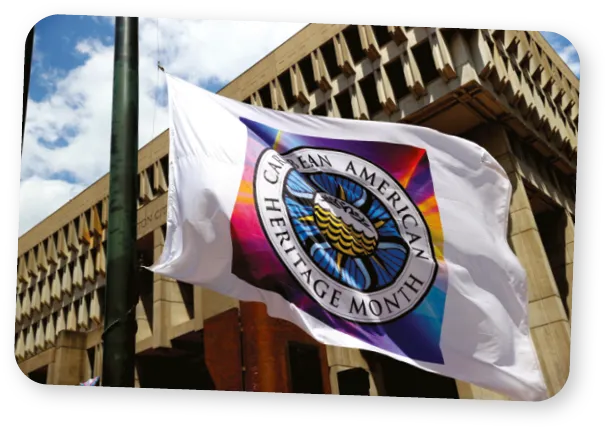
Record a new episode for Caribbean Voices: Stories of Identity and Culture, a podcast celebrating Caribbean American Heritage Month. Your episode should shine a light on one aspect of Caribbean culture, identity, or influence in the U.S., such as music, traditions, food, migration stories, or inspiring individuals. Help listeners connect with the Caribbean diaspora and their vibrant culture!
Ressource affichée de l'autre côté.
Faites défiler pour voir la suite.
Faites défiler pour voir la suite.
Let's do it!
- Research the Caribbean diaspora. Look into the contributions of Caribbean communities to American culture (music, literature, festivals, food, or historical figures).
- Structure your episode: an engaging introduction, an informative development with examples or statistics, and a memorable conclusion.
- Practice your delivery. Rehearse your script with clarity, natural rhythm, and varied intonation. Speak with enthusiasm to keep your audience engaged.
- Check your pronunciation. Use tools like the Oxford Dictionary to ensure unfamiliar words are pronounced correctly.
- Record your podcast. Make sure your audio is clear, your pace is steady, and your content is easy to follow. You can use recording apps like Anchor, Audacity, or a voice memo tool.
- Share your podcast. Present it to the class or upload it to your school's digital platform. Be prepared to explain your message and what you have learnt.
Une erreur sur la page ? Une idée à proposer ?
Nos manuels sont collaboratifs, n'hésitez pas à nous en faire part.
j'ai une idée !
Oups, une coquille