Case Study 14
Axe 6
Objet d'étude 2
A 51st star on the flag?
Ressource affichée de l'autre côté.
Faites défiler pour voir la suite.
Faites défiler pour voir la suite.
Design a poster for Puerto Rico's future.
For over a century, Puerto Ricans have been U.S. citizens without full political rights, and the debate over their status is more alive than ever. You have been invited to join a campaign that advocates for Puerto Rico's statehood. Explore Puerto Rico's history, migration, identity, and political situation, and create a striking campaign poster.
For over a century, Puerto Ricans have been U.S. citizens without full political rights, and the debate over their status is more alive than ever. You have been invited to join a campaign that advocates for Puerto Rico's statehood. Explore Puerto Rico's history, migration, identity, and political situation, and create a striking campaign poster.

Ressource affichée de l'autre côté.
Faites défiler pour voir la suite.
Faites défiler pour voir la suite.
1
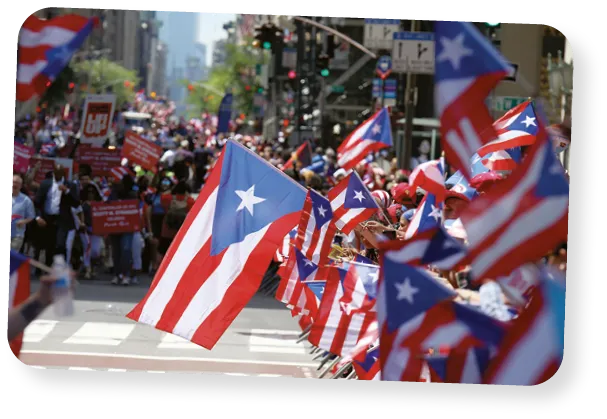
The Great Puerto Rican migration
Titre audio £
Puerto Ricans have been emigrating to New York City
since the middle of the 19th century, in the first so-called
“wave.” At the time, the island was still a Spanish province,
and the motivation to move was the same as it
was for other immigrants – America offered the greatest
opportunities for economic success.
[...]
In 1917, the Jones-Shafroth Act changed the status for Puerto Ricans forever. Now, they were officially American citizens, and could travel to and from the United States without the use of a passport. [...] This change in citizenship status caused many Puerto Ricans to head to New York City, as the island had previously been terrorized by hurricanes, ruining many crops and causing great financial crisis. But the industrialized city presented other hardships to the newly arrived Puerto Ricans. Discrimination, language barriers, and lack of technical skills were all hurdles newly arrived immigrants faced on their job hunt. [...]
The third and largest wave of Puerto Ricans occurred in the 1950s, known today as “the Great Migration.” [...]
Throughout these waves, new terminology began to spring up, and the name Nuyorican initially started as a kind of insult towards assimilated Puerto Ricans or second and third generation Puerto Ricans who have lost touch with their island roots. [...]
One of the most iconic, important cultural and intellectual movements to come out of New York City, the Nuyorican Movement produced some of the best works of poetry, literature, art, and music of the 20th century.
In 1917, the Jones-Shafroth Act changed the status for Puerto Ricans forever. Now, they were officially American citizens, and could travel to and from the United States without the use of a passport. [...] This change in citizenship status caused many Puerto Ricans to head to New York City, as the island had previously been terrorized by hurricanes, ruining many crops and causing great financial crisis. But the industrialized city presented other hardships to the newly arrived Puerto Ricans. Discrimination, language barriers, and lack of technical skills were all hurdles newly arrived immigrants faced on their job hunt. [...]
The third and largest wave of Puerto Ricans occurred in the 1950s, known today as “the Great Migration.” [...]
Throughout these waves, new terminology began to spring up, and the name Nuyorican initially started as a kind of insult towards assimilated Puerto Ricans or second and third generation Puerto Ricans who have lost touch with their island roots. [...]
One of the most iconic, important cultural and intellectual movements to come out of New York City, the Nuyorican Movement produced some of the best works of poetry, literature, art, and music of the 20th century.
Ressource affichée de l'autre côté.
Faites défiler pour voir la suite.
Faites défiler pour voir la suite.

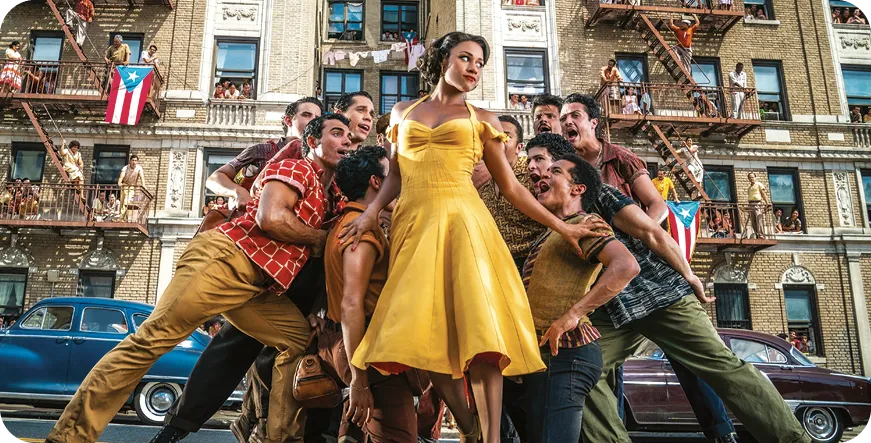
West Side Story, film by Steven Spielberg, 2021.
Vidéo associée
Ressource affichée de l'autre côté.
Faites défiler pour voir la suite.
Faites défiler pour voir la suite.
Step 1
Focus on the text.
1
Identify the main reasons why Puerto Ricans migrated to the U.S.
2
What challenges did Puerto Rican migrants face after settling in the U.S.?
3
How did Puerto Rican communities influence American culture in cities like New York?
Focus on the video.
Create a poster and illustrate it with a catchy headline and images that represent Puerto Rican identity, and influence on American culture.
4
Pay attention to information about time, people and places.
5
According to the Puerto Rican characters, what is positive about being American? What is negative?
Action!
Create a poster and illustrate it with a catchy headline and images that represent Puerto Rican identity, and influence on American culture.
Ressource affichée de l'autre côté.
Faites défiler pour voir la suite.
Faites défiler pour voir la suite.
2
The status question
Titre audio £
Could Puerto Rico be on its way to becoming
the 51st U.S. state?
[In November 2024], Puerto Ricans on the U.S. territory headed to the polls and voted in favor of becoming a state. While Puerto Ricans are U.S. citizens, they cannot vote for president, but did voice their opinions on the future of the Commonwealth's political status.
It's clear: they want changes.
The question is one Puerto Ricans on the island have voted on several times before. Once again, they have voted in favor of becoming a state, this time with 57 percent in favor. Jorge Duany, former professor [...], says the vote is simply symbolic. “According to U.S. law, only Congress can initiate a process of status change for Puerto Rico since 1898, because Puerto Rico became part of the United States as a result of the Spanish American War of that year, and Congress has never taken action with regard to the status of Puerto Rico,” Duany said.
Any change to Puerto Rico's status needs Congress' approval, but it would first need to be a priority for congressional leaders, and it never has been. [...]
The last time the United States added a state was Hawaii in 1959, after a referendum vote similar to the vote that took place in Puerto Rico.
[In November 2024], Puerto Ricans on the U.S. territory headed to the polls and voted in favor of becoming a state. While Puerto Ricans are U.S. citizens, they cannot vote for president, but did voice their opinions on the future of the Commonwealth's political status.
It's clear: they want changes.
The question is one Puerto Ricans on the island have voted on several times before. Once again, they have voted in favor of becoming a state, this time with 57 percent in favor. Jorge Duany, former professor [...], says the vote is simply symbolic. “According to U.S. law, only Congress can initiate a process of status change for Puerto Rico since 1898, because Puerto Rico became part of the United States as a result of the Spanish American War of that year, and Congress has never taken action with regard to the status of Puerto Rico,” Duany said.
Any change to Puerto Rico's status needs Congress' approval, but it would first need to be a priority for congressional leaders, and it never has been. [...]
The last time the United States added a state was Hawaii in 1959, after a referendum vote similar to the vote that took place in Puerto Rico.
Ressource affichée de l'autre côté.
Faites défiler pour voir la suite.
Faites défiler pour voir la suite.

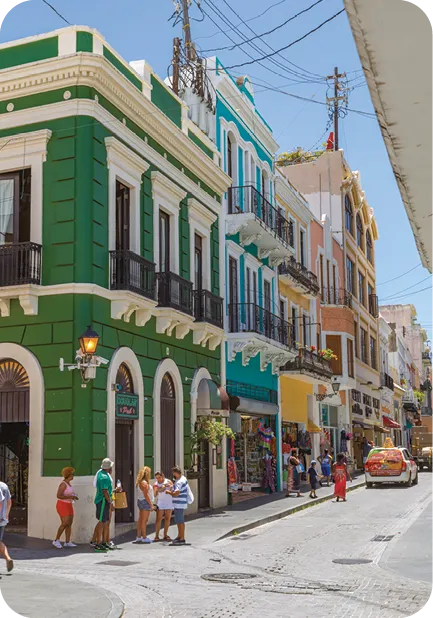
Streets of San Juan, capital of Puerto Rico.
Vidéo associée
Ressource affichée de l'autre côté.
Faites défiler pour voir la suite.
Faites défiler pour voir la suite.
Step 2
1
Identify the main historical events that shaped Puerto Rico's current political status.
2
What are the main options debated for Puerto Rico's future political status?
Action!
Create a timeline of important dates that influenced Puerto Rico's status. This will help viewers quickly understand the island's complex past and present.
Ressource affichée de l'autre côté.
Faites défiler pour voir la suite.
Faites défiler pour voir la suite.
3
“We are Americans!”


Jennifer Lopez addresses Puerto Rican comments at Harris rally, 2024.
Vidéo associée
From 9:06 to 10:31Ressource affichée de l'autre côté.
Faites défiler pour voir la suite.
Faites défiler pour voir la suite.
Step 3
1
Who is Jennifer Lopez? Go online to find out more about her.
2
How does Jennifer Lopez's speech relate to the political status of Puerto Rico?
3
Pick out striking quotes showing how she feels about the relationship between Puerto Rico and the U.S.
Action!
For your poster, use the quotes and create punchy taglines that express Puerto Rican hopes for the future.
Ressource affichée de l'autre côté.
Faites défiler pour voir la suite.
Faites défiler pour voir la suite.
Ready...
- Gather all the material from the previous steps, and do some extra research if necessary. Sketch your layout on paper or digitally.
Steady...
- Create your final poster using your design. Add colors, visuals, and make sure your message about Puerto Rican identity and political debate is clear and eye-catching.
Go!
- Be ready to present your design to the class, explaining your choices and how they relate to the historical, cultural, and political arguments for statehood. Be convincing!
Une erreur sur la page ? Une idée à proposer ?
Nos manuels sont collaboratifs, n'hésitez pas à nous en faire part.
j'ai une idée !
Oups, une coquille