Vue papier
Découvrez la vue papier en cliquant ici
Case Study 2
Axe 1
Objet d'étude 3
“Big Tech” and the workplace challenge
Ressource affichée de l'autre côté.
Faites défiler pour voir la suite.
Faites défiler pour voir la suite.
Think outside the box.
You are a project manager at a design firm. A Silicon Valley tech company has hired you to create new offices with one goal in mind: helping employees reach their professional goals in a motivating work environment. Your mission is to present an innovative workspace project to the tech company's representatives. Create a PowerPoint presentation and introduce your ideas to your client!
You are a project manager at a design firm. A Silicon Valley tech company has hired you to create new offices with one goal in mind: helping employees reach their professional goals in a motivating work environment. Your mission is to present an innovative workspace project to the tech company's representatives. Create a PowerPoint presentation and introduce your ideas to your client!

Ressource affichée de l'autre côté.
Faites défiler pour voir la suite.
Faites défiler pour voir la suite.
1
Trendy alternative workplaces
angt-cs2-step1.mp3
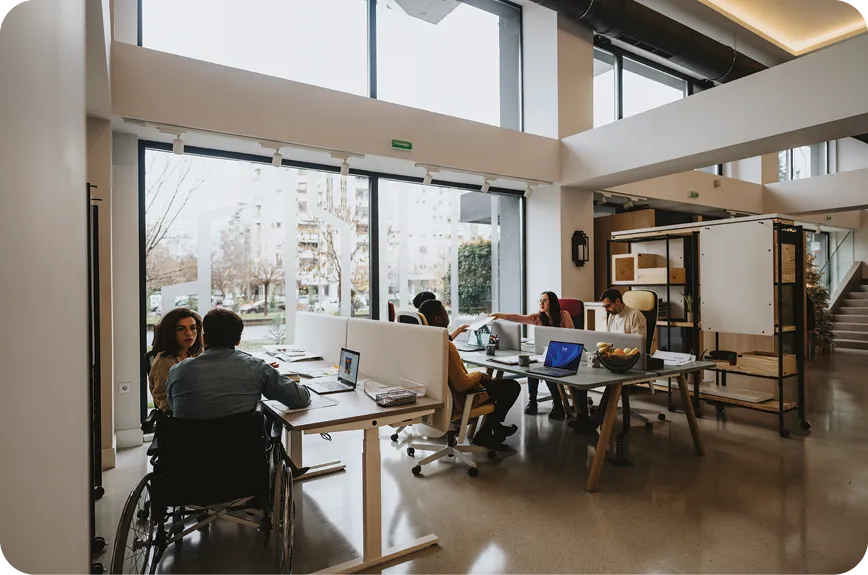
Alternative workplace (AW) is the combination of alternative work practices, settings, and locations that are starting to substitute traditional offices. [...]
Alternative work environments strive to transfer the work to the worker and offer flexibility in exchange. Workers want more freedom which the traditional offices do not offer. This freedom can also come with higher productivity and retention. [...]
Hot Desking: This is the practice where the office space has flexible workspaces that are not assigned to any specific employee. This means that any employee can use a workspace once it is available. Hence, an employee can opt to set up his or her workstation at a different location in the office every day or can even be in several places within the day.
Hoteling: This is an office practice where a worker has to schedule to use a workspace in terms of a particular cubicle, desk or office. A “hotel” work space can be reserved for an hour or hours or a day or even a week. At its advanced level, hoteling can include a customized workspace with the yet-to-occupy staff's personal memorabilia and photos just before the person arrives to use the workstation and then all the personal memorabilia removed as soon as the staff leaves that workstation. [...]
Technically, both hot desking and hoteling are forms of “desk sharing”. However, the difference is that while hoteling requires an employee to reserve the workstation in advance, hot desking deals with a first-come, first-serve basis. [...]
When given the flexibility to select their workplace and work how they want, most employees take advantage of the chance to produce their best work in their own unique style. Recently, a lot of businesses have invested in AW tactics and options. This means that the idea of a workplace can be greatly expanded by detaching work from the workplace and attaching it to the worker.
Alternative work environments strive to transfer the work to the worker and offer flexibility in exchange. Workers want more freedom which the traditional offices do not offer. This freedom can also come with higher productivity and retention. [...]
Hot Desking: This is the practice where the office space has flexible workspaces that are not assigned to any specific employee. This means that any employee can use a workspace once it is available. Hence, an employee can opt to set up his or her workstation at a different location in the office every day or can even be in several places within the day.
Hoteling: This is an office practice where a worker has to schedule to use a workspace in terms of a particular cubicle, desk or office. A “hotel” work space can be reserved for an hour or hours or a day or even a week. At its advanced level, hoteling can include a customized workspace with the yet-to-occupy staff's personal memorabilia and photos just before the person arrives to use the workstation and then all the personal memorabilia removed as soon as the staff leaves that workstation. [...]
Technically, both hot desking and hoteling are forms of “desk sharing”. However, the difference is that while hoteling requires an employee to reserve the workstation in advance, hot desking deals with a first-come, first-serve basis. [...]
When given the flexibility to select their workplace and work how they want, most employees take advantage of the chance to produce their best work in their own unique style. Recently, a lot of businesses have invested in AW tactics and options. This means that the idea of a workplace can be greatly expanded by detaching work from the workplace and attaching it to the worker.
Ressource affichée de l'autre côté.
Faites défiler pour voir la suite.
Faites défiler pour voir la suite.
Step 1
1
List three characteristics of AW (alternative workplace).
2
Identify the similarities and differences between hot desking and hoteling.
3
Explain in your own words what the author means in the last sentence of the text.
Action!
Time for a lunch debate! Discuss the pros and cons of hot desking and hoteling. Which office set up would you prefer?
Ressource affichée de l'autre côté.
Faites défiler pour voir la suite.
Faites défiler pour voir la suite.
2
Virtual collaboration tools

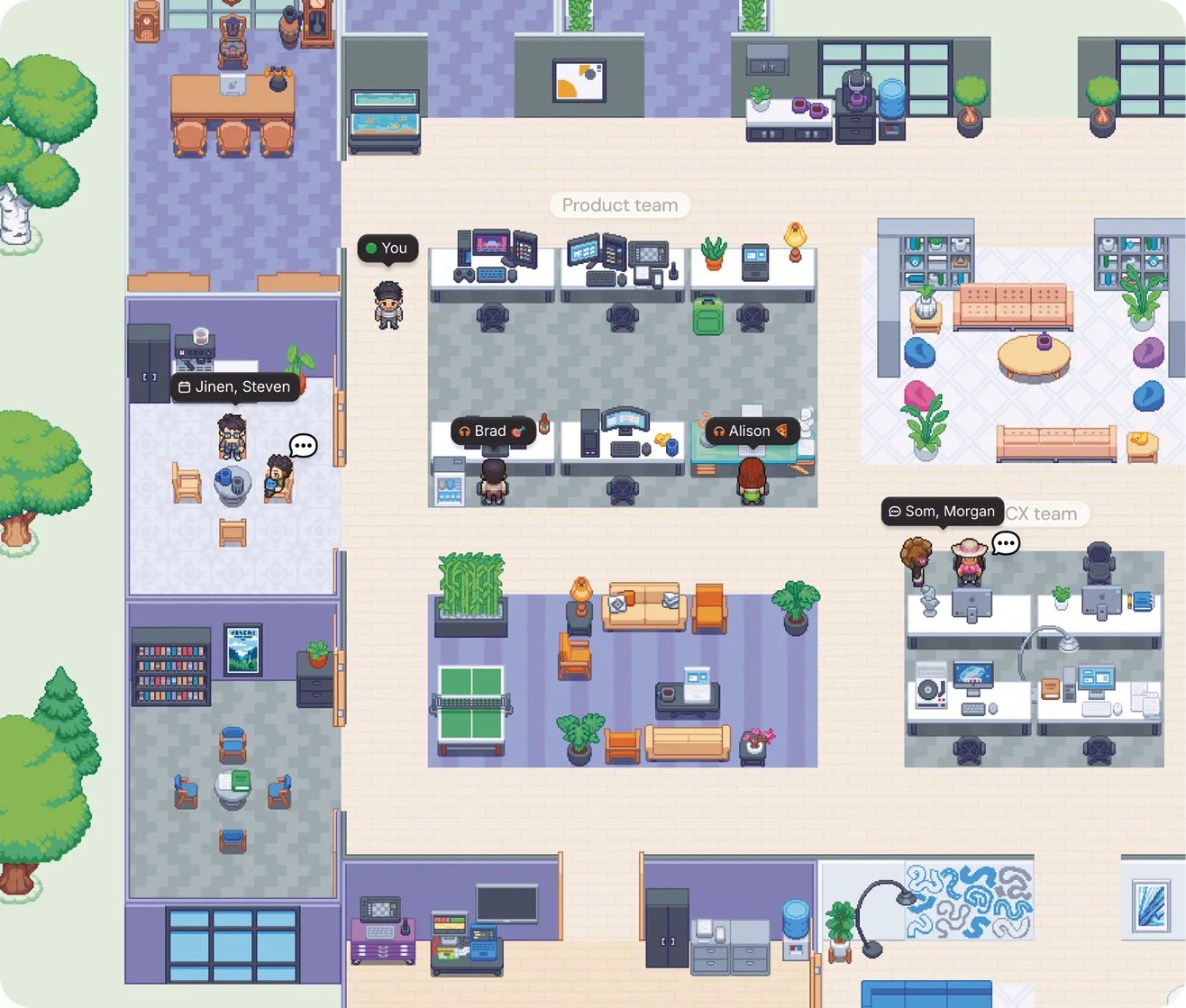
Visual from the Gather Town tool.
Vidéo associée
From 6:33 to 8:00Ressource affichée de l'autre côté.
Faites défiler pour voir la suite.
Faites défiler pour voir la suite.
Step 2
1
Identify the type of employees Gather Town was designed for.
2
Identify the main goal of this online tool.
3
List all the activities employees can engage in with this tool.
Action!
You are a manager in charge of remote workers. You have decided to use Gather Town with them. Introduce this online tool to the team.
Ressource affichée de l'autre côté.
Faites défiler pour voir la suite.
Faites défiler pour voir la suite.
3
Designing the perfect office
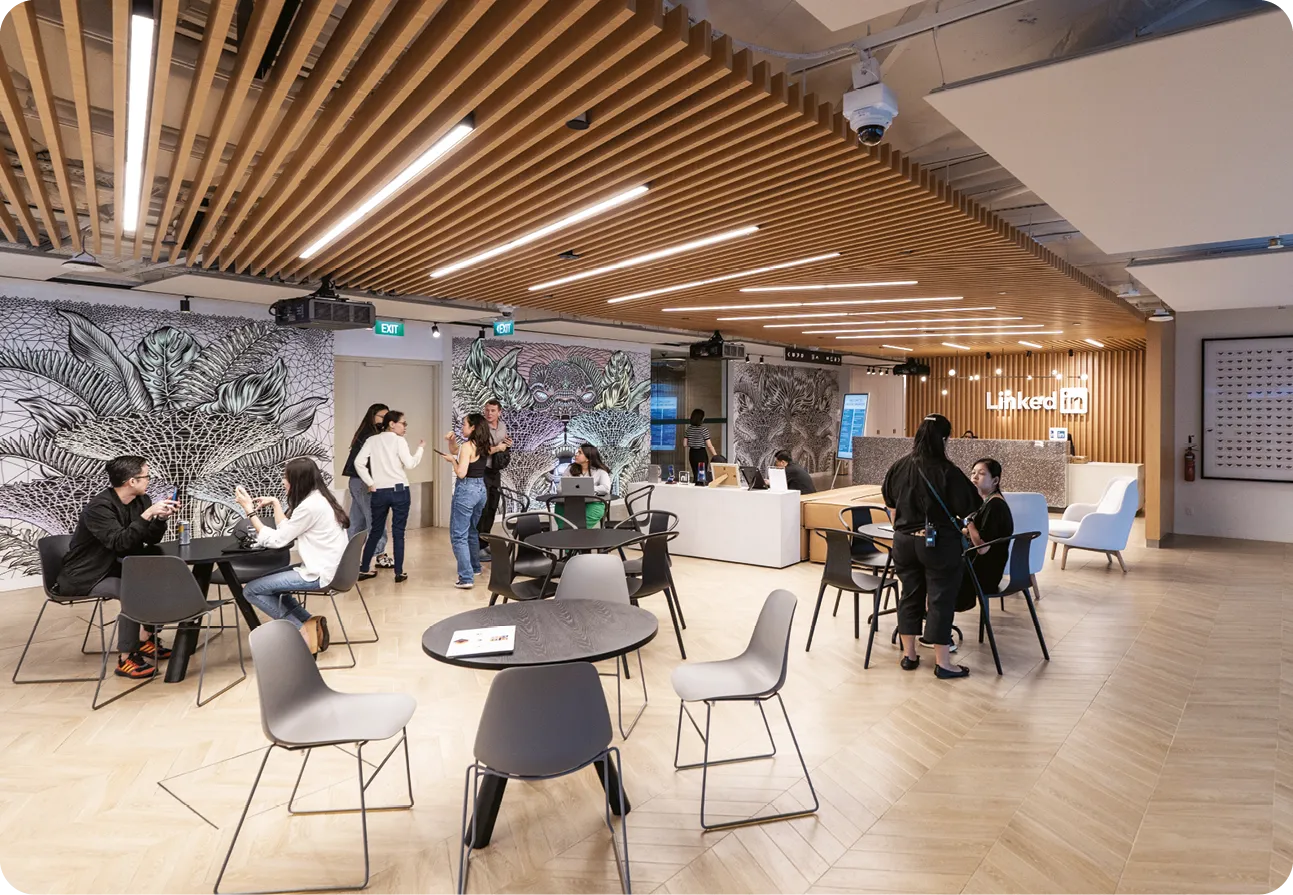
WSJ, The Office Design Strategies of LinkedIn, 2023.
Vidéo associée
From 7:09 to 10:17Ressource affichée de l'autre côté.
Faites défiler pour voir la suite.
Faites défiler pour voir la suite.
Step 3
1
Identify the event that deeply impacted work rhythms and office design.
2
List three pieces of information on LinkedIn's new office space.
3
Explain why LinkedIn's offices are suitable for hybrid work.
Action!
You work at LinkedIn and one of your friends is looking for a more flexible job. Discuss the reasons why LinkedIn would be a great fit.
Ressource affichée de l'autre côté.
Faites défiler pour voir la suite.
Faites défiler pour voir la suite.
Ready...
- Describe your workspace. List its architectural characteristics and mention the different spaces you have created, as well as the use of technology.
Steady...
- Highlight its value. Explain how this new workspace will positively impact employees (wellbeing, productivity, creativity, etc.).
Go!
- Make a call to action. Give three arguments that explain why it's the most suitable workspace for your client.
Une erreur sur la page ? Une idée à proposer ?
Nos manuels sont collaboratifs, n'hésitez pas à nous en faire part.
j'ai une idée !
Oups, une coquille