Unit 4
Book Club
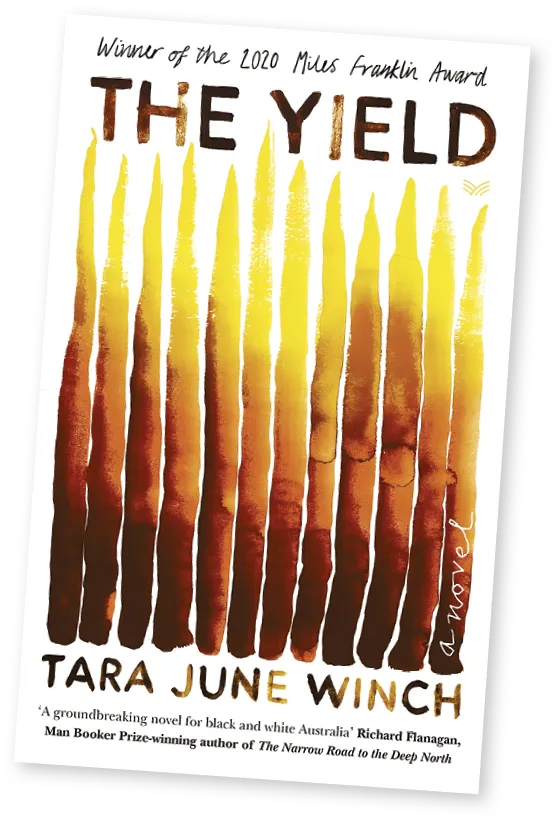
The Yield
Ressource affichée de l'autre côté.
Faites défiler pour voir la suite.
Faites défiler pour voir la suite.
The Yield is a novel that weaves together three voices to tell the story
of the Gondiwindi family and their connection to their ancestral land.
At the heart of the book is a dictionary of Wiradjuri words written by
Albert Gondiwindi, an Elder who wants to preserve the language and pass
on the stories of his Country. Through this dictionary, and through the
voices of his granddaughter and a historical missionary, the novel explores
themes of land rights, cultural survival, and the power of language.
Ressource affichée de l'autre côté.
Faites défiler pour voir la suite.
Faites défiler pour voir la suite.
Texte
I was born on Ngurambang – can you hear it? – Ngu–ram–bang. If you say it right it hits
the back of your mouth and you should taste blood in your words. Every person around
should learn the word for country in the old language, the first language – because that is
the way to all time, to time travel! You can go all the way back. [...]
It was my wife, Elsie, who bought me the first dictionary. I think she knew she was planting a seed, germinating something inside me when she did that. What a companion the dictionary is – there are stories in that book that'll knock your boots off. To this day it remains my prized possession, and I wouldn't trade it for all the tea in China.
The dictionary from Elsie is why I'm writing it down – it was my introduction to the idea of recording, written just like the Reverend once wrote the births and baptisms at the Mission, like the station manager wrote rations at the Station, and just like the ma'ams and masters wrote our good behavior at the Boys' Home – a list of words any fool can look up and be told the meaning. A dictionary, even if this language isn't mine alone, even if it's something we grow into and then, living long enough, shrink away from. I am writing because the spirits are urging me to remember, and because the town needs to know that I remember, they need to know now more than ever before.
To begin – but there are too many beginnings for us Gondiwindi – that's what we were bestowed and cursed with by the same shifty magic – an eternal Once upon a time. The story goes that the church brought time to us, and the church, if you let it, will take it away. I'm writing about the other time, though, deep time. This is a big, big story. The big stuff goes forever, time ropes and loops and is never straight, that's the real story of time.
The problem now facing my own Once upon a time is that Doctor Shah from the High Street Surgery has recently given me a filthy bill of health – cancer of the pancreas – which is me done and dusted.
So, because they say it is urgent, because I've got the church time against me, I'm taking pen to paper to pass on everything that was ever remembered.
All the words I found on the wind. [...]
yarran tree, spearwood tree, or hickory acacia – yarrany The dictionary is not just words – there are little stories in those pages too. After years with the second great book, I figured out the best way to read it. First time, I went in like reading the Bible, front to back. Aa words first – there you find Aaron, and him in the Book of Exodus, brother of Moses, founder of Jewish priesthood. Aardvark – that animal with a tube nose that eats the ants of Africa. [...]
You could keep reading the dictionary that way – front to back, straight as a dart – or you can get to aardvark and then skip to Africa, then skip to continent, then skip to nations, then skip to colonialism, then skip over to empire, then skip back to apartheid in the section – that happened in South Africa. Another story. When I was on the letter W in the Oxford English Dictionary, wiray would be in that section, it means “no.” Wiray wasn't there though, but I thought I'd make it there. Wheat was there, but when I skipped ahead not our word for wheat – not yura. So I thought I'd make my own list of words. We don't have a Z word in our alphabet, I reckon, so I thought I'd start backward, a nod to the backward whitefella world I grew up in, start at Y – yarrany. So that is the once upon a time for you. [...]
where is your country? – dhaganhu ngurambang? The question is not really about a place on the map. When our people say Where is your country, they are asking something deeper. Who is your family? Who are you related to? Are we related?
There's a story I read about someone who wanted to build a map that was the scale 1:1 so that the map covered all the oceans and all the mountains and land at its true size. That made the girls laugh when I told them – imagine walking underneath and holding the thing above your head in the dark? That's a little what a map does, takes the light out so you can't see. The map isn't the thing, this country is made of impossible distances, places you can only reach by time travel. By speaking our language, by singing the mountains into existence.
It was my wife, Elsie, who bought me the first dictionary. I think she knew she was planting a seed, germinating something inside me when she did that. What a companion the dictionary is – there are stories in that book that'll knock your boots off. To this day it remains my prized possession, and I wouldn't trade it for all the tea in China.
The dictionary from Elsie is why I'm writing it down – it was my introduction to the idea of recording, written just like the Reverend once wrote the births and baptisms at the Mission, like the station manager wrote rations at the Station, and just like the ma'ams and masters wrote our good behavior at the Boys' Home – a list of words any fool can look up and be told the meaning. A dictionary, even if this language isn't mine alone, even if it's something we grow into and then, living long enough, shrink away from. I am writing because the spirits are urging me to remember, and because the town needs to know that I remember, they need to know now more than ever before.
To begin – but there are too many beginnings for us Gondiwindi – that's what we were bestowed and cursed with by the same shifty magic – an eternal Once upon a time. The story goes that the church brought time to us, and the church, if you let it, will take it away. I'm writing about the other time, though, deep time. This is a big, big story. The big stuff goes forever, time ropes and loops and is never straight, that's the real story of time.
The problem now facing my own Once upon a time is that Doctor Shah from the High Street Surgery has recently given me a filthy bill of health – cancer of the pancreas – which is me done and dusted.
So, because they say it is urgent, because I've got the church time against me, I'm taking pen to paper to pass on everything that was ever remembered.
All the words I found on the wind. [...]
yarran tree, spearwood tree, or hickory acacia – yarrany The dictionary is not just words – there are little stories in those pages too. After years with the second great book, I figured out the best way to read it. First time, I went in like reading the Bible, front to back. Aa words first – there you find Aaron, and him in the Book of Exodus, brother of Moses, founder of Jewish priesthood. Aardvark – that animal with a tube nose that eats the ants of Africa. [...]
You could keep reading the dictionary that way – front to back, straight as a dart – or you can get to aardvark and then skip to Africa, then skip to continent, then skip to nations, then skip to colonialism, then skip over to empire, then skip back to apartheid in the section – that happened in South Africa. Another story. When I was on the letter W in the Oxford English Dictionary, wiray would be in that section, it means “no.” Wiray wasn't there though, but I thought I'd make it there. Wheat was there, but when I skipped ahead not our word for wheat – not yura. So I thought I'd make my own list of words. We don't have a Z word in our alphabet, I reckon, so I thought I'd start backward, a nod to the backward whitefella world I grew up in, start at Y – yarrany. So that is the once upon a time for you. [...]
where is your country? – dhaganhu ngurambang? The question is not really about a place on the map. When our people say Where is your country, they are asking something deeper. Who is your family? Who are you related to? Are we related?
There's a story I read about someone who wanted to build a map that was the scale 1:1 so that the map covered all the oceans and all the mountains and land at its true size. That made the girls laugh when I told them – imagine walking underneath and holding the thing above your head in the dark? That's a little what a map does, takes the light out so you can't see. The map isn't the thing, this country is made of impossible distances, places you can only reach by time travel. By speaking our language, by singing the mountains into existence.
Ressource affichée de l'autre côté.
Faites défiler pour voir la suite.
Faites défiler pour voir la suite.
a) What does his
native language mean
to the narrator?
Ressource affichée de l'autre côté.
Faites défiler pour voir la suite.
Faites défiler pour voir la suite.
b) How does he feel
about the dictionary?
Ressource affichée de l'autre côté.
Faites défiler pour voir la suite.
Faites défiler pour voir la suite.
c) What do we learn
about his childhood
here?
Ressource affichée de l'autre côté.
Faites défiler pour voir la suite.
Faites défiler pour voir la suite.
d) What are the
two types of time
described? Which
one does the narrator
want to write about?
Ressource affichée de l'autre côté.
Faites défiler pour voir la suite.
Faites défiler pour voir la suite.
e) What motivates him
to start writing now?
Ressource affichée de l'autre côté.
Faites défiler pour voir la suite.
Faites défiler pour voir la suite.
f) Why does he start
with this word?
Ressource affichée de l'autre côté.
Faites défiler pour voir la suite.
Faites défiler pour voir la suite.
g) How can the
dictionary be read
in different ways?
Ressource affichée de l'autre côté.
Faites défiler pour voir la suite.
Faites défiler pour voir la suite.
h) What words were
missing? What did
the narrator decide
to do about it?
Ressource affichée de l'autre côté.
Faites défiler pour voir la suite.
Faites défiler pour voir la suite.
i) What is the deeper
meaning of the
question “Where is
your country?”?
Ressource affichée de l'autre côté.
Faites défiler pour voir la suite.
Faites défiler pour voir la suite.
j) What kind of map is
imagined in this story?
Ressource affichée de l'autre côté.
Faites défiler pour voir la suite.
Faites défiler pour voir la suite.
k) What power
do words have?
Ressource affichée de l'autre côté.
Faites défiler pour voir la suite.
Faites défiler pour voir la suite.
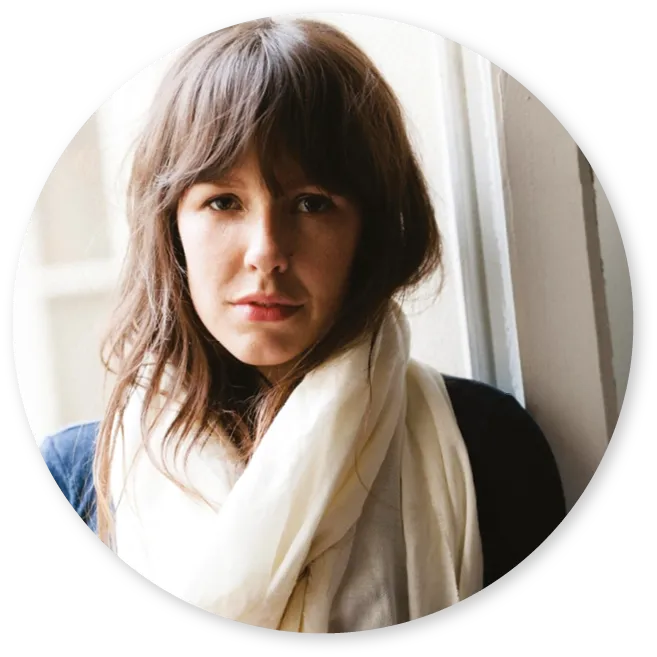
Tara June Winch is an Australian writer, born in Wollongong in 1983.
Her father is from Wiradjuri Country in western New South Wales.
Her work often centres on First Nations perspectives and stories.
Her first novel, Swallow the Air, was published in 2006 and received
critical acclaim for its vivid language. She is the 2020 winner of
the prestigious Miles Franklin Award, which honours novels that
capture the essence of Australian reality, for her third novel The Yield.

Ressource affichée de l'autre côté.
Faites défiler pour voir la suite.
Faites défiler pour voir la suite.
Where is your Country?
How would you answer this question if you were writing your own dictionary? Choose one word that represents where you come from and write a personal dictionary entry. You can talk about family, memories, places, languages, or people who make you feel at home. Is your Country only a place on a map, or something deeper?
How would you answer this question if you were writing your own dictionary? Choose one word that represents where you come from and write a personal dictionary entry. You can talk about family, memories, places, languages, or people who make you feel at home. Is your Country only a place on a map, or something deeper?
Une erreur sur la page ? Une idée à proposer ?
Nos manuels sont collaboratifs, n'hésitez pas à nous en faire part.
j'ai une idée !
Oups, une coquille