Unit 6
Activity 1
You've been warned!
Ressource affichée de l'autre côté.
Faites défiler pour voir la suite.
Faites défiler pour voir la suite.
1The origins of dystopia

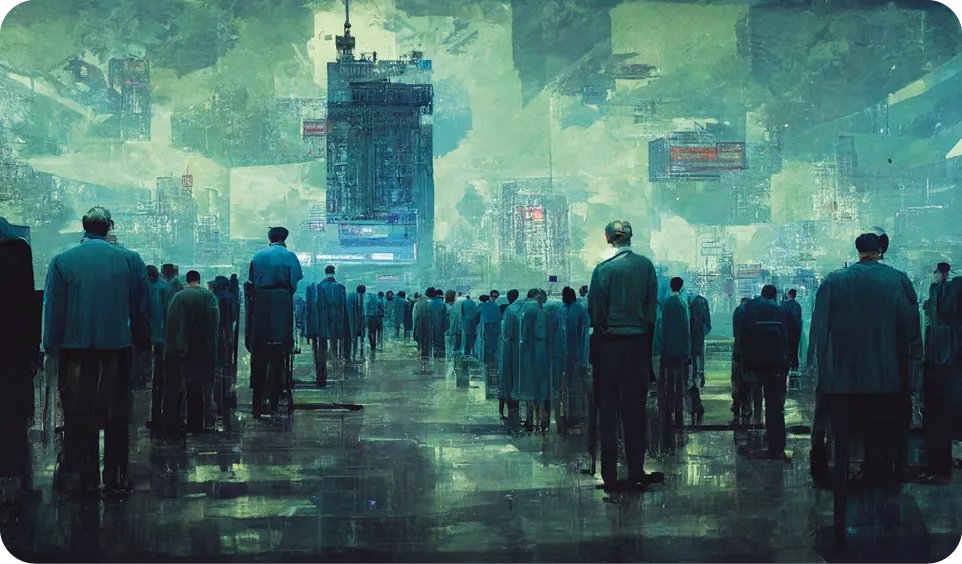
“How to recognize a dystopia”, Alex Gendler, TED-Ed, 2016.
Vidéo associée
From 0:00 to 3:58Ressource affichée de l'autre côté.
Faites défiler pour voir la suite.
Faites défiler pour voir la suite.
2The appeal of dark futures


“Dark Futures: Exploring the Allure of Dystopian Fiction”,
Leeds Beckett University, 2023.
Vidéo associée
Ressource affichée de l'autre côté.
Faites défiler pour voir la suite.
Faites défiler pour voir la suite.
3
The role of dystopian fiction
angt-unit6-activity1-doc3.mp3
[...] What makes us reach for these unattractive worlds? Where ideas are taken to illogical extremes, where agency is removed, where the human body is commodified and even brutally mutilated, where natural forces and environments are violent and inhospitable. It doesn't seem to make any sense.
Margaret Atwood hits the nail on the head (well she would) by talking in broader terms of "speculative fiction", which she views as having routes in Jonathan Swift's Gulliver's Travels. It's an interesting word to choose, by entering a dystopia we're both conjecturing and investing, considering a vision of a future and trying ideas on for size, with the bonus of it being an intellectual rather than financial exercise that costs us nothing. [...]
A dystopia serves as an obvious and useful conceptual means to critique social constructs but in fiction it's impossible not to become invested in a character. The role of the individual within the system, where they sit on the submission-rebellion spectrum, the bonds formed or dissolved with others in the face of destructive or controlling elements, carry us through dystopian works. [...]
There is a sense of relief on exit. Life is not as bad as what we've been witnessing – either in our reader's minds eye or on the screen – and it would be disingenuous to ignore the fact we step back from dystopia feeling like we're inhabiting a better place. It's ultimately a form of feel-good fiction, just in curious and compelling reverse, a punishing workout in pursuit of a dopamine effect that is both additive and addictive.
Margaret Atwood hits the nail on the head (well she would) by talking in broader terms of "speculative fiction", which she views as having routes in Jonathan Swift's Gulliver's Travels. It's an interesting word to choose, by entering a dystopia we're both conjecturing and investing, considering a vision of a future and trying ideas on for size, with the bonus of it being an intellectual rather than financial exercise that costs us nothing. [...]
A dystopia serves as an obvious and useful conceptual means to critique social constructs but in fiction it's impossible not to become invested in a character. The role of the individual within the system, where they sit on the submission-rebellion spectrum, the bonds formed or dissolved with others in the face of destructive or controlling elements, carry us through dystopian works. [...]
There is a sense of relief on exit. Life is not as bad as what we've been witnessing – either in our reader's minds eye or on the screen – and it would be disingenuous to ignore the fact we step back from dystopia feeling like we're inhabiting a better place. It's ultimately a form of feel-good fiction, just in curious and compelling reverse, a punishing workout in pursuit of a dopamine effect that is both additive and addictive.
Ressource affichée de l'autre côté.
Faites défiler pour voir la suite.
Faites défiler pour voir la suite.
Questions
1
Explain the difference between utopia and dystopia. How did the dystopian genre develop? Give examples.
2
Why is dystopia particularly relevant for young people today?
3
How does the reader feel after reading a dystopian novel? Why?
Ressource affichée de l'autre côté.
Faites défiler pour voir la suite.
Faites défiler pour voir la suite.
Background check
Why do we keep coming back to dystopian fiction?Ressource affichée de l'autre côté.
Faites défiler pour voir la suite.
Faites défiler pour voir la suite.
Bookworm challenge
In small groups, list as many authors and book titles mentioned in the documents as you can remember. The longest list wins!Une erreur sur la page ? Une idée à proposer ?
Nos manuels sont collaboratifs, n'hésitez pas à nous en faire part.
j'ai une idée !
Oups, une coquille