Unit 13
Final Project
Ressource affichée de l'autre côté.
Faites défiler pour voir la suite.
Faites défiler pour voir la suite.
The National Maritime Museum in London is organising a competition to promote a new Union Flag, better representing the nation.
As a student at the Royal College of Art in London, you decide to take part in the competition and design a new flag symbolising both tradition and change.
Ressource affichée de l'autre côté.
Faites défiler pour voir la suite.
Faites défiler pour voir la suite.
Exclu. numérique
Si nécessaire, aidez-vous de la fiche méthode Faire un discours.
Retrouvez en plus un Exam File pour vous entraîner !
Ressource affichée de l'autre côté.
Faites défiler pour voir la suite.
Faites défiler pour voir la suite.
Create a new flag design and pitch it to the jury.
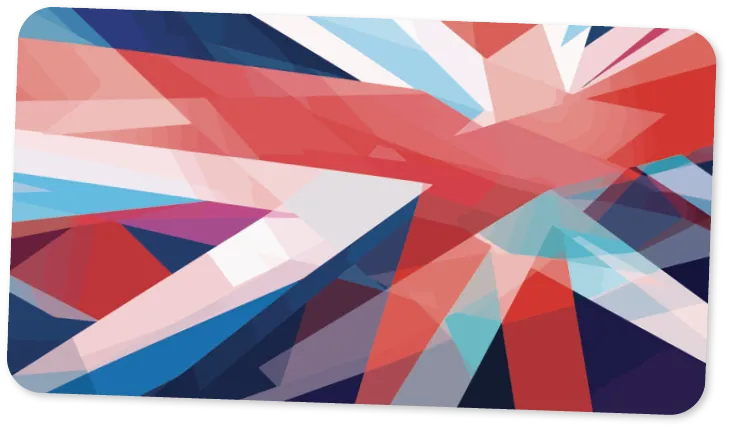
Design an original flag that captures the essence of British identity while looking to the future. Once your design is ready, you will pitch it to a panel of judges, explaining your artistic choices and how your flag balances heritage and innovation. This is more than a competition; it's a chance to make your mark on a national symbol!

Design an original flag that captures the essence of British identity while looking to the future. Once your design is ready, you will pitch it to a panel of judges, explaining your artistic choices and how your flag balances heritage and innovation. This is more than a competition; it's a chance to make your mark on a national symbol!
Ressource affichée de l'autre côté.
Faites défiler pour voir la suite.
Faites défiler pour voir la suite.
Let's do it!
- Gather your notes on the Union Jack. What colours, and patterns are used? What do they symbolise? Which elements do you want to keep or change?
- Look at past examples of reimagined flags to get inspiration.
- Research British traditions, cultural symbols, and modern influences that you want to include in your design.
- Define your concept: Choose a central message for your flag: unity? diversity? tradition meets modernity?
- Sketch ideas and identify which elements of tradition and modernity you'll incorporate.
- Design your flag: Create a draft (digitally or on paper). Make sure each element you have chosen to incorporate is meaningful and that you can justify its use.
Dépliez pour dessiner le schéma
Ressource affichée de l'autre côté.
Faites défiler pour voir la suite.
Faites défiler pour voir la suite.
| Niveau 1 (A2+) | Niveau 2 (B1) | Niveau 3 (B1+) | Niveau 4 (B2) | Vers C1 | |
|---|---|---|---|---|---|
| Réalisation de la tâche | |||||
| Production orale | |||||
| Prononciation et fluidité | |||||
| Recevabilité linguistique | |||||
| Contenus culturels |
Ressource affichée de l'autre côté.
Faites défiler pour voir la suite.
Faites défiler pour voir la suite.
➤ Préparez votre introduction
- Présentez-vous : donnez votre nom et le contexte de votre présentation.
- Donnez le titre de l'œuvre et énoncez votre objectif : Today, I am going to present my artwork titled [Title], created as part of [Project/Competition].
➤ Décrivez l'œuvre d'art
- Expliquez le format, le support, la palette de couleurs, les formes, lignes, motifs et textures.
- Guidez le regard du public : Start by looking at the central figure, then move to the background details...
➤ Analysez et interprétez
- Justifiez les choix artistiques et symboliques.
- Reliez l'œuvre d'art au thème : tradition, modernité, identité britannique.
- Partagez votre point de vue personnel ou une réflexion sur le processus de création.
- Terminez par un résumé ou une question ouverte pour susciter la réflexion.
➤ Soignez la langue et la prononciation
- Utilisez un vocabulaire varié et précis. Pensez à réemployer le vocabulaire de l'unité.
- Travaillez l'intonation et le rythme pour capter l'attention de votre auditoire.
Ressource affichée de l'autre côté.
Faites défiler pour voir la suite.
Faites défiler pour voir la suite.
Useful vocabulary:
The artwork features…
It measures…
In the foreground/background we see…
The elements are arranged to create a sense of…
The lines guide the viewer's eyes towards…
Your attention is immediately drawn to…
The texture of the artwork is achieved through…
This technique adds a sense of…
This piece aims at (V+ing)/to (V)...
It invites the viewer to (V)...
It measures…
In the foreground/background we see…
The elements are arranged to create a sense of…
The lines guide the viewer's eyes towards…
Your attention is immediately drawn to…
The texture of the artwork is achieved through…
This technique adds a sense of…
This piece aims at (V+ing)/to (V)...
It invites the viewer to (V)...
Ressource affichée de l'autre côté.
Faites défiler pour voir la suite.
Faites défiler pour voir la suite.
Write a letter to the museum.
The museum curators need to choose a flag to feature on the cover of the exhibition catalogue. Write an engaging letter presenting your design and explaining why it should be selected. Your letter should highlight how your flag represents both tradition and modern British identity.


The museum curators need to choose a flag to feature on the cover of the exhibition catalogue. Write an engaging letter presenting your design and explaining why it should be selected. Your letter should highlight how your flag represents both tradition and modern British identity.
Ressource affichée de l'autre côté.
Faites défiler pour voir la suite.
Faites défiler pour voir la suite.
Let's do it!
- Follow the main project tips to imagine your design.
- Use a polite salutation: Begin with "Dear Curator of the exhibition", or something similar.
- Introduce your purpose: Clearly explain that you want to participate in the competition.
- Describe your artwork and how it embodies Britishness.
- Make a strong conclusion: Reaffirm why your artwork should be used for the cover.