Vue papier

Découvrez la vue papier en cliquant ici
Unit 14
Activity 1
Broadcasting Britain
Ressource affichée de l'autre côté.
Faites défiler pour voir la suite.
Faites défiler pour voir la suite.
1
The birth of the BBC
angt-unit14-activity1-doc1.mp3
“Hullo, hullo, 2LO calling, 2LO calling,” a few thousand listeners heard through the hissing ether at 6 p.m. on Nov. 14, 1922. “This is the British Broadcasting Company. 2LO. Stand by for one minute please!” What followed were short news and weather bulletins, read twice, the second time slowly so that listeners could take notes.
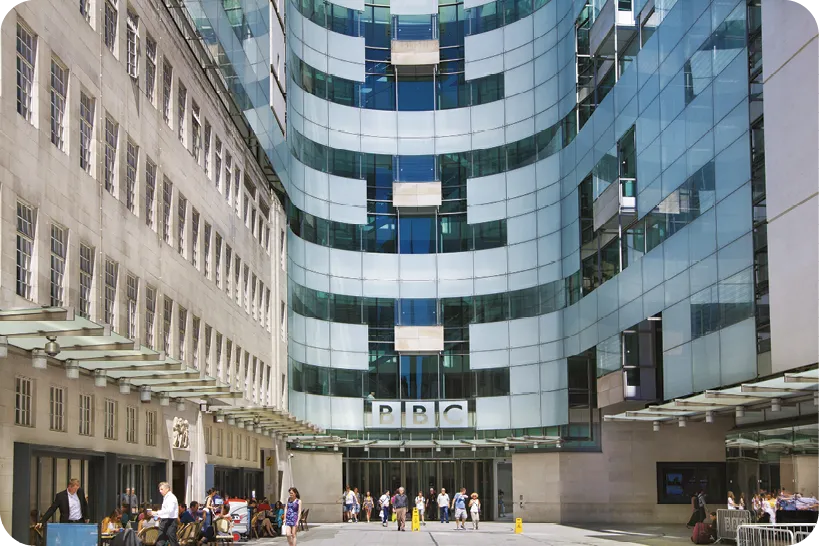
David Hendy, in his thorough and engaging new book, “The BBC: A Century on Air,” writes that you can't understand England without understanding the BBC. It occupies, he says, “a quasi-mystical place in the national psyche” It's just there, like the white cliffs of Dover.
The BBC sparked to life in the wake of World War I. Its founders included wounded veterans, and they were idealists. Civilization was in tatters; they hoped, through a new medium, to forge a common culture by giving listeners not necessarily what they wanted, but what they needed, to hear.
The audience was fed a fibrous diet of plays and concerts and talks and lectures; sports included Derby Day and Wimbledon. Announcers wore dinner jackets as well as their plummy accents, “as a courtesy to the live performers with whom they would be consorting.” Catching the chimes of Big Ben before the evening news became a ritual for millions.
Equipment was primitive. A framed notice by the microphone warned guest speakers, “If you sneeze or rustle papers you will DEAFEN THOUSANDS!!!”
Radio was new; the BBC felt that it had to teach people how to listen. “To keep your mind from wandering,” it advised, “you might wish to turn the lights out, or settle into your favorite armchair five minutes before the program starts; above all, you should remember that ‘If you only listen with half an ear, you haven't a quarter of a right to criticize.’”
David Hendy, in his thorough and engaging new book, “The BBC: A Century on Air,” writes that you can't understand England without understanding the BBC. It occupies, he says, “a quasi-mystical place in the national psyche” It's just there, like the white cliffs of Dover.
The BBC sparked to life in the wake of World War I. Its founders included wounded veterans, and they were idealists. Civilization was in tatters; they hoped, through a new medium, to forge a common culture by giving listeners not necessarily what they wanted, but what they needed, to hear.
The audience was fed a fibrous diet of plays and concerts and talks and lectures; sports included Derby Day and Wimbledon. Announcers wore dinner jackets as well as their plummy accents, “as a courtesy to the live performers with whom they would be consorting.” Catching the chimes of Big Ben before the evening news became a ritual for millions.
Equipment was primitive. A framed notice by the microphone warned guest speakers, “If you sneeze or rustle papers you will DEAFEN THOUSANDS!!!”
Radio was new; the BBC felt that it had to teach people how to listen. “To keep your mind from wandering,” it advised, “you might wish to turn the lights out, or settle into your favorite armchair five minutes before the program starts; above all, you should remember that ‘If you only listen with half an ear, you haven't a quarter of a right to criticize.’”

Ressource affichée de l'autre côté.
Faites défiler pour voir la suite.
Faites défiler pour voir la suite.
Questions
1
Pick out quotes in the documents showing that the BBC is iconic in Britain.
2
How has the way people listen or watch changed since the 1920s?
3
What challenges does the BBC face in staying relevant and maintaining its role in British life?
Ressource affichée de l'autre côté.
Faites défiler pour voir la suite.
Faites défiler pour voir la suite.
In the UK, the BBC is funded by the licence fee, a yearly payment that households must pay if they watch live TV or use BBC iPlayer. The Royal Charter that defines the BBC's missions is reviewed approximately every ten years, so the BBC's role and funding are regularly debated. Today, the licence fee is controversial: some people feel it is unfair or outdated in an age of streaming, while others argue it protects the BBC from advertising and political control.
Ressource affichée de l'autre côté.
Faites défiler pour voir la suite.
Faites défiler pour voir la suite.
Background check
How has the BBC become such an important British institution?Ressource affichée de l'autre côté.
Faites défiler pour voir la suite.
Faites défiler pour voir la suite.
Make a list of the TV or radio programmes mentioned
in the documents, then sort them into two columns:
then and now. Can any fit into both columns?
Then | Now |
|---|---|
Une erreur sur la page ? Une idée à proposer ?
Nos manuels sont collaboratifs, n'hésitez pas à nous en faire part.
j'ai une idée !
Oups, une coquille