Vue papier

Découvrez la vue papier en cliquant ici
Unit 9
Activity 2
Young blood, old dreams
Ressource affichée de l'autre côté.
Faites défiler pour voir la suite.
Faites défiler pour voir la suite.
ang1-unit9-activity2.mp3

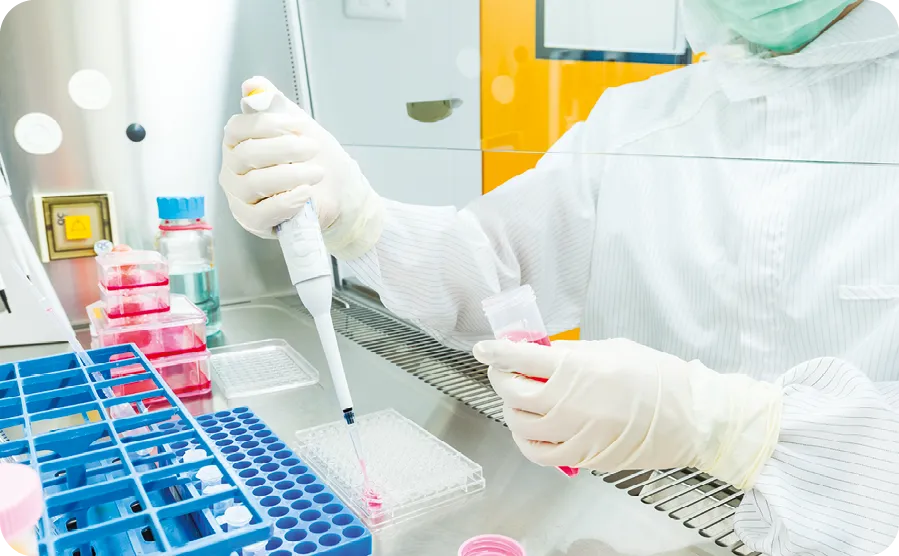
In 2017, an entrepreneur named Jesse Karmazin began making some pretty outrageous claims. His startup, Ambrosia, was offering $8,000 infusions of blood plasma taken from donors as young as 16, touting the procedure as “plastic surgery from the inside out.” Just one infusion could improve a client's appearance, sleep, and strength – and even treat diseases like Alzheimer's, he said.
“It reverses aging,” Karmazin told a reporter at the time. “There's really no question whether it works or not.”
In reality, there were a lot of questions, and just two years later, the U.S. Food and Drug Administration (FDA) would shut it all down.
Karmazin was hardly the first optimist who hoped the blood of the youth might actually be the fountain of youth.
One of the earliest documented accounts of consuming blood for rejuvenating purposes comes from ancient Rome, when Pliny the Elder reported of sufferers of epilepsy descending on a wounded gladiator “to draw forth his very life.” More than 1,000 years later, rumor has it Pope Innocent VIII drank the blood of three 10-year-old boys in attempt to stave off his impending demise. (Spoiler alert: It didn't work.) […]
Fast-forward to the 1920s, when Russian scientist Alexander Bogdanov gave himself many blood transfusions that he argued made him healthier, publishing a book touting the “stimulating” effects of young blood. Ironically, his twelfth and final transfusion led to malaria and tuberculosis, striking him dead at the tender age of 54. […]
Beginning in 2005, scientists started conjoining young mice to old mice to see how the latter might benefit. The resulting studies all seemed to point to the same thing: there was something about the new blood that made an aged rodent feel, act, and look young again. But what that something was – and how long its effects would last – remained a giant question mark.
Regardless, such experiments excited Karmazin, a Stanford Medical School student who left his residency early to launch his startup, Ambrosia.
Ressource affichée de l'autre côté.
Faites défiler pour voir la suite.
Faites défiler pour voir la suite.
PATH A
B1
1-A
Who created the startup Ambrosia? What did
he promise to people?
2-A
How much did one infusion of blood plasma
cost?
3-A
Did the U.S. authorities accept his treatment?
What happened in the end?
Ressource affichée de l'autre côté.
Faites défiler pour voir la suite.
Faites défiler pour voir la suite.
PATH B
B1+
1-B
Pick out two examples of the use of "young blood"
in history.
2-B
What happened to Alexander Bogdanov in the
1920s, and what does it show about the risks of
these experiments?
3-B
Why do you think Jesse Karmazin refused to say
where the plasma came from?
Ressource affichée de l'autre côté.
Faites défiler pour voir la suite.
Faites défiler pour voir la suite.
Let's talk this out!
4
Summarise what Jesse Karmazin and his company Ambrosia were trying to do. What was the result of this project?
5
What ethical questions does the idea of using “young blood” raise (for donors, for society, for medicine)?
Ressource affichée de l'autre côté.
Faites défiler pour voir la suite.
Faites défiler pour voir la suite.
Ambrosia in the news
You're a journalist who's been commissioned by The Guardian to report on Jesse Karmazin's company, Ambrosia. Write a short newspaper article, summarising what he promised and what happened. Add a catchy headline to attract readers.Une erreur sur la page ? Une idée à proposer ?
Nos manuels sont collaboratifs, n'hésitez pas à nous en faire part.
j'ai une idée !
Oups, une coquille